
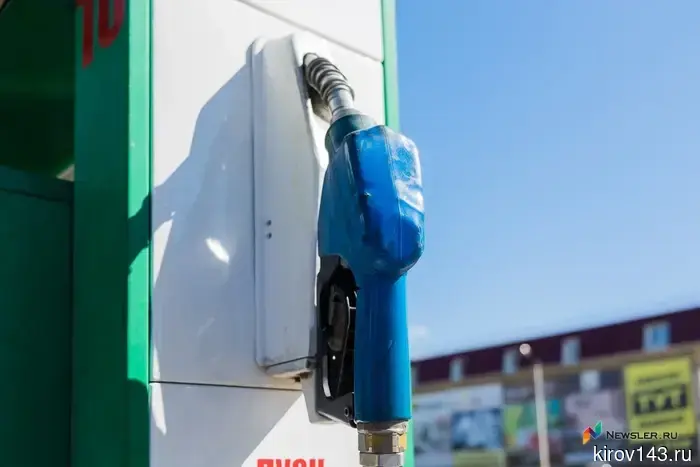
Oil refineries were allowed to "dilute" gasoline.
Experts note that lowering the fuel grade may alleviate local gasoline shortages occurring in certain regions, reports "Kommersant." The publication writes that the corresponding government decree was adopted back in the fall of 2025, valid until May 1, 2026, but then the action of this measure was extended. This decree applies to oil refineries that have a registration certificate for entities conducting operations for the processing of crude oil in accordance with Article 179.7 of the Tax Code of the Russian Federation. In particular, this concerns refineries that have entered into agreements with the Ministry of Energy on the introduction of new deep processing units and have the right to receive a reverse excise tax.
It should be noted that such a reduction in fuel grade does not eliminate risks for car owners, as this gasoline may contain, in particular, a higher sulfur content. High sulfur content in fuel, as experts note, poses serious risks to the vehicle. In particular, for modern engines equipped with complex emission control systems and electronics. When burning sulfur-rich fuel, aggressive compounds are formed that accelerate the wear of various components and systems.
When sulfur burns, substances are produced that corrode the surfaces of plunger pairs, injectors, rings, bearings, and other elements of the fuel system. The condensation of acids on the cold walls of the cylinders and exhaust manifold during engine warm-up causes "cold corrosion," which most intensively destroys metal in the first minutes of engine operation.
Sticky deposits from the combustion of sulfur and oil can disrupt the geometry of the intake channels, reducing engine power. Lacquer and salt deposits alter the fuel spray pattern, increase combustion temperature, and can lead to uneven fuel delivery. All of this can result in costly car repairs.
It should be noted that in the fall of 2025, mass complaints from car owners about gasoline quality were recorded in Russia. In particular, car owners complained about detonation, loss of vehicle power, and the check engine light coming on after refueling.
Recall that earlier in Crimea and Kuban, there were problems with gasoline: local authorities imposed restrictions on the amount of fuel sold to one person.
Другие Новости Кирова (НЗК)
 More than 11,000 ninth graders will take the OGE by choice on June 16.
In the Kirov region, the main period of the state final certification for 9th grade graduates continues.
More than 11,000 ninth graders will take the OGE by choice on June 16.
In the Kirov region, the main period of the state final certification for 9th grade graduates continues.
 In Kirov, surgeries on the carotid arteries are being performed.
Medical assistance can be obtained with the compulsory health insurance policy.
In Kirov, surgeries on the carotid arteries are being performed.
Medical assistance can be obtained with the compulsory health insurance policy.
 The Kirov branch of the Investigative Committee will spend about one million rubles on security.
Services must be provided from June to November 2026.
The Kirov branch of the Investigative Committee will spend about one million rubles on security.
Services must be provided from June to November 2026.
 Pamfilova urged not to complain about internet outages during the elections.
During the September elections in Russia, restrictions on the internet and communication may be imposed. This was stated by the head of the Central Election Commission of the Russian Federation, Ella Pamfilova.
Pamfilova urged not to complain about internet outages during the elections.
During the September elections in Russia, restrictions on the internet and communication may be imposed. This was stated by the head of the Central Election Commission of the Russian Federation, Ella Pamfilova.
 Scammers disguised the website as Roskomnadzor.
The attackers registered a domain and set it up as an information portal of the agency. The forgery has already caught the attention of the Department for the Organization of the Fight Against the Illegal Use of ICT.
Scammers disguised the website as Roskomnadzor.
The attackers registered a domain and set it up as an information portal of the agency. The forgery has already caught the attention of the Department for the Organization of the Fight Against the Illegal Use of ICT.
 The Investigative Committee organized an inspection regarding the death of a man in Vyatka.
The Investigative Committee is conducting a procedural check after the body of a resident of Kirov was found in the river. This was reported by the regional department of the Investigative Committee for the Kirov region.
The Investigative Committee organized an inspection regarding the death of a man in Vyatka.
The Investigative Committee is conducting a procedural check after the body of a resident of Kirov was found in the river. This was reported by the regional department of the Investigative Committee for the Kirov region.
Oil refineries were allowed to "dilute" gasoline.
To prevent a fuel shortage in the Russian market, the government has allowed a number of refineries to produce gasoline and diesel fuel of "Euro-5" class for the domestic market, but with "Euro-3" specifications.