

Blood Hunt Season: Women Are Attacked by Ticks More Often
Experts are drawing the attention of Russians to the fact that the tick season is not limited to the spring months. The traditional peak of their activity occurs from April to June; however, caution should be exercised in nature until September. The Kirov region is among those areas where the risk of bites is considered elevated.
Statistics on visits to medical institutions show that women make up the majority of those affected by tick bites, accounting for 73% of cases. Analysts attribute this to the fact that women more often choose active outdoor recreation and find themselves in places where the bulk of parasites accumulate: forested areas with dense grass, overgrown road shoulders, ravines, cemeteries with abundant vegetation, as well as garden plots bordering on the wilderness.
As for the age structure, in 63% of cases, bites are recorded in people from two age groups: 40–50 years and over 60 years. In most situations, victims extract the tick themselves and send it for laboratory analysis. The most sought-after tests during this period remain comprehensive PCR studies for 4–6 infections.
Different species of ticks can be found in Russia. Some wait for a person or animal in grass and low bushes at a height of no more than 1–1.5 meters, while others actively pursue their prey in open areas, following it for several meters. To reduce the risk on personal plots, specialists advise regularly mowing the grass, combating weeds and shrub overgrowth, avoiding cluttering the territory, and treating the plot and the adjacent strip behind the fence, 1–2 meters wide, with insectoacaricide preparations.
However, treatment of the territory only protects within the plot and does not guarantee safety beyond its borders. The only reliable method of preventing tick-borne viral encephalitis remains vaccination. The standard scheme involves two vaccinations with an interval of 1 to 7 months, followed by revaccination after a year, and then once every three years. The ideal time to start vaccination is autumn or winter, so that immunity has time to develop by the gardening season. For those who did not manage to get vaccinated in advance, an accelerated scheme is provided: two injections with an interval of 2–4 weeks.
In addition to encephalitis, ticks carry borreliosis, ehrlichiosis, the Congo-Crimean fever virus, anaplasmosis, and other diseases. As of today, there are no vaccines against them. Treatment of severe forms of these infections, especially if it takes place in a hospital, can cost tens and hundreds of thousands of rubles. Insurance can be an alternative to financial risks — a policy covering tick bites includes emergency prevention, tests, doctor visits, and rehabilitation. As noted by the insurance company "Soglasie," the cost of such a policy starts from several hundred rubles, while one injection of immunoglobulin without insurance is comparable in price to an annual insurance policy for the whole family.
Другие Новости Кирова (НЗК)
 Due to debts of 100 thousand rubles, residents of Kirov lost their car and part of their apartment.
In Kirov, bailiffs took extreme measures against two debtors for utility payments. One had their car seized, while the other had a share in their property arrested. However, the return of the property will cost the debtors more than the amount of the principal debt.
Due to debts of 100 thousand rubles, residents of Kirov lost their car and part of their apartment.
In Kirov, bailiffs took extreme measures against two debtors for utility payments. One had their car seized, while the other had a share in their property arrested. However, the return of the property will cost the debtors more than the amount of the principal debt.
 In Nagorsk, an employee was unlawfully dismissed for absenteeism.
The Prosecutor's Office of the Nagorsky District achieved the restoration of the labor rights of a local resident who was unlawfully dismissed by his employer for absenteeism. The court recognized the dismissal as illegal and ordered the employer to pay the man more than 60,000 rubles.
In Nagorsk, an employee was unlawfully dismissed for absenteeism.
The Prosecutor's Office of the Nagorsky District achieved the restoration of the labor rights of a local resident who was unlawfully dismissed by his employer for absenteeism. The court recognized the dismissal as illegal and ordered the employer to pay the man more than 60,000 rubles.
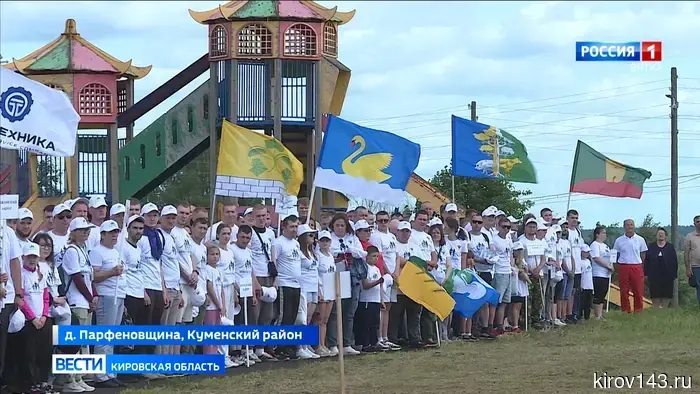 В Верхошижемском районе состоится региональный этап марафона «Земля спорта – 2026».
11 июля Кировская область станет участником марафона «Земля спорта - 2026». Об этом проинформировало правительство Кировской области. В посёлке Верхошижемье с 10:00 на территорию лыжного комплекса «Шижма» состоится региональный этап физкультурно-спортивного праздника, на котором смогут участвовать все желающие.
В Верхошижемском районе состоится региональный этап марафона «Земля спорта – 2026».
11 июля Кировская область станет участником марафона «Земля спорта - 2026». Об этом проинформировало правительство Кировской области. В посёлке Верхошижемье с 10:00 на территорию лыжного комплекса «Шижма» состоится региональный этап физкультурно-спортивного праздника, на котором смогут участвовать все желающие.
 Fraudsters pretend to be oil giants: how not to lose money when buying fuel
Entrepreneurs are being sent commercial offers for gasoline at bargain prices, while drivers are promised refueling without queues. Behind these "favorable conditions" are criminals who disguise themselves as suppliers of the largest oil companies. The banking sector has revealed details of the scheme and named the amount of saved funds.
Fraudsters pretend to be oil giants: how not to lose money when buying fuel
Entrepreneurs are being sent commercial offers for gasoline at bargain prices, while drivers are promised refueling without queues. Behind these "favorable conditions" are criminals who disguise themselves as suppliers of the largest oil companies. The banking sector has revealed details of the scheme and named the amount of saved funds.
 Three districts of the Kirov region want to take out loans to cover the budget deficit.
The speech is about the Malmyzhsky, Verkhnekamsky, and Luzsky districts.
Three districts of the Kirov region want to take out loans to cover the budget deficit.
The speech is about the Malmyzhsky, Verkhnekamsky, and Luzsky districts.
 Residents of Kirov have started to undergo MRI and CT scans more frequently.
In the first five months of 2026, the number of high-precision diagnostic studies significantly increased in the Kirov region. Compared to the same period last year, the number of MRIs rose by 18%, and a similar increase was recorded for computed tomography.
Residents of Kirov have started to undergo MRI and CT scans more frequently.
In the first five months of 2026, the number of high-precision diagnostic studies significantly increased in the Kirov region. Compared to the same period last year, the number of MRIs rose by 18%, and a similar increase was recorded for computed tomography.
Blood Hunt Season: Women Are Attacked by Ticks More Often
The peak activity of ticks has already started this year, but the danger of their attacks will remain at least until September. Specialists analyzed the statistics of medical assistance requests and found out who makes up the majority of the victims, in which regions the risk is higher, and which measures truly protect against infections.