
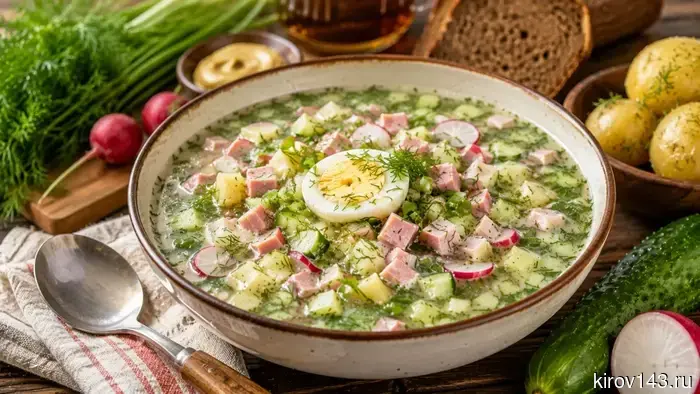
The recipe for authentic Russian okroshka has been named.
No kefir, whey, mineral water, or beer. All of this is not okroshka. The kefir cold soup is called dovga and came from the Caucasus. Whey was given to livestock in Russia. So if you are offered okroshka with whey, you can subtly hint at pigs.
The meat in okroshka should be boiled — beef, pork, or chicken. Boiled sausage is a sign of spiritual poverty. Previously, meat scraps from other dishes were used.
Vegetables: potatoes, eggs, radishes (although turnips were used before, but they are hard to find now). Radishes should be cut not into cubes, but into thin sticks — as recommended by Pokhlyobkin.
Spices and heat: crush onions with salt and mustard, add horseradish and black pepper. Okroshka should "hit the nose," not be bland.
And the final touch: in strong heat, you can throw crushed ice into the bowl.
Far Eastern variant
Due to the historical poverty of settlers in the Far East, meat was sometimes replaced with cheap salted herring. It turned out tasty and uniquely its own.
Okroshka is a part of Russian culture. Calling a cold soup made with kefir or mineral water okroshka is as absurd as calling a woman Brünnhilde. Respect the tradition. Only kvass, only the right ingredients, writes transsibinfo.com.
The history of okroshka: from royal feasts to burlak's vobla
Okroshka is not just a cold soup. It is a mirror of Russian cuisine that reflected three centuries: noble extravagance, burlak ingenuity, and Soviet scarcity. The real history of the dish is much more interesting than the usual debates of "on kvass or on kefir."
Origin of the name
The word "okroshka" comes from "kroshivo" — everything that is finely chopped. The main principle from the very beginning: take leftovers, chop them, pour with a liquid base. No complicated philosophical subtext — just culinary rationalism.
Noble okroshka (18th–19th century)
The first written recipe for okroshka appears not in peasant notebooks, but in noble cookbooks of the late 18th century. For example, in "The Old Russian Housekeeper, Keykeeper, and Cook" (1790), it was suggested:
"Chop various roasted meats, with onions, cucumbers, and sour cream; and pour with cucumber brine, or kvass, or sour liquids." Yesterday's roast meat was used — piglet, turkey, capercaillie, hazel grouse. Okroshka was not food for the poor, but a way to utilize exquisite leftovers. A kind of "recycling" in a royal way.
Burlak okroshka (19th-century legend)
This is the most romantic version, although historians debate its scale.
Volga burlaks received a meager ration: kvass and dried vobla. The fish was hard "as a sole." To soften it and eat, burlaks would crumble vobla directly into kvass, adding wild onions, radishes, or horseradish. It turned out hearty, cheap, and edible.
Thus, okroshka temporarily became a dish of the lower classes — without meat, but with fish and sharp roots.
Soviet okroshka (20th century)
It was in the 20th century that okroshka acquired the familiar form — and simultaneously became surrounded by myths.
Potatoes
In the original noble recipes, there was no potato. It entered the recipe en masse only in Soviet times — as a cheap and filling filler.
Sausage instead of game
Expensive meat was replaced by boiled sausage (most often "Doctor's"). The recipe was simplified and cheapened, and the taste became recognizable for several generations.
Kefir heresy
Kefir became widely available only in the 20th century. The first recipe for okroshka with kefir was published in 1977 and was called "Ashgabat okroshka" — with lamb and greens. Thus, the debate "kvass versus kefir" split into an authentically Russian tradition and Soviet innovation.
Whey, mineral water, beer
All of these are experiments of the late Soviet and post-Soviet times. They have nothing in common with historical okroshka.
Facts that surprise
Radishes in okroshka are a substitute for turnips, which could not be found in Soviet stores.
Cucumber brine was sometimes added instead of salt — to save.
In strong heat, crushed ice was added to okroshka — this was practiced as early as the 19th century. In the Far East, due to poverty, meat was replaced with salted herring — resulting in a local, very tasty variant.
Другие Новости Кирова (НЗК)
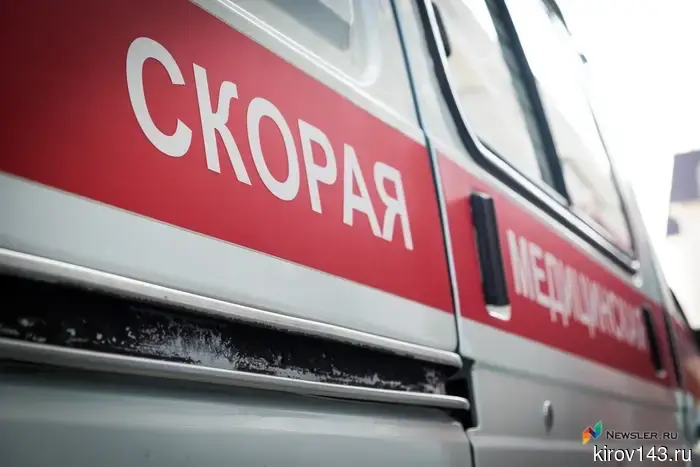 In Kirov, a plumber fell from a ladder.
The State Labor Inspection in the Kirov Region has summarized the results of the investigation into the incident involving an employee of LLC "Instroy."
In Kirov, a plumber fell from a ladder.
The State Labor Inspection in the Kirov Region has summarized the results of the investigation into the incident involving an employee of LLC "Instroy."
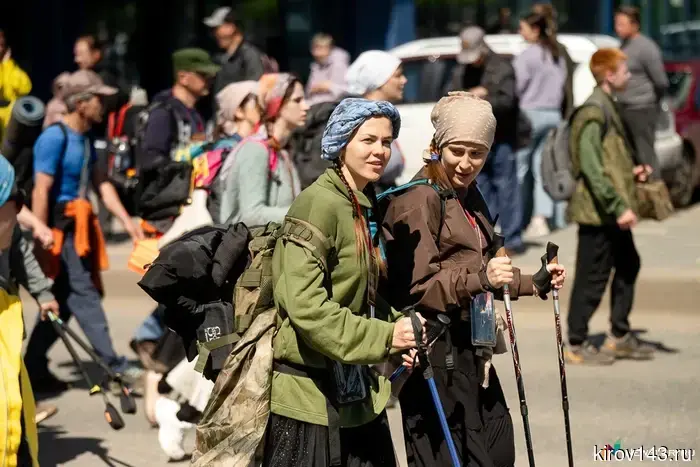 Pilgrims in Gorokhovo: the procession has entered the final stage.
This morning, at 3:00 AM, the column set off from the village of Monastyrskoye. Now, according to the schedule, the procession is in the village of Gorokhovo, where the Divine Liturgy is taking place. Ahead is the most difficult stretch of the journey to Velikoretskoe through forests and rough terrain.
Pilgrims in Gorokhovo: the procession has entered the final stage.
This morning, at 3:00 AM, the column set off from the village of Monastyrskoye. Now, according to the schedule, the procession is in the village of Gorokhovo, where the Divine Liturgy is taking place. Ahead is the most difficult stretch of the journey to Velikoretskoe through forests and rough terrain.
 The culprit of the large fire in Slobodskoy faces a sentence.
The man can also be fined a large amount.
The culprit of the large fire in Slobodskoy faces a sentence.
The man can also be fined a large amount.
 It became known which streets will be closed on June 8 in Kirov.
On June 8, a number of streets in Kirov will be closed due to the return of the Velikoretsky cross procession.
It became known which streets will be closed on June 8 in Kirov.
On June 8, a number of streets in Kirov will be closed due to the return of the Velikoretsky cross procession.
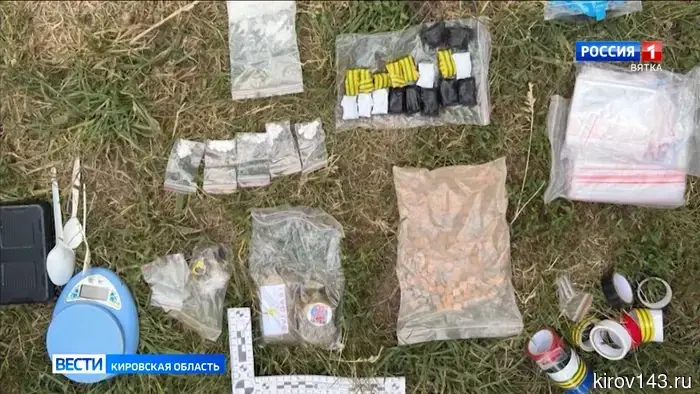 В Кирове была осуждена участница организованной преступной группы за продажу наркотиков.
Ленинский районный суд Кирова вынес решение по уголовному делу, касающемуся 37-летней соучастницы организованной преступной группы, занимающейся продажей наркотиков. Женщину осудили по нескольким статьям Уголовного Кодекса. Об этом сообщили в пресс-службе областной прокуратуры.
В Кирове была осуждена участница организованной преступной группы за продажу наркотиков.
Ленинский районный суд Кирова вынес решение по уголовному делу, касающемуся 37-летней соучастницы организованной преступной группы, занимающейся продажей наркотиков. Женщину осудили по нескольким статьям Уголовного Кодекса. Об этом сообщили в пресс-службе областной прокуратуры.
 In Darovsky, they caught the driver responsible for the injuries of a girl and a guy.
New details have emerged about the accident involving the electric bicycle.
In Darovsky, they caught the driver responsible for the injuries of a girl and a guy.
New details have emerged about the accident involving the electric bicycle.
The recipe for authentic Russian okroshka has been named.
Okroshka is the main summer soup in Russia. But what makes it authentic? Culinary historian William Pokhlyobkin gave a clear answer: the base is only kvass, rye spirit, cucumbers, dill, green onions, mustard, horseradish, and sour cream. And Newsler.ru traced the journey of okroshka to our table.