
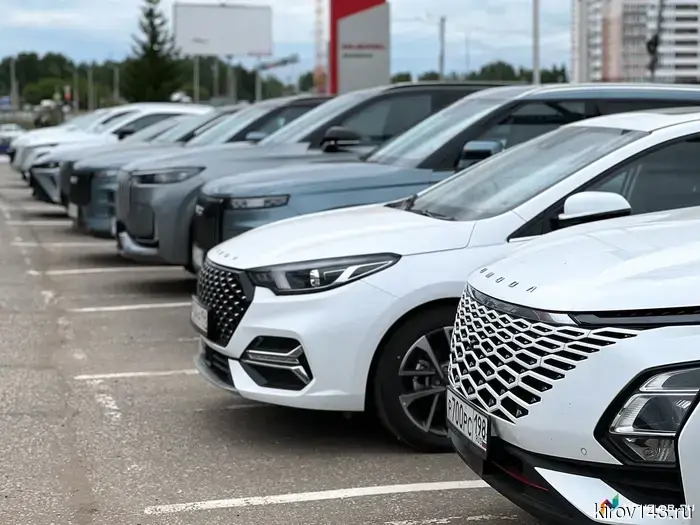
The maintenance of an electric car is 2.7 times cheaper than that of a gasoline car.
The Russian automotive market has faced an unexpected imbalance in the electric vehicle and hybrid segment. Since the beginning of 2026, the number of inquiries from potential buyers for new models with alternative powertrains has increased by 28%, while in the secondary market, it has even doubled. At the same time, the number of cars available for sale has decreased. In January, "green" transport accounted for almost 8% of the total supply, but by July, this share had dropped to 6%. The most significant decline was recorded in the new electric car segment — down 70% from January levels. Hybrid models lost 15%.
Among new electric vehicles, users were most attracted to the Avatr 11 (average price 7.45 million rubles), Avatr 12 (7.68 million), Evolute i-Joy (3.07 million), and Geely EX5 (4.43 million). In the secondary market, the leader is the Zeekr 001 with an average cost of 5.78 million rubles, as well as the Tesla Model 3 (3.18 million), Nissan Leaf (868 thousand), Tesla Model Y (4.6 million), and Hongqi E-HS9 (4.95 million).
In the hybrid segment, the leader has changed. The Lixiang brand, which held the top spot among new hybrids last year, has completely dropped out of the top five popular models. Its place has now been taken by the Zeekr 9X (12.3 million rubles), Voyah Free (6.21 million), Lynk & Co 900 (8.3 million), Geely EX5-EM-i (3.95 million), and Toyota Camry (4.85 million). Among used hybrids, the LiXiang L7 (5.78 million) and L9 (6.4 million) remain popular, as well as the Voyah Free (3.64 million), Toyota Prius (1.8 million), and Nissan Note (1.3 million).
As for operating costs, the dynamics here are mixed. From January to July 2026, the number of visits by electric cars to service stations increased by 23% compared to the same period last year. Hybrid owners, on the contrary, have been visiting service centers less frequently — by 4%. The total flow of popular electric and hybrid models exceeded 10,000 car visits. The most noticeable increase in inquiries among hybrids was shown by the Honda Freed II (+46%), Lixiang L7 (+49%), Lixiang L9 (+53%), and Voyah Free (+88%). In the electric vehicle group, the record holders were Zeekr 001 (+51%), BMW i3 (I01) (+60%), and Evolute i-Pro (+67%).
The average service check also varies depending on the type of powertrain. For the seven months of 2026, it amounted to 4,945 rubles for electric vehicles (up 7% year-on-year) and 8,447 rubles for hybrids (+9%). For comparison: vehicles with internal combustion engines cost owners an average of 13,219 rubles per visit, which is 12% more than a year ago.
Thus, the average expenses of owners of popular electric cars for one service visit turned out to be 2.7 times lower than the average across the network of auto services. These figures are provided in a study by the international network FIT SERVICE, which analyzed the dynamics of inquiries over the seven months of 2026.
However, experts point out an important nuance: directly comparing electric cars and internal combustion engine vehicles in terms of service costs would be incorrect. In Russia, the fleet of alternative vehicles mainly consists of relatively new cars with low mileage, while the average age of vehicles in the country has long exceeded 15 years. Essentially, this is a comparison of new and old cars. Moreover, electric cars are structurally simpler: the absence of an internal combustion engine relieves the owner from regular oil changes, oil filter replacements, and fuel system maintenance. Hybrids, on the other hand, combine both circuits — electric and traditional, which explains their intermediate position in terms of maintenance costs.
Analysts agree that the "green" transport segment in Russia is becoming increasingly noticeable, but its infrastructure — both service and trade — is still not keeping pace with the growing demand. And while savings on fuel and maintenance are obvious, qualified repairs for such vehicles remain a non-trivial task for many regions.
Другие Новости Кирова (НЗК)
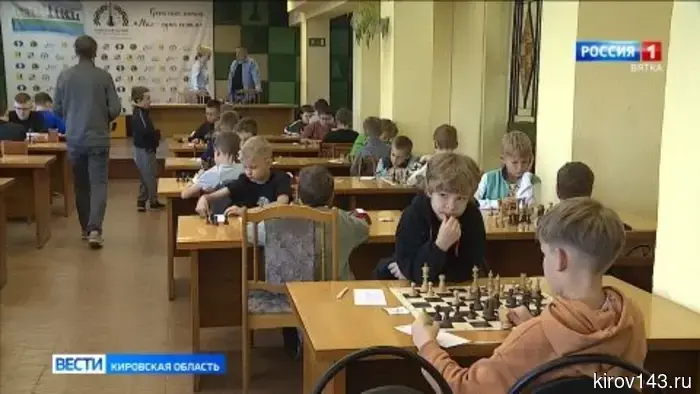 Сотня молодых шахматистов сражается за первое место на чемпионате Кировской области.
В клубе "Вятская ладья" проходит чемпионат Кировской области по шахматам для юношей и девушек. За звание сильнейшего борются лучшие игроки со всего региона. Подробности в материале Елены Крыловой. Примерно сто участников из Кирова, Кирово-Чепецка, Вятских Полян и Омутнинска принимают участие в соревнованиях.
Сотня молодых шахматистов сражается за первое место на чемпионате Кировской области.
В клубе "Вятская ладья" проходит чемпионат Кировской области по шахматам для юношей и девушек. За звание сильнейшего борются лучшие игроки со всего региона. Подробности в материале Елены Крыловой. Примерно сто участников из Кирова, Кирово-Чепецка, Вятских Полян и Омутнинска принимают участие в соревнованиях.
 In the Kirov region, a woman is wanted for owing child support.
The bailiffs are asking residents of the region to help locate 36-year-old Natalia Dudina from Yurya. She is evading child support payments for her minor child.
A drunk without rights was "chased" through two regions.
The driver of a VAZ-2110 tried to escape from the State Traffic Inspectorate in Yoshkar-Ola and was eventually detained in the Kirov region. During the chase, he managed to violate traffic rules 26 times.
In the Kirov region, a woman is wanted for owing child support.
The bailiffs are asking residents of the region to help locate 36-year-old Natalia Dudina from Yurya. She is evading child support payments for her minor child.
A drunk without rights was "chased" through two regions.
The driver of a VAZ-2110 tried to escape from the State Traffic Inspectorate in Yoshkar-Ola and was eventually detained in the Kirov region. During the chase, he managed to violate traffic rules 26 times.
 A 14-year-old teenager was injured in a traffic accident near Slobodskoy.
The accident occurred on the evening of August 28 on the federal highway. The driver of the "Lada" and a 14-year-old passenger on the motorcycle were injured.
A 14-year-old teenager was injured in a traffic accident near Slobodskoy.
The accident occurred on the evening of August 28 on the federal highway. The driver of the "Lada" and a 14-year-old passenger on the motorcycle were injured.
 The end of summer is like a small sorrow: a psychologist explained why melancholy is normal.
August is coming to an end, and with it goes the feeling of endless days, lightness, and freedom. Familiar? Clinical psychologist Alexander Votintsev explains why we feel this way at the end of summer and how to cope with this state without losses.
The end of summer is like a small sorrow: a psychologist explained why melancholy is normal.
August is coming to an end, and with it goes the feeling of endless days, lightness, and freedom. Familiar? Clinical psychologist Alexander Votintsev explains why we feel this way at the end of summer and how to cope with this state without losses.
 In the Kirov region, the widow of a pensioner who died in a car accident was paid 300 thousand.
A man died after being hit by a car while crossing the road in an unauthorized place.
In the Kirov region, the widow of a pensioner who died in a car accident was paid 300 thousand.
A man died after being hit by a car while crossing the road in an unauthorized place.
The maintenance of an electric car is 2.7 times cheaper than that of a gasoline car.
While the interest of Russians in "green" transport is hitting records, the supply in the market is rapidly dwindling. Analysts have noted a paradox: electric vehicles are arriving at service centers 23% more often, but the average bill for their maintenance remains minimal compared to cars running on traditional fuel.