

Thirteen goats died on the "Oktyabrskoye" farm.
On August 20, Newsler.ru reported on the situation at the "Oktyabrskoye" farm in the Svechinsky district, where veterinarians arrived to vaccinate the animals. What they saw seriously concerned them: there were about 400 goats on the farm, many of which were severely emaciated. The animals looked so thin that their ribs and bones were clearly visible under their skin, and almost nothing remained of their former well-fed appearance. According to sources, the goats were in extremely poor condition and appeared to have been deprived of feed for a long time. The photographs taken by specialists showed exhausted and weakened animals, some of which could barely stand. The scene raised serious questions about the conditions in which the goats were kept on the farm.
On August 28, the Veterinary Department of the Kirov region responded to Newsler.ru's inquiry about the situation with the animals at this agricultural enterprise. The response indicated that no infectious diseases were found among the goats; however, since the beginning of 2026, the death of 13 animals had been recorded on the farm. This information draws attention because just on August 20, the Kirov regional government published a statement about the situation at the farm and also referred to data from the Veterinary Department. At that time, the agency stated that no cases of animal deaths had been recorded. Now the official wording is different: "The cases of death recorded on the farm are related to non-infectious diseases and amount to 13 heads since the beginning of 2026."
Does this mean that 13 goats died between August 20 and 28, or are we talking about animals that died earlier but were not reflected in the previous message? From the response of the Veterinary Department, it cannot be determined. The agency does not specify the dates of death for each of the 13 heads.
At the same time, it is important to understand what the veterinarians mean by "non-infectious etiology." These are diseases that are not related to infection and are not transmitted from animal to animal. The causes of such diseases can include, in particular, feeding violations, lack of nutrients, unfavorable living conditions, poisoning, and other factors. One possible consequence of insufficient or inadequate nutrition is alimentary dystrophy — the exhaustion of the body.
On August 20, the bankruptcy manager of "Oktyabrskoye," Elena Kuchumova, stated to the regional government that the animals were not starving. "We take care of the animals. They are not starving. We feed them regularly with hay and grain. We milk them every day," she said.
What is happening with the goats now? There are discrepancies in the information about the number of animals. On August 20, the government reported that all 280 goats would be transferred to a new owner and taken to another region by August 25. The statement also mentioned that permission for transportation had already been obtained and that the situation was under the control of the regional government.
In the recent response from the Veterinary Department, the picture looks somewhat different. According to the agency, in August, 160 heads of small cattle were sold and transported from "Oktyabrskoye" to another region. One more head was sent to another district of the Kirov region. Currently, about 100 animals are under quarantine at the farm. Thus, it is now officially confirmed that 161 heads have been exported and that there are about 100 goats remaining on the farm. However, it was previously stated that all 280 animals would be transferred to the new owner by August 25. From the response of the Veterinary Department, it is unclear whether these figures are related to different stages of a single transaction or if the plans for transferring part of the herd have changed.
Veterinary examinations of the farm were not conducted. Another detail concerns the nature of the activities carried out. In its response to Newsler.ru, the Veterinary Department specifically emphasized that a veterinary and sanitary examination of the farm by the state veterinary service was not conducted in 2026. However, as early as the end of March, the small cattle were placed under preventive quarantine for subsequent sale to a new owner.
State veterinary service specialists conducted planned preventive activities in the spring and summer: they examined the animals, took blood samples for research, checked them for infectious diseases, vaccinated them against particularly dangerous diseases, and treated them for parasites. As a result of these activities, the animals were deemed clinically healthy. No infectious, including particularly dangerous, diseases were detected. The agency emphasized separately: "Currently, LLC 'Oktyabrskoye' is free from infectious, including particularly dangerous, diseases."
Thus, the absence of infections among the goats is confirmed; however, based on this data, it cannot be claimed that there were no problems with the conditions of keeping or feeding on the farm. The Veterinary Department attributes the issues of feeding, watering, and keeping the animals to the responsibilities of the bankruptcy manager. The Veterinary Department also reported that it had sent information about the possibility of acquiring breeding small cattle from "Oktyabrskoye" to the relevant authorities in other regions.
Другие Новости Кирова (НЗК)
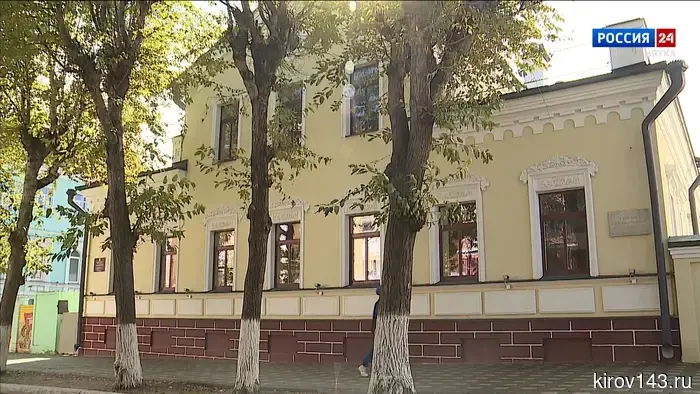 Осенью Вятская кунсткамера снова откроет свои двери.
Здание Вятской кунсткамеры, известное многим с детства, переживает свое второе рождение. В настоящее время здесь завершаются финальные работы, и уже этой осенью архитектурный памятник откроет свои двери в совершенно новом виде. Алина Смирнова расскажет подробнее. Для немногих кировчан это здание является частью их личной истории.
Осенью Вятская кунсткамера снова откроет свои двери.
Здание Вятской кунсткамеры, известное многим с детства, переживает свое второе рождение. В настоящее время здесь завершаются финальные работы, и уже этой осенью архитектурный памятник откроет свои двери в совершенно новом виде. Алина Смирнова расскажет подробнее. Для немногих кировчан это здание является частью их личной истории.
 In the Kirov region, the production of textiles has increased, while the production of medicines, furniture, and clothing has decreased.
According to Kirovstat, from January to July 2026, the industrial production index in the Kirov region amounted to 106.8% compared to the corresponding period of 2025.
Соколов поговорил о том, как кировские заводы могут выйти на федеральный уровень в судостроении.
Соколов рассмотрел возможность выхода кировских заводов на федеральный уровень в судостроении.
In the Kirov region, the production of textiles has increased, while the production of medicines, furniture, and clothing has decreased.
According to Kirovstat, from January to July 2026, the industrial production index in the Kirov region amounted to 106.8% compared to the corresponding period of 2025.
Соколов поговорил о том, как кировские заводы могут выйти на федеральный уровень в судостроении.
Соколов рассмотрел возможность выхода кировских заводов на федеральный уровень в судостроении.
 ВТБ и «Онлайн Патент» определили самых известных классиков русской литературы среди представителей бизнеса.
ВТБ и «Онлайн Патент» определили самых востребованных классиков русской литературы среди бизнеса.
В Кировской области создают мастер-план для микрорайона «Нижние Черемушки».
В Кировской области создается мастер-план для микрорайона «Нижние Черемушки».
ВТБ и «Онлайн Патент» определили самых известных классиков русской литературы среди представителей бизнеса.
ВТБ и «Онлайн Патент» определили самых востребованных классиков русской литературы среди бизнеса.
В Кировской области создают мастер-план для микрорайона «Нижние Черемушки».
В Кировской области создается мастер-план для микрорайона «Нижние Черемушки».
Thirteen goats died on the "Oktyabrskoye" farm.
The Veterinary Department of the Kirov Region reported on the condition of the goats at the bankrupt farm in the Svechinsky District. At the same time, the new information from the department contradicts what it reported to the regional government a week ago.