

School: survive at any cost
Bullying. Or, as it was previously called — school harassment — is a problem that is practically ubiquitous. Harassment existed during the Soviet period and in the times of the decline of the socialist system, and school harassment exists now. Almost everyone has similar stories in their memory, where they were on one side or the other — the executioner or the victim. Rarely could anyone remain aloof from the conflict and the harassment of an outcast who, for unknown reasons, did not please their classmates.
Alien Element
Psychologists agree that victims of bullying are not chosen for their shortcomings, but for convenience. Simply put, bullying is not a conflict between the strong and the weak, but a way to stabilize the group by excluding the "alien element." Adolescents aged 12 to 15 are in a stage of identity crisis, and it is vital for them to belong to a "pack." The victim becomes the person who, for some reason, stands out from the overall picture of this pack, the one on whom the boundaries of what is acceptable are tested. And absolutely anyone can become a target for school bullying for absolutely any reason, the main one being their difference.
"Children come to me who have already been labeled. 'Show-off,' 'weird,' 'not like the others.' But behind the label is a living child who just wants to be noticed and accepted. The difficulty is that adults often take the easy way out: instead of understanding the situation, they remove the victim — transferring them to another class or school. I worked with a boy who had to change several schools for this reason," said one of Kirov's school psychologists, Alexey.
Alexey (with the student's permission) shared his story, which fortunately ended well: the child was able to withstand school bullying. "I was bullied since kindergarten. First, it was the 'greedy kings' with toys, then came the shoves, the boycott in chats, the dirty rumors. Because of them, I had to leave school. It was scary and hurtful, but I realized early on: their aggression is about them, not me. I saved myself through creativity. While my classmates asserted themselves at my expense, I learned to craft. In the ninth grade, my project was stolen and then returned. That’s when I finally decided: it’s not hatred, it’s envy. My passion became my shield. In the new school, already in high school, I stopped giving the bullies what they expected. They provoked me — I smiled. I knew who I was and where I was going. I passed my exams with high scores, while they remained stuck in their aggression," said the former student.
"Bullying is not a quarrel between children. It is a symptom that basic things in the group are broken — safety, respect, empathy. This boy had to go through several schools. He coped through creativity and the ability not to give the desired reaction. It worked. But a child should not have to be a superhero to deserve safety. He explained bullying as envy, and for him, it became a salvation — that’s how he preserved his self-esteem. But it is wrong to reduce bullying only to envy; the reasons can be different, and our task is to create an environment where there is no place for aggression.
In my work with the class, I try not to label but to work with the dynamics of the group. It is important not to force the victim to 'be simpler' or 'not pay attention,' but to work with the aggressors and those who silently watch, including the parents of the entire class. And, of course, to help the child find their support — but not to make this support the only condition. That boy did not break, and that’s great. School should not be a place from which one needs to run away to find oneself. The victim is not to blame. They have the right to protection, and we, the adults, have the duty to provide it," Alexey said.
"School harassment is not just 'children's squabbles' and not a stage of growing up that 'will pass on its own.' It is systematic, targeted violence, where there is a persistent imbalance of power: a group or a stronger child regularly inflicts harm on someone who cannot effectively defend themselves. The problem remains extremely relevant: according to various studies, a significant portion of students face bullying in one form or another, and the consequences can be severe and long-lasting — from decreased academic performance and school anxiety to serious psychological difficulties," said clinical psychologist Alexander Votintsev from the "Sovermed" medical centers.
The specialist notes that parents and educators often miss the first alarming signals: they attribute a child's withdrawal to "age-related" issues, and aggressive jokes from classmates to "ordinary childhood rudeness."
Significance at the Expense of Others
Why do children start bullying? Sometimes it seems that bullying starts "over trivial matters": someone dresses differently, speaks differently, or answers a bit slower at the board. But, as Alexander Votintsev reported, this is almost always not about personal grievances against the child, but about the characteristics of the children's collective and the difficulties of the bullies themselves.
The desire to feel stronger and more significant. For some children, humiliating another is a way to quickly "earn" authority. Especially if they have a lot of insecurity inside: aggression helps hide fear and show, "I am the boss here."
Another reason is the fear of becoming the next target. This explains why bullying is supported not by one child, but by an entire group.
The influence of a prominent leader. In any class, there is a child whose opinion is listened to. If such a leader chooses someone as a "target," the others often follow suit: this is how they try to earn his approval or simply do not want to go against the majority.
A habitual model of behavior. If a child is constantly criticized, scolded, or conflicts are resolved with shouting at home, they may sincerely believe that pushing and mocking is normal. For them, it is just a way of communicating that they brought from home.
Relieving tension. Sometimes a child is going through a tough period themselves: quarrels at home, strong stress, self-esteem issues. And instead of saying, "I feel bad," they start taking it out on others.
Why does bullying become "the business of the whole class"? It is not that all the children in the class are "bad." Often, a simple logic works: when one person starts to mock, and adults do not stop it, the others read this as a silent permission: "Then it’s allowed." Gradually, roles are established in the class: there is the one who is laughed at, those who laugh, and those who simply remain silent. And the longer this lasts, the harder it is for the child to step out of the role of "target."
The most important thing to remember is that the victim of bullying is never to blame for being hurt.
If you see signs of bullying — do not try to find the cause in the child's characteristics. It is better to immediately focus on how to protect them and change the rules in the collective.
Conflict or Bullying?
Children quarrel — this is normal. This is how they learn to defend their interests, make up, and negotiate. It is important to be able to distinguish conflict from bullying: this determines how to properly help the child.
The main difference is in the nature of the situation. A conflict is a clash of interests, where both sides are roughly equal and can influence the outcome. Bullying is constant pressure, where the forces are inherently unequal, and the bully's goal is not to solve the problem but to humiliate and dominate.
Red Flags
If you suspect not just a quarrel, but bullying, pay attention to such changes:
• the child increasingly does not want to go to school, asks to stay home;
• has become withdrawn, does not talk about classmates, avoids conversations about school;
• their belongings go missing or are damaged, they have unexplained bruises;
• their mood changes sharply: after school, they often cry, get irritated, or look depressed;
• they avoid group activities, do not want to participate in class events.
"A child who is being bullied often does not tell even their closest ones about it. And it is not about 'stubbornness' or a desire to 'complicate everything.' For them, silence is a way to cope with an unbearable situation. The main reasons why a child hides bullying. Fear that it will get worse. The most common reason: the child is sure that after a complaint, the bullies will get angry and start bullying even more. Sometimes aggressors directly threaten: 'If you tell, it will be worse.' And the child believes them. Shame and guilt. They may feel that they themselves 'did something wrong,' 'are too weak,' 'cannot stand up for themselves.' Thoughts swirl in their head: 'Maybe I really am somehow not like everyone else.' Because of this, they feel ashamed to admit it even to their mom. They fear not being heard or receiving reproach. If previous complaints were met with responses like 'figure it out yourself,' 'don't be a whiner,' 'just ignore it,' the child concludes: talking is useless or even dangerous. They do not understand that this is indeed bullying. For some children, constant mockery and boycotting become 'the norm': 'That’s how we do it in our class.' They do not see it as a problem that needs to be discussed with adults.
They fear losing the remnants of status and friends. Even if they have almost no friends, the child may cling to any shred of acceptance. A complaint seems risky: 'If I tell, they will
Другие Новости Кирова (НЗК)
 303 thousand Kirov residents received support for paying utility services.
According to Kirovstat, in the first half of 2026, 2 billion 382 million rubles were allocated for social support from budgets of all levels.
303 thousand Kirov residents received support for paying utility services.
According to Kirovstat, in the first half of 2026, 2 billion 382 million rubles were allocated for social support from budgets of all levels.
 Мы вместе – следовательно, мы непобедимы: Народная программа «Единой России» откликается на нужды миллионов граждан страны.
Мы вместе – значит, мы неустрашимы: Народная программа «Единой России» учитывает потребности миллионов граждан страны.
Мы вместе – следовательно, мы непобедимы: Народная программа «Единой России» откликается на нужды миллионов граждан страны.
Мы вместе – значит, мы неустрашимы: Народная программа «Единой России» учитывает потребности миллионов граждан страны.
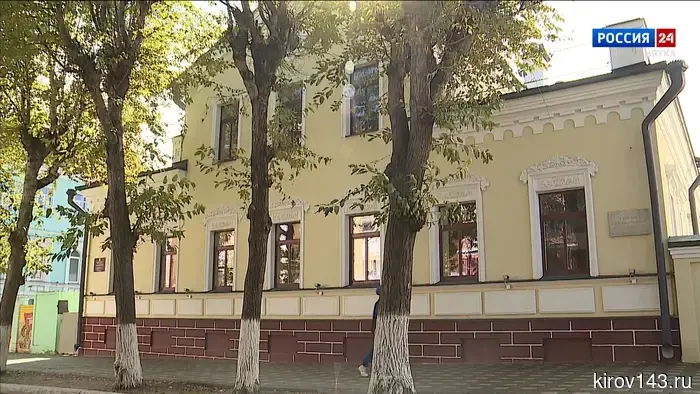 Осенью Вятская кунсткамера снова откроет свои двери.
Здание Вятской кунсткамеры, известное многим с детства, переживает свое второе рождение. В настоящее время здесь завершаются финальные работы, и уже этой осенью архитектурный памятник откроет свои двери в совершенно новом виде. Алина Смирнова расскажет подробнее. Для немногих кировчан это здание является частью их личной истории.
Осенью Вятская кунсткамера снова откроет свои двери.
Здание Вятской кунсткамеры, известное многим с детства, переживает свое второе рождение. В настоящее время здесь завершаются финальные работы, и уже этой осенью архитектурный памятник откроет свои двери в совершенно новом виде. Алина Смирнова расскажет подробнее. Для немногих кировчан это здание является частью их личной истории.
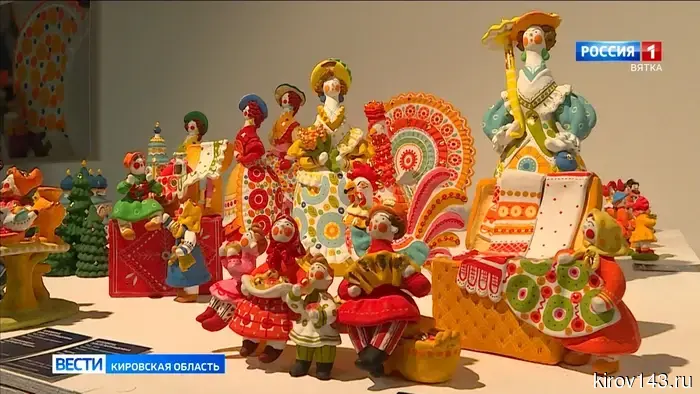 Дымковская игрушка будет представлена на международной выставке в Индии.
Международная выставка промышленности «ИННОПРОМ. Индия» состоится впервые с 9 по 11 сентября в Нью-Дели. Как сообщили в правительстве Кировской области, регион тоже примет участие в выставке. На мероприятии будет представлен вятский народный промысел – дымковская игрушка. В рамках экспозиции свои изделия…
Дымковская игрушка будет представлена на международной выставке в Индии.
Международная выставка промышленности «ИННОПРОМ. Индия» состоится впервые с 9 по 11 сентября в Нью-Дели. Как сообщили в правительстве Кировской области, регион тоже примет участие в выставке. На мероприятии будет представлен вятский народный промысел – дымковская игрушка. В рамках экспозиции свои изделия…
 In the East, a full-cycle production of domestic antibiotics was presented.
Today, August 28, at the production site of the "Vostok" plant in the settlement of Vostochny in the Omutninsky District of the Kirov Region, the Russian full-cycle production of the antibiotic tobramycin is being presented. An expert discussion on its application in pediatric and hospital practice is also taking place here.
In the East, a full-cycle production of domestic antibiotics was presented.
Today, August 28, at the production site of the "Vostok" plant in the settlement of Vostochny in the Omutninsky District of the Kirov Region, the Russian full-cycle production of the antibiotic tobramycin is being presented. An expert discussion on its application in pediatric and hospital practice is also taking place here.
 In the Kirov region, the production of textiles has increased, while the production of medicines, furniture, and clothing has decreased.
According to Kirovstat, from January to July 2026, the industrial production index in the Kirov region amounted to 106.8% compared to the corresponding period of 2025.
In the Kirov region, the production of textiles has increased, while the production of medicines, furniture, and clothing has decreased.
According to Kirovstat, from January to July 2026, the industrial production index in the Kirov region amounted to 106.8% compared to the corresponding period of 2025.
School: survive at any cost
Almost everyone knows the old, Soviet song about the wonderful school years. Its words evoke a quiet sadness and nostalgia for the times when life seemed easy, and an amazing, mysterious, and undoubtedly beautiful future awaited everyone. However, for some, the school years were overshadowed by a serious problem, and those who faced it feel anything but nostalgia for their school years; instead, they feel relief that "they cannot be brought back."