

The youth have stopped chasing quick money.
In mid-2026, the results of a large-scale study were published, which examined the everyday lives, fears, and real actions of Russians aged 14 to 28 for several months. The project involved analysts from hh.ru, the SALT agency, and ONIN, as well as the "My Shift" service — they joined forces to understand what truly drives young people when entering the labor market.
The first finding recorded by the researchers was a high level of labor activity among the youngest. It turned out that 18% of students in grades 8-11 are already combining their studies with work. At the same time, the motivation of schoolchildren is rarely related to necessity: much more often, they perceive part-time work as a way to "try on" adult life, earn their first income, and understand what they are capable of, while still retaining the option to step back without serious consequences. This is why flexible formats with short shifts are preferred over classic employment contracts.
The second important conclusion concerns education. The widespread belief that diplomas have devalued and are only needed "for show" was not confirmed. The data showed a clear pattern: among those working in their field, the proportion of people with higher education is almost twice as high (65%) as among those working in other areas. This means that for a significant portion of the audience, university remains a conscious stage of professional development.
The third stereotype that the study sent to the past is the perception of youth as a chaotic mass, constantly changing jobs in pursuit of income. In reality, the behavior of young people is closely tied to their life stage. At ages 16-20, flexibility, the ability to combine work with studies, and exposure to different fields are the top priorities. But by ages 23-28, priorities shift: the importance of stable income, clear conditions, and financial independence increases. In other words, along with the emergence of domestic obligations, the requirements for employers mature as well.
A separate insight is the emotional perception of the job search process itself. Contrary to expectations, fear and anxiety do not dominate here. Young people feel more curiosity and interest in themselves. However, the main problem remains — uncertainty. They find it difficult to understand how to properly describe their minimal experience, what skills are currently in demand, and where to move next.
The study showed that it is useless to appeal to age when engaging in dialogue with young job seekers. A school student balancing studies and their first job, a student juggling classes and shifts, a graduate choosing a profession, and a young specialist seeking stability — all of them live in different coordinate systems. The key task of modern employment services is not just to offer vacancies but to help each of them recognize their own path.
14 minutes to warm up: how much time Kirov residents spend before starting their workday
56% of Kirov residents live by the principle that "the workday is just the beginning"
Residents of the Kirov region work at their first job for an average of 5.5 years
Другие Новости Кирова (НЗК)
 Industrial production in the Kirov region fell by almost 6%.
Kirovstat has published new data about our region.
Industrial production in the Kirov region fell by almost 6%.
Kirovstat has published new data about our region.
 В Кирове 8 июля будут закрыты некоторые улицы.
В Кирове 8 июля состоится крестный ход, приуроченный ко дню памяти святых Петра и Февронии и ко дню семьи, любви и верности, сообщили в городской администрации. В храме Иоанна Предтечи будет проведена божественная литургия, после которой крестный ход отправится от церкви к Александровскому саду и памятнику святых.
В Кирове 8 июля будут закрыты некоторые улицы.
В Кирове 8 июля состоится крестный ход, приуроченный ко дню памяти святых Петра и Февронии и ко дню семьи, любви и верности, сообщили в городской администрации. В храме Иоанна Предтечи будет проведена божественная литургия, после которой крестный ход отправится от церкви к Александровскому саду и памятнику святых.
 Kirov doctors performed a complex surgery that federal centers refused to undertake.
Specialists from the Center for Traumatology, Orthopedics, and Neurosurgery assisted a 69-year-old patient with severe comorbidities.
Kirov doctors performed a complex surgery that federal centers refused to undertake.
Specialists from the Center for Traumatology, Orthopedics, and Neurosurgery assisted a 69-year-old patient with severe comorbidities.
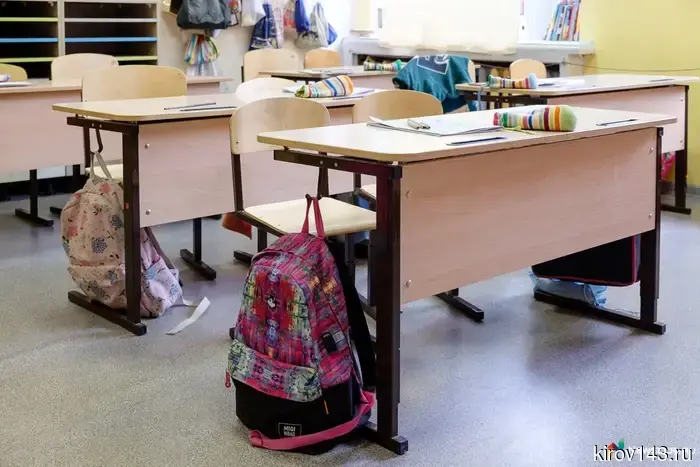 The Ministry of Education has excluded homework from the curriculum for first-grade classes.
Starting from September 2026, Russian first-graders will officially stop receiving homework assignments. The corresponding order from the ministry makes changes to the previously existing methodological recommendations and completely relieves children from extracurricular academic workload.
The Ministry of Education has excluded homework from the curriculum for first-grade classes.
Starting from September 2026, Russian first-graders will officially stop receiving homework assignments. The corresponding order from the ministry makes changes to the previously existing methodological recommendations and completely relieves children from extracurricular academic workload.
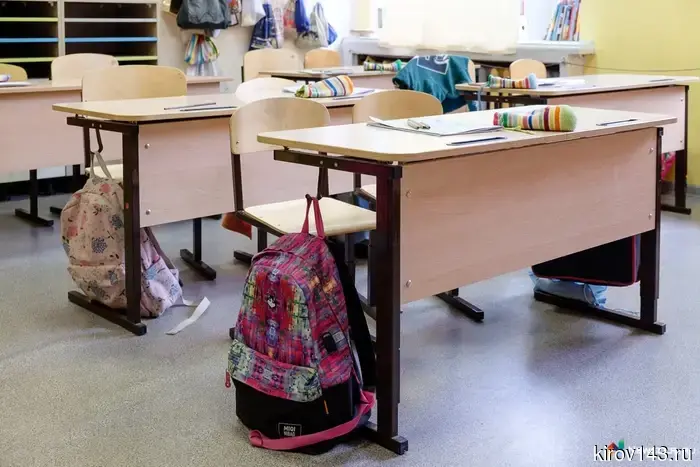 The Ministry of Education has excluded homework from the curriculum for first-grade classes.
Starting from September 2026, Russian first-graders will officially stop receiving homework assignments. The corresponding order from the ministry makes changes to the previously existing methodological recommendations and completely relieves children from extracurricular academic workload.
The Ministry of Education has excluded homework from the curriculum for first-grade classes.
Starting from September 2026, Russian first-graders will officially stop receiving homework assignments. The corresponding order from the ministry makes changes to the previously existing methodological recommendations and completely relieves children from extracurricular academic workload.
 Доходы от использования лесов в регионе составили более миллиарда рублей.
Подведены итоги доходов от лесов Кировской области за первое полугодие 2026 года. В областном правительстве сообщили, что в консолидированный бюджет Российской Федерации было направлено свыше 1,19 млрд рублей в качестве платежей за использование лесных ресурсов. «Лесные» доходы в бюджет Кировской области за указанный период составили
Доходы от использования лесов в регионе составили более миллиарда рублей.
Подведены итоги доходов от лесов Кировской области за первое полугодие 2026 года. В областном правительстве сообщили, что в консолидированный бюджет Российской Федерации было направлено свыше 1,19 млрд рублей в качестве платежей за использование лесных ресурсов. «Лесные» доходы в бюджет Кировской области за указанный период составили
The youth have stopped chasing quick money.
Schoolchildren, students, and young professionals turned out to be so different in their career expectations that it no longer makes sense to talk about a common "Generation Z" or "Alpha." A joint project by analysts and marketers showed that the requests of a 16-year-old teenager and a 26-year-old graduate differ more than those of people of different ages did twenty years ago, and the most persistent stereotypes about laziness and the pursuit of easy money crumbled at the first encounter with the numbers.