
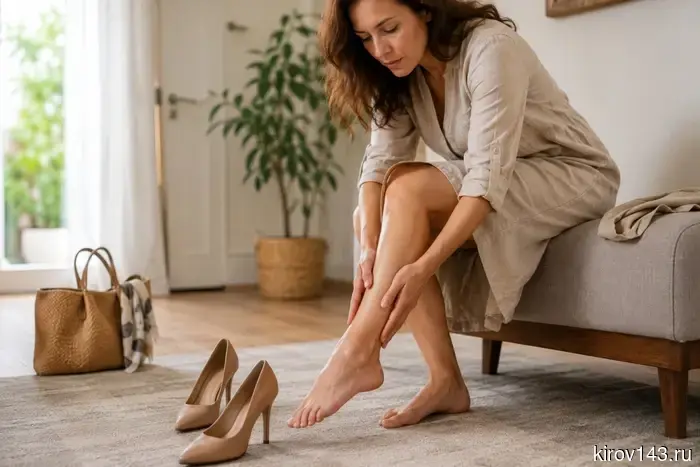
Why do legs swell in summer: when is it normal and when is it a reason to see a doctor
Understanding is aided by candidate of medical sciences, associate professor of Pirogov University, Yaroslav Gurin.
Quick test: why do your legs swell?
Answer three questions.
1. When do the swellings appear? A) In the evening B) Already in the morning after sleep
2. If you press your finger on the shin, the dent: A) Lasts for several seconds B) The skin quickly levels out but remains cold or pale
3. The swelling is accompanied by: A) Heaviness, bursting, fatigue in the legs B) Shortness of breath, weakness, bluish lips
If you have more answers A, it is likely about physiological summer swellings.
If more answers B, it is better not to delay a visit to the doctor.
Why do legs swell more often in the heat?
The reason is in the work of the blood vessels.
In the heat, the body tries to cool down, so the blood vessels expand. Because of this, blood rises more slowly from the legs to the heart.
— As a result, some of the fluid begins to leak into the tissues, and the lymphatic system does not always manage to drain it, — explains the doctor.
The situation is aggravated by:
prolonged sitting;
sedentary lifestyle;
long standing;
tight shoes;
lack of movement.
Therefore, office workers and people who spend a lot of time on their feet often face swellings especially in summer.
Can hands also swell?
Yes. Especially in hot weather and during prolonged computer work. If you sit for a long time with bent arms, lymphatic drainage may worsen. Hence the feeling of swelling in the fingers and rings that are hard to remove in the evening.
What will help?
1. Raise your legs above heart level Even 15–20 minutes of rest in this position helps reduce swelling.
2. Move more Walking is the best natural "pump" for veins and the lymphatic system.
3. Drink enough water Many mistakenly start drinking less out of fear of swelling.
In fact, dehydration can only worsen the situation.
4. Avoid tight clothing and shoes In summer, it is especially important not to constrict the blood vessels.
5. If necessary, use compression garments But it’s better — after consulting a specialist.
When is swelling a warning signal?
Sometimes swellings can indicate problems with the heart, kidneys, or veins.
You should see a doctor if:
the swellings do not go away by morning;
shortness of breath has appeared;
the swelling occurred suddenly;
only one leg is swelling;
pain, redness, or hardening has appeared;
the skin has changed color.
— It is especially important not to self-medicate and not to take diuretics without a doctor's prescription, — warns the expert.
The main thing to remember is that small swellings in the heat are often a physiological reaction of the body.
But if other symptoms accompany the swellings or they become permanent, this is already a reason to undergo an examination.
Другие Новости Кирова (НЗК)
 Money has overtaken family: Kirov youth have re-evaluated their goals for the five-year plan.
Over the year, the share of Kirov residents under 35 who dream of wealth has increased from 53% to 62%. This has pushed even traditional priorities such as starting a family and having children to second place. At the same time, the majority of respondents already live in their own housing, and one in four saves regularly.
Money has overtaken family: Kirov youth have re-evaluated their goals for the five-year plan.
Over the year, the share of Kirov residents under 35 who dream of wealth has increased from 53% to 62%. This has pushed even traditional priorities such as starting a family and having children to second place. At the same time, the majority of respondents already live in their own housing, and one in four saves regularly.
 "Moves with difficulty": a 55-year-old man is being searched for in the Urzhum district
Volunteers of the search and rescue team have published a new alert.
"Moves with difficulty": a 55-year-old man is being searched for in the Urzhum district
Volunteers of the search and rescue team have published a new alert.
 Российские исследователи создали переносное устройство для лечения рака кожи.
Исследователи Иркутского политеха разработали прототип устройства для лечения плоскоклеточного рака кожи. Об этом информирует "Наука.РФ". Прибор использует фотосенсибилизаторы и светодиоды для уничтожения злокачественных образований, при этом не повреждая здоровые ткани. В настоящее время разработка проходит этап тестирования.
Российские исследователи создали переносное устройство для лечения рака кожи.
Исследователи Иркутского политеха разработали прототип устройства для лечения плоскоклеточного рака кожи. Об этом информирует "Наука.РФ". Прибор использует фотосенсибилизаторы и светодиоды для уничтожения злокачественных образований, при этом не повреждая здоровые ткани. В настоящее время разработка проходит этап тестирования.
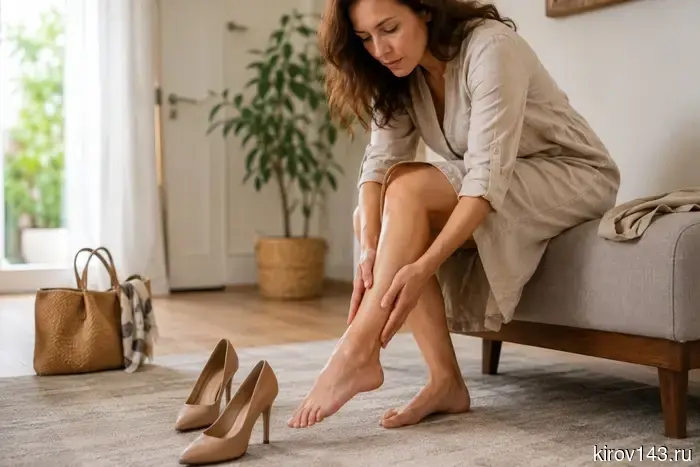 Why do legs swell in summer: when is it normal and when is it a reason to see a doctor
In the summer, many notice an unpleasant thing: by evening, shoes become tight, there are marks on the skin from socks, and the legs feel as if they are "filled with lead." Is this a normal reaction of the body to the heat or a signal of health problems?
Why do legs swell in summer: when is it normal and when is it a reason to see a doctor
In the summer, many notice an unpleasant thing: by evening, shoes become tight, there are marks on the skin from socks, and the legs feel as if they are "filled with lead." Is this a normal reaction of the body to the heat or a signal of health problems?
 56% of Kirov residents live by the principle that "the workday is just the beginning."
While some argue about the balance between life and work, most residents of Kirov have long made the choice in favor of extra hours. Fresh data from personnel studies paints an unusual portrait of the modern employee: the older a person gets, the less often they stay late in the office, while with an increase in salary, the willingness to work outside of regular hours, on the contrary, rapidly increases.
56% of Kirov residents live by the principle that "the workday is just the beginning."
While some argue about the balance between life and work, most residents of Kirov have long made the choice in favor of extra hours. Fresh data from personnel studies paints an unusual portrait of the modern employee: the older a person gets, the less often they stay late in the office, while with an increase in salary, the willingness to work outside of regular hours, on the contrary, rapidly increases.
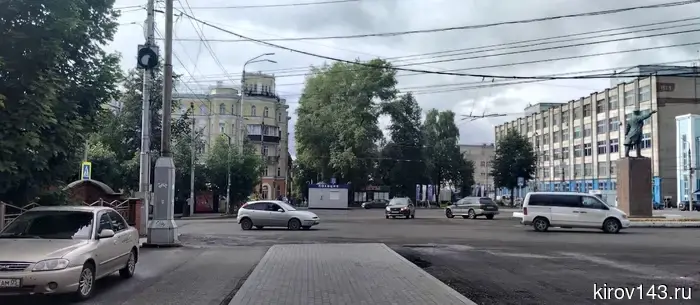 Подрядчик намерен начать асфальтирование площади Лепсе в Кирове.
При хороших погодных условиях асфальтирование площади Лепсе стартует уже сегодня, сообщила городская администрация. Подрядчик планирует начать работы в 19:00 и завершить их в ночь с 30 июня на 1 июля. Одновременно будет укладываться новый асфальт на оставшейся части проезжей части улицы.
Подрядчик намерен начать асфальтирование площади Лепсе в Кирове.
При хороших погодных условиях асфальтирование площади Лепсе стартует уже сегодня, сообщила городская администрация. Подрядчик планирует начать работы в 19:00 и завершить их в ночь с 30 июня на 1 июля. Одновременно будет укладываться новый асфальт на оставшейся части проезжей части улицы.
Why do legs swell in summer: when is it normal and when is it a reason to see a doctor
In the summer, many notice an unpleasant thing: by the evening, shoes become tight, there are marks from socks on the skin, and the legs feel as if they are "filling with lead." Is this a normal reaction of the body to heat or a signal of health problems?