
.jpg)
Elections-2026: digital breakthrough or old rules in new packaging? (Part II)
Part Five. Regional Level: Legislative Assemblies as Testing Grounds
Elections to the legislative assemblies of the subjects of the Russian Federation (OZs) will take place in 39 regions in 2026. In many of them, they are synchronized with the federal campaign — voting will occur on the same dates, from September 18 to 20.
At the regional level, the district schemes are also changing. In the Lipetsk region, according to media reports, "pro-government political leaders have begun preparations for a large electoral campaign." In the Altai Territory, elections to the legislative assembly will be held according to an updated scheme, "which will lead to a change of deputies in a number of cities and districts."
In the Kirov region, the changes are even more significant. In the fall of 2025, the regional parliament adopted a law increasing the number of deputies from 40 to 45. This will affect the eighth convocation, which the residents of the region will elect in 2026. Now, 30 deputies will be elected from single-member districts (up from 27), and 15 from party lists (up from 13).
The new district scheme, approved for the next ten years, provides for the creation of three additional single-member districts in Kirov itself — their number will increase from nine to twelve. However, the total number of single-member districts in the region will remain the same: the increase in the number of deputies in the regional center occurs at the expense of reducing the number of districts in rural areas.
Governor Alexander Sokolov explained this by demographic dynamics: "Kirov is actively growing... we need more representatives from the regional capital in the Legislative Assembly."
However, the main change in the Kirov region is occurring not only at the level of electoral districts but also at the level of municipalities themselves. Starting January 1, 2026, all municipal districts of the Kirov region will be transformed into municipal districts. The reform, initiated by the governor, involves a transition from a two-tier system of local self-government (district + settlements) to a single-tier one. A total of 20 new municipal districts will be created in addition to the 19 already existing ones.
Chairman of the Legislative Assembly Roman Beresnev explained the need for the reform with practical considerations: "Municipal districts will be formed to make it easier and more actively address some issues that have been problematic. For example, if the road is not cleared — is it the responsibility of the settlement or the district, no one could understand. Now everything will be clear."
However, the reform also has a political dimension. Changes will affect the procedure for electing heads of municipalities: they will now be elected by the representative body from among candidates proposed by the governor. This means that direct elections of district heads are abolished — they become appointed figures, which strengthens the vertical of power and reduces the influence of local elites.
How might this affect the results of elections to the OZs?
The transformation of districts into municipal districts creates a new administrative reality: territorial administrations of the district administration replace rural administrations.
During the transitional period (from January 1 to December 31, 2026), voters will have to simultaneously elect deputies to the new district Dumas and to the regional Legislative Assembly. This "dual" campaign may either increase turnout due to the overlap of elections or confuse voters, who do not always understand who and at what level they are voting for.
Alexey Martynov notes that the primary reform with a ban on combining for regional elections is in full effect — unlike at the federal level. "Primaries are about attracting new faces, mobilizing supporters, expanding the base, but also calibrating the program and candidates," he says.
However, in the Kirov region, as in other regions, it seems that the old practice of "locomotives" and the struggle of elite groups for districts persists, simply taking on new forms.
Epilogue: Where is the system heading?
In five years, the Russian electoral system has evolved from COVID experiments to digital routine. Remote electronic voting and three-day voting have become the norm. The primaries of "United Russia" have transformed from a formality into a strict filter — albeit with significant caveats for "locomotives." The redrawing of districts continues to be a subtle tool for managing results.
"There are no ideal elections," acknowledges Alexey Mukhin. Martynov, on the contrary, is convinced: "In the medium term, all elections will move to an electronic format."
The main question that remains outside of technological discussions is trust. Voters increasingly ask themselves: am I voting, or has everything already been decided for me?
The answer to this question may well determine the actual outcome of the elections on September 20, 2026.
Другие Новости Кирова (НЗК)
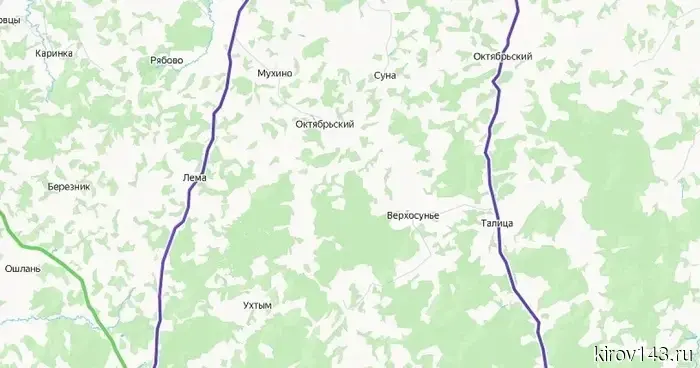 Сегодня планируется восстановить движение по дороге в Фаленском районе.
Сегодня планируется восстановление движения по дороге в Фаленском районе.
Сегодня планируется восстановить движение по дороге в Фаленском районе.
Сегодня планируется восстановление движения по дороге в Фаленском районе.
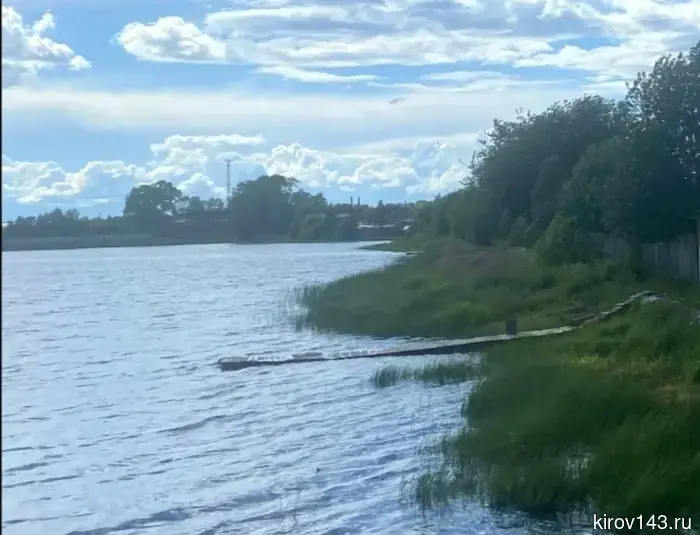 The shore of the Kirsinskoye Reservoir will be returned to the state through the court.
The supervisory authority of the Verkhnekamsky district challenged in court a land deal near the water. A plot of land measuring over 250 square meters ended up in private hands, although by law this area should remain publicly accessible.
The shore of the Kirsinskoye Reservoir will be returned to the state through the court.
The supervisory authority of the Verkhnekamsky district challenged in court a land deal near the water. A plot of land measuring over 250 square meters ended up in private hands, although by law this area should remain publicly accessible.
 В Кировской области некоммерческим организациям будет выделено 30 миллионов рублей.
Некоммерческим организациям Кировской области будет выделено 30 миллионов рублей.
В Кировской области некоммерческим организациям будет выделено 30 миллионов рублей.
Некоммерческим организациям Кировской области будет выделено 30 миллионов рублей.
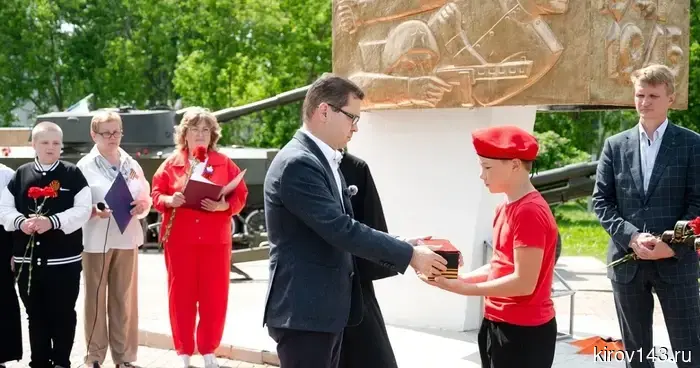 Борис Веснин: «Память о героизме Павла Глушкова из Шабалинского района вновь обрела свое место на родной земле»
Борис Веснин: «Память о подвиге героя Павла Глушкова из Шабалинского района вновь вернулась на его родную землю»
Борис Веснин: «Память о героизме Павла Глушкова из Шабалинского района вновь обрела свое место на родной земле»
Борис Веснин: «Память о подвиге героя Павла Глушкова из Шабалинского района вновь вернулась на его родную землю»
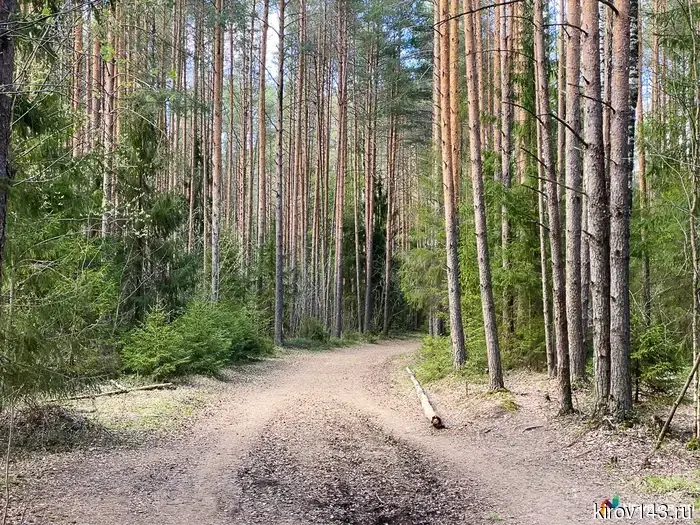 Residents of Syktyvkar and Verkhoshizhemye will pay 200 thousand for illegal logging.
The Soviet District Court sentenced two men who illegally logged in the Verkhoshizhemsky district in 2022.
Residents of Syktyvkar and Verkhoshizhemye will pay 200 thousand for illegal logging.
The Soviet District Court sentenced two men who illegally logged in the Verkhoshizhemsky district in 2022.
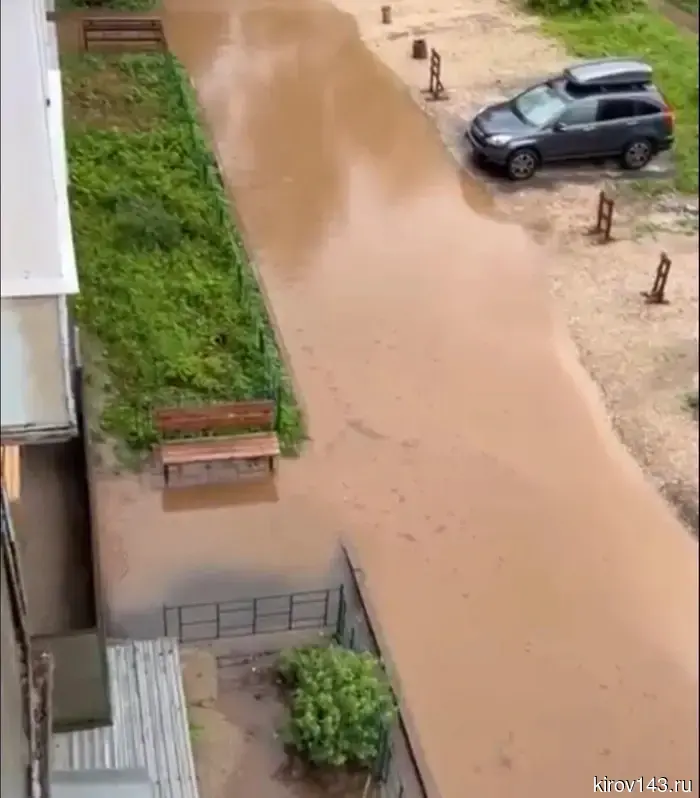 In Kirov, the yard on Koltsova turns into Venice after the rains.
Residents of house No. 10 on Koltsova have been unable for the third year to get the repaired yard, which cost 2 million rubles, to stop flooding after rain. Before the improvement, there was no such problem — the old drainage ditch handled the precipitation, but during the renovation, it was paved over.
In Kirov, the yard on Koltsova turns into Venice after the rains.
Residents of house No. 10 on Koltsova have been unable for the third year to get the repaired yard, which cost 2 million rubles, to stop flooding after rain. Before the improvement, there was no such problem — the old drainage ditch handled the precipitation, but during the renovation, it was paved over.
Elections-2026: digital breakthrough or old rules in new packaging? (Part II)
Regional elections are a test of the resilience of federal trends. From September 18 to 20, campaigns will take place in 39 regions. Using the Kirov region as an example, we will examine how the struggle for the regional legislative assembly unfolds against the backdrop of the cancellation of direct elections for heads and the transformation of districts into territories, and we will see how the balance of power is changing locally.