
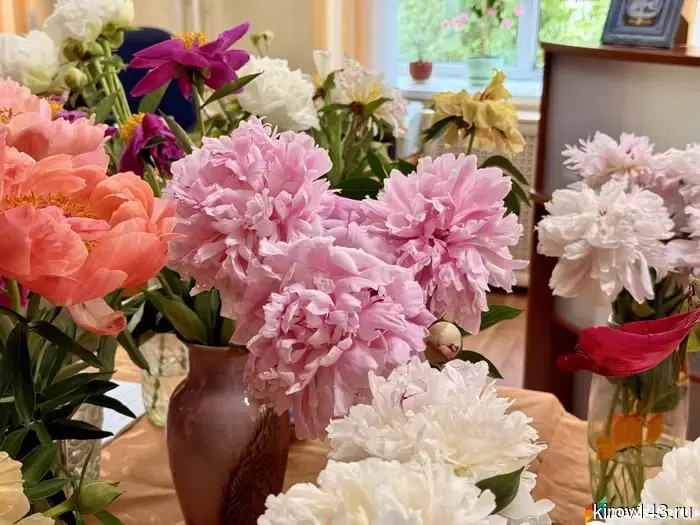
In Gertsenka, a peony paradise has bloomed.
You walk up to the second floor—and... You want to breathe deeper, walk slower, and your gaze cannot be torn away from the buds of various colors and sizes. In the corridors of the library, there is the usual silence, but behind the door of the patent sector, something completely different is spilled out—a palette of summer. A light coolness, a gentle, slightly sweet aroma that makes your head spin, and dozens of peonies—huge, weightless, different, like clouds in the summer sky.
The staff admitted: when they were setting up the exhibition, they couldn't step away themselves. They ran around, looked, gasped. They said, "Oh my God, how unusual they are, how different." No one expected such beauty.
The exhibition (12+) was prepared under the guidance of biologist and landscape designer Alevtina Kopylova. It opened on June 16. Initially, it was planned to last three days—until the 19th. But the residents of Kirov flocked in, and the organizers realized: that's it, there's no turning back, as the blooming of late peonies, the "heavy artillery," is ahead, and it would be wrong not to let the people of Kirov enjoy this beauty. The exhibition was extended until June 23.
"Apparently, there is interest," says collector Flera Vovnyakova, whose peonies form the basis of the exhibition. "Three days is too little. The weather was cool, the nights were cold, and then all the peonies began to bloom at once. We couldn't keep up with showing all the blooming periods. The early varieties had already faded by the time we opened."
The collection lives its own life. Every day something changes: wilted buds are removed, fresh ones are placed in their place, new varieties are brought in. On the day of our visit, there were about 40 vases in the hall. Throughout the exhibition, the residents of Kirov will see more than fifty. Some flowers still do not have labels—the variety is undetermined, records were lost by the owners many years ago. But this even adds charm: each peony here is a little mystery.
Peonies that remember the 19th century
You stand in front of a glass vase, and inside it is "Monsieur Jules Eli," a variety from 1888. Bomb-shaped, light pink-lavender, with silver tips. It smells of old French parks where ladies in long dresses strolled arm in arm with their suitors.
Next to it is "Sarah Bernhardt," from 1906. Delicate pink, rose-shaped, with a lilac hue. They say the actress was so beautiful that the flower was named in her honor. And it truly has not lost its grace to this day.
And this is already our Soviet history. "Pearl Scatter" by Gorobets-Tyran, from 1989—Japanese form, light pink-lavender, with a pleasant unobtrusive aroma. "Original" by Anatoly Skakodub—complex shape, pink-white-cream, with raspberry strokes in the center, as if someone carelessly brushed it. "Darya Volodina" by Vladimir Dubrov—milk-flowered, double-rose-shaped, delicate pink-pearl. Light, airy, like a cloud.
And here are the overseas guests. "Coral Charm" from the USA, 1964—semi-double, initially bright coral, almost terracotta, and by the end of blooming, it lightens to the color of boiled milk. You look and can't believe that nature had enough imagination for such a thing.
"Barcella"—an Ito hybrid, lemon-yellow with red flashes in the center. "Garden Treasure"—yellow, like egg yolk, with a scarlet spot in the middle. You won't find such in the Kirov gardens. Very few people have seen them in Russia at all.
"Each peony—15 years of work"
Flera Vovnyakova has been collecting her collection for about ten years. Actively since 2016. She bought from breeders in Moscow and the Moscow region, from Vladimir Dubrov—personally, from Larisa Skakodub—the daughter of the famous Anatoly Skakodub.
Flera talks about peonies as if they were people. Each has its own character, its own whims, its own growth rate. Some wake up quickly, reach for the sun, bloom large and bright. Others are slow, thoughtful, can sit in the ground for four years after division and only then show their true color.
"To get a new variety, you need to sow a thousand seeds. Of those, maybe six hundred will sprout. Survive and not be culled—one hundred. And only five to eight will be recognized as worthy. And they only bloom in the eighth year. Then there's another check: did the variety retain its characteristics after division? Sometimes not—and back to the basket."
She gives an example: one root of a new Dutch variety once cost almost half a million rubles at the current exchange rate. The average price of a good, still rare variety in Russia is 50-60 thousand.
"Peonies are not dandelions," she says. "They don't grow for free."
Beauty that you want to touch
The hall is quiet. Only the rustling from the corridor can be heard, and occasionally glass clinks—someone among the visitors accidentally bumped into a vase while examining a flower up close. People walk slowly, bend down, read the labels. "Exhibitor: Perminova L.N."—means this peony was grown by the hands of a specific person, in their plot, under their sun.
Flera Raufovna tells how they assembled the exhibition:
"In my part of the city, flowers bloom a little later, while in some southern areas—they are already in full bloom. The region is large, and we take advantage of that. Someone brings from Kotelnich, someone from Yury. Everyone wants to show what they have grown."
And this is appealing. Not perfect Dutch cuts from the store, but live, slightly imperfect, yet so real flowers. Some petals are already starting to fall off—but that is their life, their breath. They are not eternal, and that makes them even more valuable.
"Now the semi-double form is in fashion, coral, pastel shades," says Flera Raufovna. "Before, the French chased after aromas, now the Americans—after stability and bush shape. Peonies, like art, change. But the main thing is—they bring joy."
She is right. You stand in front of the vase with "Coral Charm"—and forget about business, deadlines, evening traffic jams. You look at the weightless petals, inhale their scent—and exhale everything unnecessary. And you want only one thing: for this summer not to end.
In the Herzen Library, it is now not just an exhibition. Something more is spilled out here—attention to detail, respect for others' labor, and simply quiet, almost forgotten beauty.
Другие Новости Кирова (НЗК)
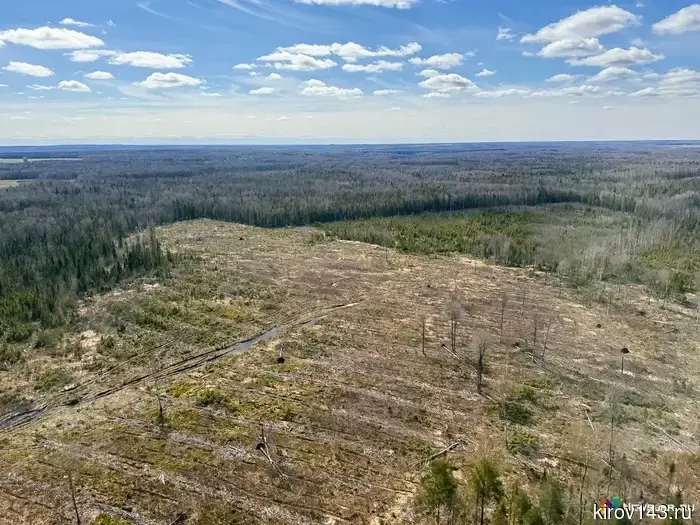 Agricultural land will be allocated for a woodworking workshop and a cemetery.
The Legislative Assembly Committee supported two initiatives.
Agricultural land will be allocated for a woodworking workshop and a cemetery.
The Legislative Assembly Committee supported two initiatives.
 In the Kirov region, a man was "raising" a child with his fists.
In the Malmyzh district, a 30-year-old man has been convicted for systematically beating his 11-year-old stepson for six months.
In the Kirov region, a man was "raising" a child with his fists.
In the Malmyzh district, a 30-year-old man has been convicted for systematically beating his 11-year-old stepson for six months.
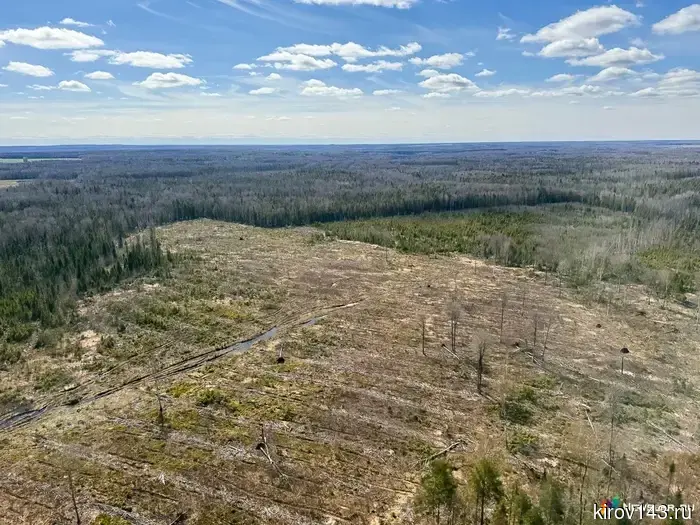 Agricultural land will be allocated for a woodworking workshop and a cemetery.
The Legislative Assembly Committee supported two initiatives.
Agricultural land will be allocated for a woodworking workshop and a cemetery.
The Legislative Assembly Committee supported two initiatives.
 Migrants were checked on the central streets of Kirov.
An interdepartmental inspection of compliance with migration legislation took place in Kirov.
Migrants were checked on the central streets of Kirov.
An interdepartmental inspection of compliance with migration legislation took place in Kirov.
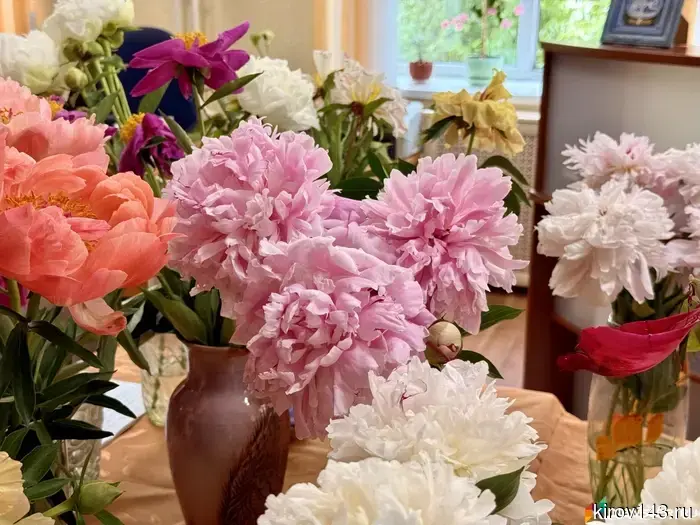 In Gertsenka, a peony paradise has blossomed.
At the Herzen Library, the exhibition of live peonies (12+) has been running for the second day. A correspondent from "Newsler.ru" visited the floral kingdom, learned how many varieties are actually represented, and of course, enjoyed the aromas.
In Gertsenka, a peony paradise has blossomed.
At the Herzen Library, the exhibition of live peonies (12+) has been running for the second day. A correspondent from "Newsler.ru" visited the floral kingdom, learned how many varieties are actually represented, and of course, enjoyed the aromas.
 In 2027-2028, four large "waste" facilities will be built in the Kirov region.
Two agreements have been concluded, and two more will be concluded in the near future.
In 2027-2028, four large "waste" facilities will be built in the Kirov region.
Two agreements have been concluded, and two more will be concluded in the near future.
In Gertsenka, a peony paradise has bloomed.
At the Herzen Library, the exhibition of live peonies (12+) has been running for the second day. A correspondent from "Newsler.ru" visited the floral kingdom, learned how many varieties are actually presented, and of course, enjoyed the aromas.