
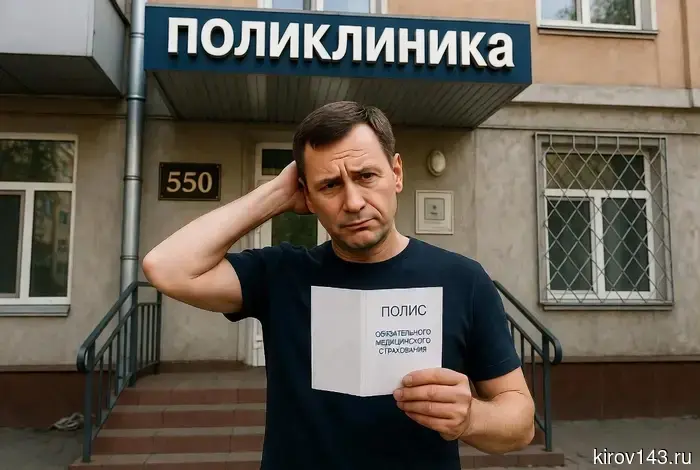
Not everything is free: experts revealed which diseases and services are not covered by the compulsory health insurance policy.
What the compulsory health insurance policy provides without additional payments
The compulsory health insurance program allows free visits to therapists and specialists, undergoing check-ups and preventive examinations, getting vaccinations according to the national calendar, taking basic tests, and receiving inpatient treatment.
This also includes most surgical operations, pregnancy management, childbirth, and some dental care (treatment of cavities, tooth extractions — at the clinic in the place of residence, without expensive materials).
It seems like an impressive list. However, there are a number of diseases and medical services that are not funded by the compulsory health insurance program — at least not in full.
What remains "outside" of compulsory health insurance
According to health care experts, the following are outside the basic program:
treatment of HIV infection (some therapy may be provided through special regional programs, but not everywhere and not always);
tuberculosis therapy (in the acute phase — yes, but some stages of rehabilitation and supportive treatment are at the patient's expense);
a number of sexually transmitted diseases (syphilis, gonorrhea, and others — their treatment is selectively funded, often only in the early stages);
certain types of psychiatric care (especially long-term psychotherapy, rehabilitation, and non-drug methods);
palliative care (pain relief and home care — only partially, much has to be paid for by the patients themselves);
air ambulance services (helicopters and planes for emergency patient evacuation — in most regions, they are not included in compulsory health insurance).
An important nuance: emergency care — outside the rules
Experts emphasize: if it concerns a life-threatening condition, they cannot refuse assistance. In the case of a heart attack, stroke, serious accident, or sudden exacerbation of any disease — even one not included in the compulsory health insurance list — the ambulance team and emergency room doctors are obliged to do everything necessary.
However, bureaucracy may begin afterward: the payment procedure for such treatment depends on the region, and some procedures may later be attempted to be billed as paid. Patients or their relatives often have to prove that the assistance was emergency.
Regional differences: what is free in Moscow is paid in Magadan
The main problem that experts warn about is the territorial compulsory health insurance program. The federal law sets only a basic minimum, and each region of Russia can expand or narrow the list of free services at the expense of its budget.
As a result, what is provided for free in one city (for example, an expensive drug for HIV or a palliative bed at home) may cost tens of thousands of rubles in another region.
Therefore, the specialists' advice is clear: before counting on a free service (especially a specialized or expensive one), it is necessary to personally contact the territorial compulsory health insurance fund of your region or the hotline of the insurance company. They will provide an accurate list for the current year.
How to avoid unexpected bills: three steps
To avoid unexpected bills after treatment, experts recommend:
When planning hospitalization — request written confirmation in advance that all prescribed procedures and medications are included in the territorial compulsory health insurance program.
If the hospital demands payment for something that should be free by law — call the hotline of your insurance representative (the number is indicated in the policy).
If assistance is refused (even for a disease not included in compulsory health insurance) — demand a written conclusion and appeal to the prosecutor's office or the territorial body of the Federal Service for Surveillance in Healthcare, reports karelinform.ru.
The compulsory health insurance policy is a powerful but not all-encompassing tool. A lot can be obtained for free, but treatment for HIV, tuberculosis, venereology, palliative care, and air ambulance services should be checked separately. And remember: in life-threatening situations — refusal is illegal, and in planned assistance — the rule "trust, but verify" applies in your regional compulsory health insurance fund.
Другие Новости Кирова (НЗК)
 An accident on the water supply is being eliminated on Proletarskaya Street in Kirov.
In Kirov, there was a leak in the cold water supply networks. This was reported by the city administration.
An accident on the water supply is being eliminated on Proletarskaya Street in Kirov.
In Kirov, there was a leak in the cold water supply networks. This was reported by the city administration.
 A repeat offender from Kirovo-Chepetsk was sent to a penal colony for hitting with a mug and a fist.
In Kirovo-Chepetsk, a 40-year-old local resident has been convicted for twice beating people within a year — once with a fist to the head outside a house and once with a glass mug in a café.
A repeat offender from Kirovo-Chepetsk was sent to a penal colony for hitting with a mug and a fist.
In Kirovo-Chepetsk, a 40-year-old local resident has been convicted for twice beating people within a year — once with a fist to the head outside a house and once with a glass mug in a café.
 For snowballing through the window — 50 thousand rubles: the prosecutor demands compensation for the beaten teenager.
In Luzha, the prosecutor filed a lawsuit in court seeking compensation for moral damages in favor of a 15-year-old teenager. A man beat the schoolboy for throwing a snowball at the window of his apartment.
For snowballing through the window — 50 thousand rubles: the prosecutor demands compensation for the beaten teenager.
In Luzha, the prosecutor filed a lawsuit in court seeking compensation for moral damages in favor of a 15-year-old teenager. A man beat the schoolboy for throwing a snowball at the window of his apartment.
 The Legislative Assembly Committee proposed to hold elections on September 20.
The deputies supported the initiative.
The Legislative Assembly Committee proposed to hold elections on September 20.
The deputies supported the initiative.
 Business horoscope: Aries will see an increase in money, while Pisces should avoid haste.
Astrologers have provided practical recommendations for each zodiac sign for the upcoming business Tuesday.
Business horoscope: Aries will see an increase in money, while Pisces should avoid haste.
Astrologers have provided practical recommendations for each zodiac sign for the upcoming business Tuesday.
 22% of Kirov companies retain pensioner employees
"SuperJob" found out how employers in Kirov feel about employees of retirement age.
22% of Kirov companies retain pensioner employees
"SuperJob" found out how employers in Kirov feel about employees of retirement age.
Not everything is free: experts revealed which diseases and services are not covered by the compulsory health insurance policy.
Many Russians are convinced that if they have a compulsory health insurance policy, then all medical assistance in the country becomes free. This is not entirely true. The compulsory health insurance system does cover a wide range of services, but there are entire areas of treatment that fall outside its scope. Experts explained what policyholders should not expect and how to avoid falling into the trap of unexpected expenses.