

Warm, press, smear: three mistakes that turn a painless lump on the eyelid into an abscess.
Barley and chalazion are two different stories, although at first glance, an ordinary person can easily confuse them. The first occurs within hours due to bacteria, causes pain, redness, and produces a purulent head. The second is caused by the blockage of the meibomian gland, develops over weeks, is almost painless, and appears as a dense nodule in the thickness of the eyelid — without pus, without sharp redness. And while barley sometimes "breaks" on its own, chalazion tends to have a chronic course.
The main problem is that people start treating chalazion with the same methods as barley — and make three typical mistakes.
The first is aggressive heating. Moderate dry heat in the early stages of blockage can help, but when a patient applies a hot egg or salt during an already started inflammation (sharp pain, pronounced redness), it only increases swelling and raises the risk of abscess.
The second is attempts to squeeze or puncture the nodule at home. Even if it seems that it is completely "ripe," any self-opening creates a direct path for infection. The original text clearly states: such actions lead to eyelid abscess, phlegmon, and the spread of inflammation to the orbit. This is not a scare tactic, but described clinical cases.
The third is prolonged treatment with "folk methods" without a doctor. Applying aloe, incantations, homemade ointments delay a visit to the ophthalmologist for months. During this time, the granuloma manages to be covered with a dense capsule, increase in size, and then conservative therapy is almost useless — chalazion has to be surgically removed.
What else is dangerous about an advanced chalazion? It can press on the cornea, causing astigmatism and blurred vision, provoke chronic conjunctivitis due to constant friction against the mucosa, and in rare cases, deform the eyelid, change the growth of eyelashes, or lead to their loss. In addition, severe purulent complications are known — periorbital cellulitis, requiring inpatient treatment.
A separate surprise for fans of beauty procedures. According to clinical studies, patients with regular eyelid tattoos, eyelash extensions, botulinum toxin injections, and fillers statistically suffer more often from meibomian gland dysfunction — the secretion becomes thicker, and the ducts are blocked more easily. This same risk group includes lovers of waterproof cosmetics, those who do not remove makeup at night, and those who violate contact lens wearing rules. Ophthalmologist at INVITRO, Inna Varivoda, emphasizes: eyelid hygiene is not only about beauty but also a direct prevention of chalazion.
And finally, the fourth, no longer a therapeutic, but a strategic mistake — ignoring background diseases. If a person does not treat chronic blepharitis, demodicosis, seborrheic dermatitis, or rosacea, chalazion will return again and again. In such cases, fighting each new nodule without addressing the cause is an endless and futile process.
The conclusion from all this is simple: if a nodule appears on the eyelid that does not go away for more than a week — do not guess whether it is barley or not. Do not heat, do not press, do not wait for a miracle. Go to an ophthalmologist. He will distinguish chalazion from eyelid tumors and other conditions, and if necessary, will prescribe tests — for demodicosis, glucose levels, inflammatory markers. Perhaps it will be enough with drops and hygiene. But if neglected, then — as stated in the original text — the only solution will be surgical removal.
Другие Новости Кирова (НЗК)
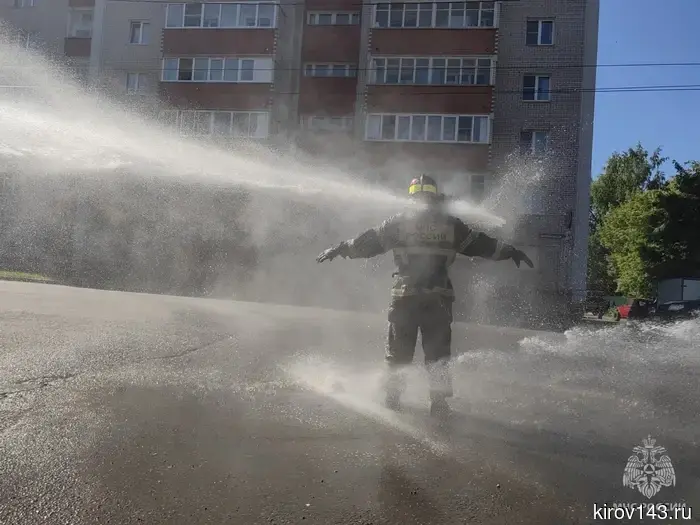 Sokolova was sent off to a well-deserved retirement.
In the Kirov region, a farewell ceremony was held for Alexey Sokolov, the assistant chief of the duty shift of the fire extinguishing service, as he retired. He served in the fire department for about 35 years. The farewell was conducted with firefighting traditions — accompanied by the sounds of sirens and streams of water from fire hoses.
Sokolova was sent off to a well-deserved retirement.
In the Kirov region, a farewell ceremony was held for Alexey Sokolov, the assistant chief of the duty shift of the fire extinguishing service, as he retired. He served in the fire department for about 35 years. The farewell was conducted with firefighting traditions — accompanied by the sounds of sirens and streams of water from fire hoses.
 A resident of Darovsky gave 9.2 million rubles to scammers.
A 43-year-old woman from the village of Darovskoy lost a large sum of money after communicating with fake employees of the Central Bank and the FSB. A criminal case has been initiated.
A resident of Darovsky gave 9.2 million rubles to scammers.
A 43-year-old woman from the village of Darovskoy lost a large sum of money after communicating with fake employees of the Central Bank and the FSB. A criminal case has been initiated.
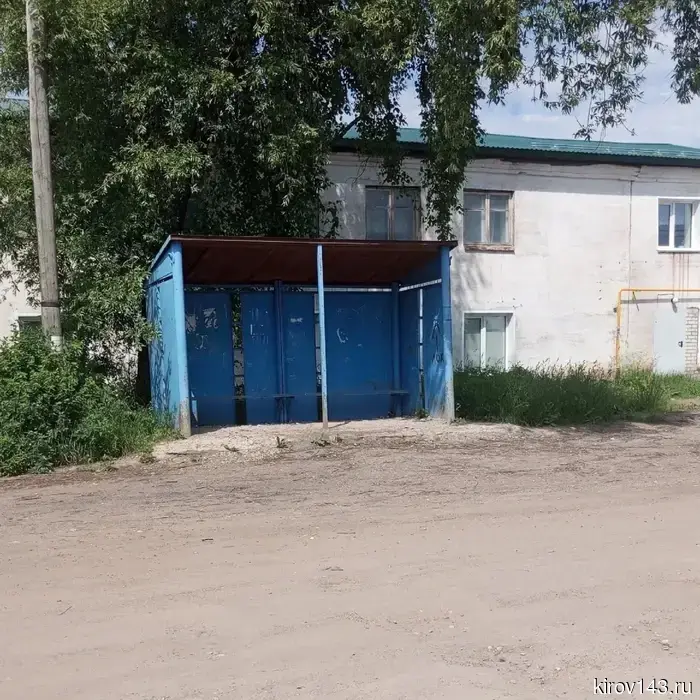 Residents of Belaya Kholunitsa are forced to take taxis due to the cancellation of buses.
In Belaya Kholunitsa, two city routes connecting remote neighborhoods with the center have been canceled. Local residents complain that the promised combined route either does not operate or does not adhere to the schedule, reported the People's Front.
Residents of Belaya Kholunitsa are forced to take taxis due to the cancellation of buses.
In Belaya Kholunitsa, two city routes connecting remote neighborhoods with the center have been canceled. Local residents complain that the promised combined route either does not operate or does not adhere to the schedule, reported the People's Front.
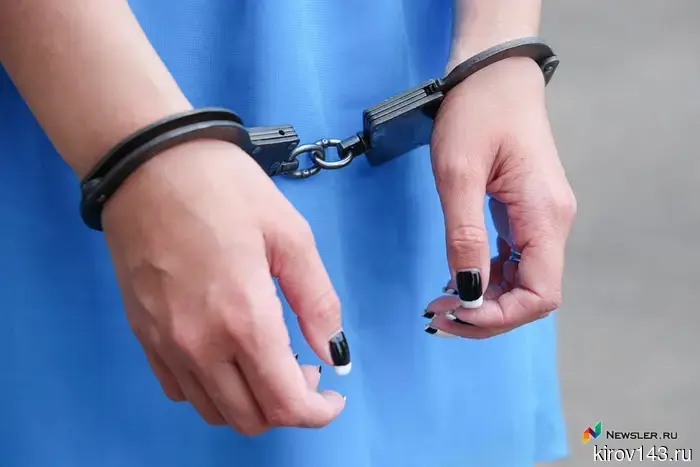 A drug addict was detained at the railway station in Kirov.
Transport police officers detained a 30-year-old local resident in Kirov who was behaving suspiciously near the railway tracks and had impaired coordination of movements.
A drug addict was detained at the railway station in Kirov.
Transport police officers detained a 30-year-old local resident in Kirov who was behaving suspiciously near the railway tracks and had impaired coordination of movements.
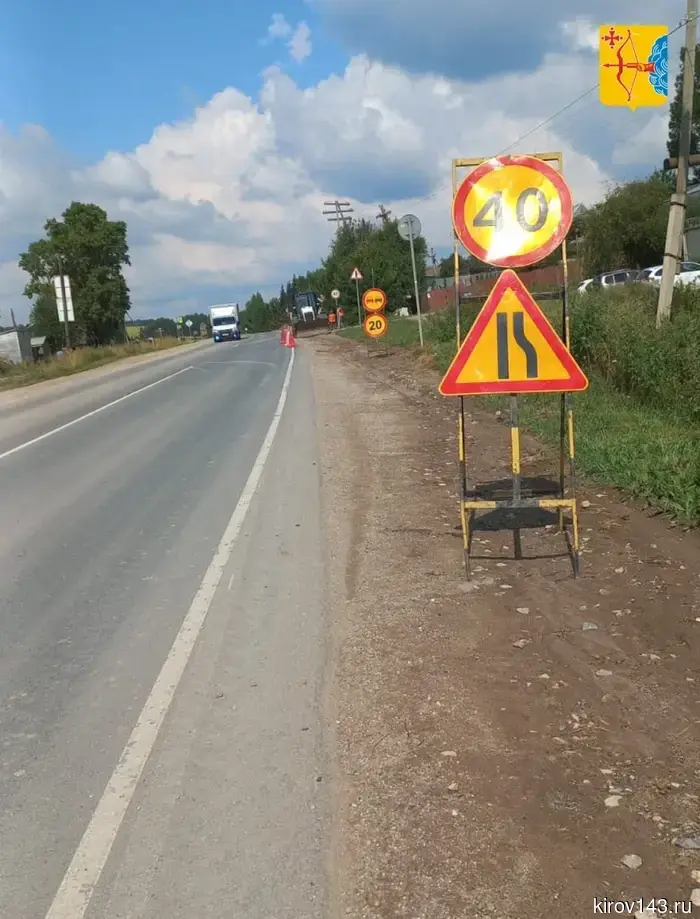 Sidewalks and bus stops will be built on the highway in the Sunskiy district.
It is also planned to install streetlights.
Sidewalks and bus stops will be built on the highway in the Sunskiy district.
It is also planned to install streetlights.
 В поселке Кумены пострадал 14-летний велосипедист на дороге.
Согласно предварительным данным сотрудников ГИБДД Кировской области, во вторник, 9 июня, в 17:15 на улице Гагарина в поселке Кумены 59-летний водитель автомобиля «Лада Гранта» наехал на 14-летнего мальчика на велосипеде. В результате инцидента велосипедист получил травмы. По факту ДТП ведется расследование.
В поселке Кумены пострадал 14-летний велосипедист на дороге.
Согласно предварительным данным сотрудников ГИБДД Кировской области, во вторник, 9 июня, в 17:15 на улице Гагарина в поселке Кумены 59-летний водитель автомобиля «Лада Гранта» наехал на 14-летнего мальчика на велосипеде. В результате инцидента велосипедист получил травмы. По факту ДТП ведется расследование.
Warm, press, smear: three mistakes that turn a painless lump on the eyelid into an abscess.
A dense "pea" on the eyelid can sit for weeks, it doesn't hurt, but it also doesn't go away. Familiar story? Many habitually call it a stye and start home treatment with an egg or a tea bag. Ophthalmologists warn: this can not only fail to cure it but also lead to surgery or even phlegmon. This is because in half of such cases, it is not a stye but a chalazion — and the approach to it must be fundamentally different.