
AI agents are taking over the economy: bankers and marketplaces revealed at the St. Petersburg International Economic Forum when robots will replace us.
The moderator was the first deputy chairman of the board of Sberbank. Representatives from the largest banks, a well-known marketplace, the chemical industry, and an IT giant participated in the discussion. The global market for AI agents has almost reached $10 billion and is expected to grow 15 times by 2034, according to forecasts. Experts explained that these tools are similar to familiar Excel but can not only analyze but also act—communicate with other agents, negotiate, and adapt to feedback. Gradually, they are becoming independent market participants. A survey among session participants showed that one in three believes that by 2030, AI agents will make 40-60% of decisions in their companies without human involvement. The spread of technologies is hindered by two things—the speed of progress and regulation. In the future, there will be both universal agents and specialized ones for specific tasks. Bankers noted that AI agents sharply reduce information asymmetry and eliminate intermediaries. For example, an agent can independently browse hundreds of websites, select the best offer, negotiate, and provide the user with a ready-made solution. A person will not have to search for anything. At the forum, a platform was presented where agents from different companies can make deals in real-time through blockchain. However, the main question for businesses is how to get into the circle of trusted agents of the client. According to bankers, trust comes to the forefront. There will be thousands of agents, and a person will not be able to use them all. They will choose those they trust in various areas. Companies will thus turn into "commodities"—standard products. It is important what metric the agent will maximize: immediate profit or long-term customer happiness. The competition for loyalty will reach a new level, reports transsibinfo.com. A representative of the marketplace added that so far no one has created an agent that independently navigates different platforms, compares, negotiates, and purchases on behalf of the user—this is a kind of "Holy Grail." Two barriers hinder this. The first is trust: people are just learning to use built-in assistants and are not always ready to rely on external ones. The second is that people love to choose for themselves; they enjoy comparing and making decisions. Therefore, the process will not be quick, but the company wants to become a pioneer and create a first-choice assistant. Bankers also predicted that the agent economy will make financial conditions between banks practically identical: everyone will have access, quickly and seamlessly. But people are not as rational as they seem (as proven by Nobel laureates). Therefore, banks are transitioning from "fintech" to "fanthech"—who provides more pleasure, with whom it is pleasant to associate oneself. For the next five years, this will become the main factor of competition. A representative of the chemical industry spoke about three areas of implementing AI agents in companies. The first is transactions for the back office. The second is the production system, which has been imported and is now integrating agents for the complete reproduction of technological processes. The third, completely new, is when a company's agent interacts with a counterparty's agent. All three tracks are actively developing. Changes in the labor market were discussed separately. A representative of the IT company reminded that every 10-20 years, a technological revolution occurs. Initially, programming was done on lamps, then languages, compilers, low-code, and no-code appeared. Now the programming language is the human language. The number of programmers has never decreased; it has only grown—the entry threshold has lowered, and the market has expanded. With the arrival of agents, one programmer will be able to launch a factory of agents and do the work of ten. In the future, everyone will be able to manage such a factory and do many times more. In conclusion, the moderator suggested that the audience assess the economic impact of the agent economy by 2030. Almost half of the participants responded that it would exceed 20%.
Другие Новости Кирова (НЗК)
 In Kirov, the National Guard detained a thief with two boxes of shoes.
Officers of the private security caught a man who broke a pavilion at the market and stole goods.
In Kirov, the National Guard detained a thief with two boxes of shoes.
Officers of the private security caught a man who broke a pavilion at the market and stole goods.
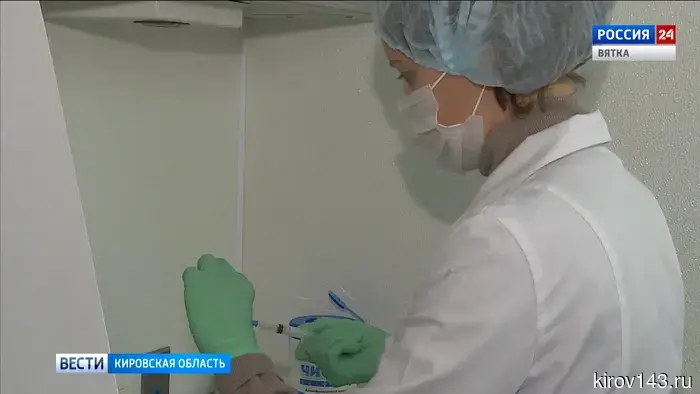 Объявлена дата выхода российской вакцины против аллергии на пыльцу березы.
Первые отечественные рекомбинантные вакцины против аллергии на березовую пыльцу, созданные Институтом иммунологии ФМБА России, могут быть зарегистрированы в сентябре 2026 года, сообщает РИА «Новости» ссылаясь на главу Федерального медико-биологического агентства (ФМБА) России Веронику Скворцову.
Объявлена дата выхода российской вакцины против аллергии на пыльцу березы.
Первые отечественные рекомбинантные вакцины против аллергии на березовую пыльцу, созданные Институтом иммунологии ФМБА России, могут быть зарегистрированы в сентябре 2026 года, сообщает РИА «Новости» ссылаясь на главу Федерального медико-биологического агентства (ФМБА) России Веронику Скворцову.
 AI agents are taking over the economy: bankers and marketplaces revealed at the St. Petersburg International Economic Forum when robots will replace us.
At the St. Petersburg International Economic Forum (SPIEF-2026), a session of the Alliance in the field of artificial intelligence took place, dedicated to the "agent economy" — a new market model where humans and AI work together, significantly increasing efficiency.
AI agents are taking over the economy: bankers and marketplaces revealed at the St. Petersburg International Economic Forum when robots will replace us.
At the St. Petersburg International Economic Forum (SPIEF-2026), a session of the Alliance in the field of artificial intelligence took place, dedicated to the "agent economy" — a new market model where humans and AI work together, significantly increasing efficiency.
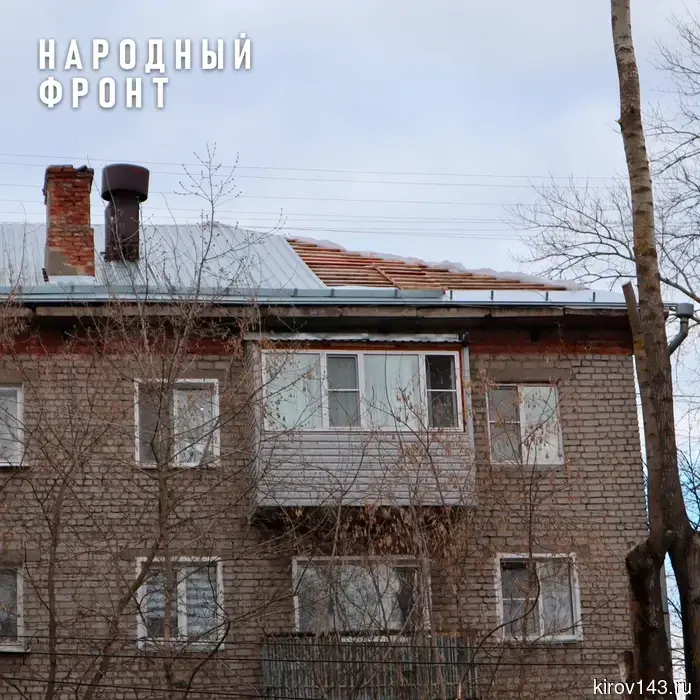 The roof of the house on Lenin has finally been closed.
In a nine-story building in the Lyangasovo microdistrict of Kirov, the major roof repair stretched over several months. Half of the roof was uncovered, apartments were flooded, and construction debris lay right under the windows. To resolve this situation, the residents had to seek help.
The roof of the house on Lenin has finally been closed.
In a nine-story building in the Lyangasovo microdistrict of Kirov, the major roof repair stretched over several months. Half of the roof was uncovered, apartments were flooded, and construction debris lay right under the windows. To resolve this situation, the residents had to seek help.
 "I can no longer not go": Actress Irina Sheyanova on life after the cross procession
After the main celebrations in Velikoretsk, we managed to talk to actress Irina Sheyanova, known for her roles in the projects "The Secret Diary of My Sister" (16+, 2024), "Help Yourself" (16+, 2025), and many others.
"I can no longer not go": Actress Irina Sheyanova on life after the cross procession
After the main celebrations in Velikoretsk, we managed to talk to actress Irina Sheyanova, known for her roles in the projects "The Secret Diary of My Sister" (16+, 2024), "Help Yourself" (16+, 2025), and many others.
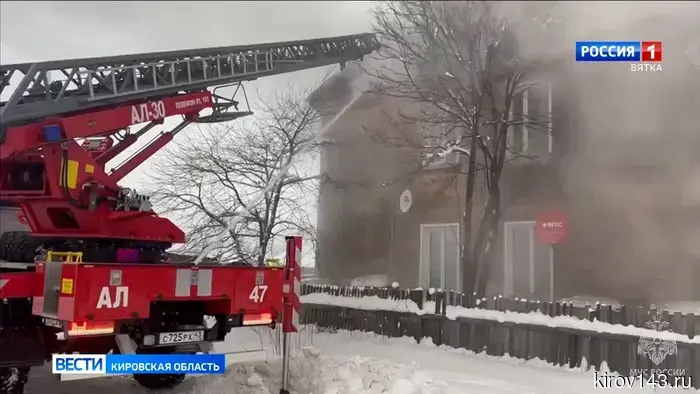 В Слободском начнется судебный процесс над виновным в пожаре в жилом доме.
Чрезвычайное происшествие произошло в декабре минувшего года. На улице Мира случился пожар в многоквартирном доме. Три квартиры пострадали от огня, крыша здания также получила повреждения. Два жильца нуждались в медицинской помощи. Из-за пожара здание признано непригодным для проживания и подлежит сносу. Ущерб составил примерно 1 миллион.
В Слободском начнется судебный процесс над виновным в пожаре в жилом доме.
Чрезвычайное происшествие произошло в декабре минувшего года. На улице Мира случился пожар в многоквартирном доме. Три квартиры пострадали от огня, крыша здания также получила повреждения. Два жильца нуждались в медицинской помощи. Из-за пожара здание признано непригодным для проживания и подлежит сносу. Ущерб составил примерно 1 миллион.
AI agents are taking over the economy: bankers and marketplaces revealed at the St. Petersburg International Economic Forum when robots will replace us.
At the St. Petersburg International Economic Forum (SPIEF-2026), a session of the Alliance in the field of artificial intelligence took place, dedicated to "agent economy" — a new market model where humans and AI work together, significantly increasing efficiency.