

WHO has declared a state of emergency due to the Ebola fever. What is known about the new outbreak?
What is happening in the DRC and Uganda
The new outbreak was officially reported by the Minister of Health of the DRC, Samuel Roger Kamba. The epicenter of the epidemic has become the areas of Mongbwalu and Rwampara in Ituri Province. The first registered case was the death of a nurse from the city of Bunia — she was found to have a strain of the Ebola virus called Bundibugyo.
Currently, 80 deaths, presumably related to Ebola fever, have been recorded in three regions of the DRC, along with 246 suspected cases of infection. Of this number, only eight diagnoses have been laboratory confirmed. Experts acknowledge that it is currently difficult to accurately assess the scale of the disease's spread, and there remain many uncertainties regarding the actual number of infected individuals and the geography of the virus's spread.
At the same time, in the capital of Uganda, Kampala, two confirmed cases of infection were identified on May 15-16 among people who had recently arrived from the DRC. Unfortunately, one of the patients has died.
The particular danger of the Bundibugyo strain
Although this strain is considered less deadly compared to other variants of the virus, it poses a serious threat due to the lack of a specialized vaccine.
In contrast, a vaccine exists and is successfully used against another common strain — the Zaire virus. This circumstance makes the current outbreak more difficult to control, reports karelinform.ru.
How to recognize the disease
The source of infection traditionally comes from wild animals. The disease begins acutely: patients complain of fever, intense muscle and headache, and discomfort in the throat.
As the disease progresses, internal organs suffer — primarily the kidneys and liver. In severe cases, dangerous bleeding occurs, both internal and external.
The Ebola virus was first identified in 1976 in the territory of modern DRC. Since then, periodic outbreaks have occurred in various African countries. The most extensive epidemic occurred in 2014-2016 in the countries of West Africa — Guinea, Liberia, and Sierra Leone. At that time, the disease claimed the lives of more than 11,000 people, becoming one of the most tragic pages in the history of the fight against infectious diseases.
The current situation has not yet reached such scales, but the WHO's decision to declare a state of emergency indicates a high level of concern and the readiness of the global community for coordinated actions.
Другие Новости Кирова (НЗК)
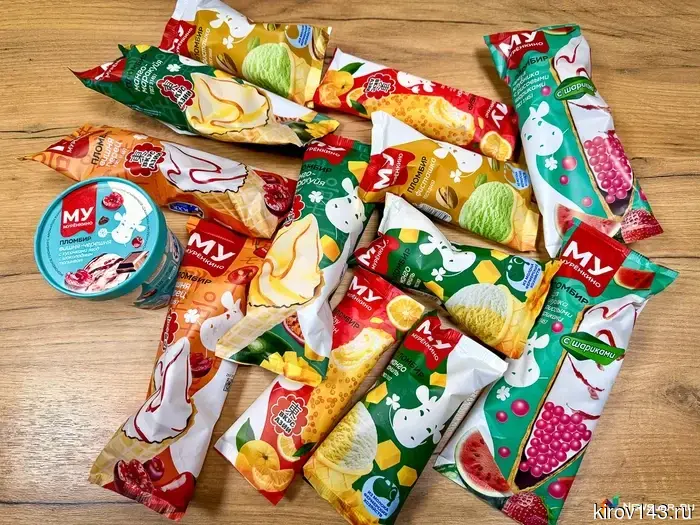 What happens if you add pepper to ice cream: Newsler editorial tried the new products from "Muryonki."
When a box of "Muryonki" ice cream was brought to the Newsler editorial office for tasting, everything started quite predictably: some immediately reached for the classic plombir, some for cones, while the most cautious looked suspiciously at flavors like "Cherry-Pepper" and "Yuzu-Lemon."
What happens if you add pepper to ice cream: Newsler editorial tried the new products from "Muryonki."
When a box of "Muryonki" ice cream was brought to the Newsler editorial office for tasting, everything started quite predictably: some immediately reached for the classic plombir, some for cones, while the most cautious looked suspiciously at flavors like "Cherry-Pepper" and "Yuzu-Lemon."
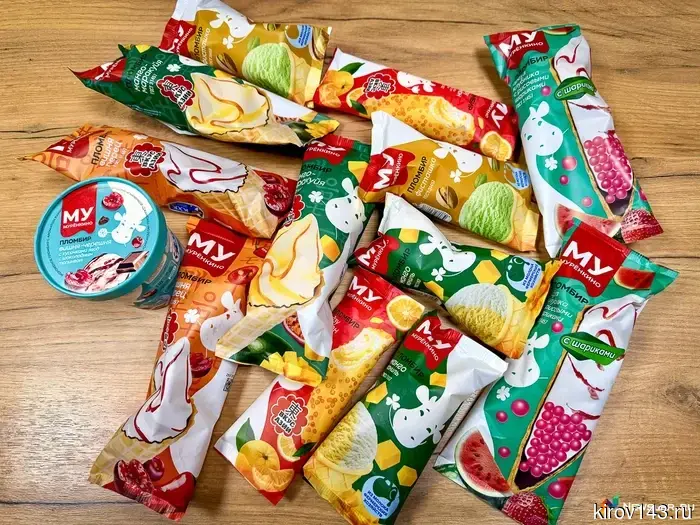 What happens if you add pepper to ice cream: Newsler editorial tried the new products from "Muryonki's"
When a box of "Murjonkino" ice cream was brought to the Newsler editorial office for tasting, everything started quite predictably: some immediately reached for the classic plombir, some for the cones, while the most cautious looked suspiciously at flavors like "Cherry-Pepper" and "Yuzu-Lemon."
What happens if you add pepper to ice cream: Newsler editorial tried the new products from "Muryonki's"
When a box of "Murjonkino" ice cream was brought to the Newsler editorial office for tasting, everything started quite predictably: some immediately reached for the classic plombir, some for the cones, while the most cautious looked suspiciously at flavors like "Cherry-Pepper" and "Yuzu-Lemon."
 In the Kirov region, they have started to reconsider disputed refusals for the unified allowance.
In the Kirov region, they have begun to reconsider previously rejected applications for the universal allowance. This concerns families whose income exceeded the subsistence minimum by less than 10%.
In the Kirov region, they have started to reconsider disputed refusals for the unified allowance.
In the Kirov region, they have begun to reconsider previously rejected applications for the universal allowance. This concerns families whose income exceeded the subsistence minimum by less than 10%.
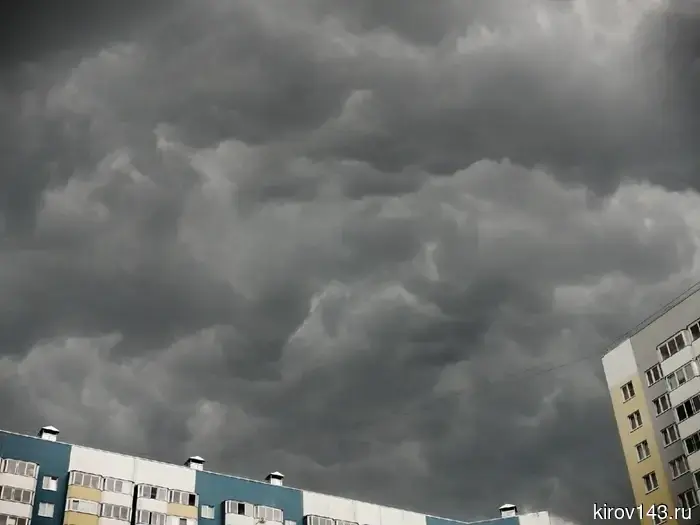 Hail and tornadoes have hit the Kirov region.
Meteorology enthusiasts report the formation of several supercells capable of bringing large hail, gusty winds, and even tornadoes.
Hail and tornadoes have hit the Kirov region.
Meteorology enthusiasts report the formation of several supercells capable of bringing large hail, gusty winds, and even tornadoes.
 WHO has declared a state of emergency due to the Ebola fever. What is known about the new outbreak?
The World Health Organization has officially declared a state of international emergency due to the outbreak of Ebola fever in the Democratic Republic of the Congo and Uganda. The corresponding statement was made by the WHO Director-General after consultations with member states. The organization emphasizes that the situation is classified as an epidemic rather than a pandemic, but it still poses a serious threat to public health on a global level.
WHO has declared a state of emergency due to the Ebola fever. What is known about the new outbreak?
The World Health Organization has officially declared a state of international emergency due to the outbreak of Ebola fever in the Democratic Republic of the Congo and Uganda. The corresponding statement was made by the WHO Director-General after consultations with member states. The organization emphasizes that the situation is classified as an epidemic rather than a pandemic, but it still poses a serious threat to public health on a global level.
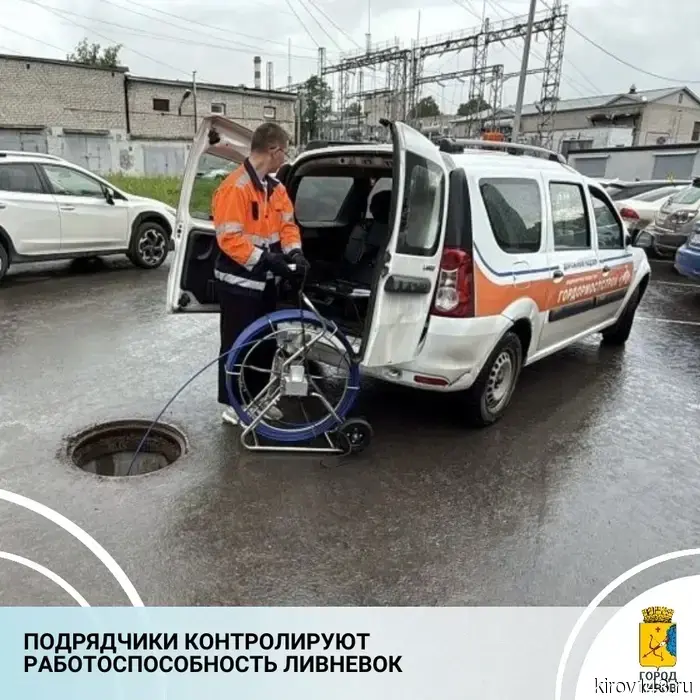 The rains in Kirov forced contractors to take stormwater drainage under enhanced control.
Due to bad weather, road workers were issued warnings. The administration demanded closer monitoring of water drainage, while the contracting organization has already reported on the full volume of work completed.
The rains in Kirov forced contractors to take stormwater drainage under enhanced control.
Due to bad weather, road workers were issued warnings. The administration demanded closer monitoring of water drainage, while the contracting organization has already reported on the full volume of work completed.
WHO has declared a state of emergency due to the Ebola fever. What is known about the new outbreak?
The World Health Organization has officially declared a state of international emergency due to the outbreak of Ebola fever in the Democratic Republic of the Congo and Uganda. The statement was made by the WHO Director-General after consultations with member states. The organization emphasizes that the situation is classified as an epidemic rather than a pandemic, but it still poses a serious threat to public health on a global scale.