
Dissociative identity disorder in cinema: the most romanticized diagnosis is scarier.
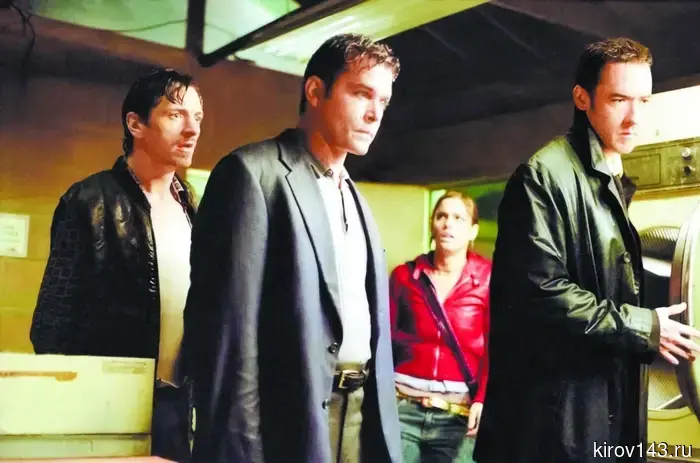
One such example I want to discuss is the far from new, but undeservedly forgotten film "Identity" (18+, 2003) starring John Cusack.
From doppelgänger to psychiatry
In general, if we go back to the distant past, the genre of "psychological thriller" emerged as a distinct genre in the late 19th century. Perhaps the most fertile century for the horror genre. So, the theme of split personality was first explored in the novella "Strange Case of Dr Jekyll and Mr Hyde" (16+, 1886). Briefly, the main character encounters his evil double — a doppelgänger (German for "double"). This term was gifted to us by the beautiful era of Romanticism, where everyone loved to ponder the secret and forbidden desires of the weak human soul. Essentially, this doppelgänger, or duality, represented a version of the main character that wallows in sin, and nothing good usually comes from it — moral decay and death. The most vivid examples are Wilde's Dorian Gray, Hoffmann's ("The Sandman"), and Coleridge's "Christabel," where he described the "shadow side" of the idealized main heroine. In general, every self-respecting writer of that time wrote on this topic. And we all know the fate of iconic literary movements during the birth of cinema.
Screen Psychos: The Birth of a New Culture
Until about the 1950s, scaring audiences in cinema was quite simple — a made-up main antagonist runs towards the camera, and that's it, a spectacle of horror. But then the legendary Alfred Hitchcock appeared. A man who decided that the adaptation of a familiar fear, known to everyone, is much more effective and frightening than monsters with mysticism.
Hitchcock's film "Psycho" became a true watershed, proving that the most dangerous maniac can hide not in an abandoned castle with a chainsaw, but in a quiet, polite, and seemingly harmless young man — the owner of an unremarkable roadside motel. This shift of focus from external horror to internal, to the exploration of the dark corners of the human psyche, paved the way for a whole series of films where the main mystery is not "who is the killer?" but "what's going on in his head?"
When the motel becomes a mirror of consciousness
After the success of "Psycho," the theme of split personality firmly established itself in cinema. It was addressed by serious dramas, comedies, and intellectual thrillers. But in 2003, director James Mangold (who is now better known for "Logan" or the biopic about Johnny Cash) decided to play with this theme in his own way. He made a puzzle film that starts as a classic detective story in a confined space and by the end turns into something entirely different.
At the center of the plot are ten strangers who, due to an unprecedented downpour, find themselves trapped in a dreary roadside motel. Among them are: a former police officer turned driver (John Cusack), a fading movie star, a family with a child, a prostitute with a hard fate, and a cop escorting a dangerous prisoner. And, of course, one by one, they begin to be killed. A classic Agatha Christie scheme, only in an American setting with endless rain and a sense of complete hopelessness.
Simultaneously, a second plotline unfolds: an emergency night court session regarding a serial killer, whose lawyer insists on the defendant's insanity.
The cast is a separate celebration. John Cusack here plays not just "another good guy," but a character with an internal fracture. Ray Liotta (as the police officer) is textured and brutal, as always. Amanda Peet, Jake Busey, and even the briefly appearing Clea DuVall — all contribute to the atmosphere. Visually, the film is also good: the cinematography creates a sense of claustrophobia, the rain pours so convincingly that you want to throw on a hood.
The actors' performances, the tension, the dark atmosphere — all of this keeps you glued to the screen almost until the very end. The problem with "Identity" lies elsewhere. The final twist, which was supposed to be the highlight of the program, disappointed many viewers and critics, to put it mildly. I won't reveal the details (that would be unfair to those who haven't seen it yet), but the essence of the complaints boils down to the fact that the resolution undermines all the logic of the detective investigation and leaves the feeling of "why did I watch all this?"
Some critics called the ending "utter nonsense," and the twist itself "cheap and unconvincing." And there is undoubtedly some truth to this. The device that worked like a bomb in "Fight Club" here seems forced and even a bit insulting to the viewer who diligently tried to solve the mystery along with the characters.
Nevertheless, I personally have a warm regard for "Identity." In an era when every second film has become an endless part of someone's cinematic universe, this dark, self-sufficient, and very atmospheric thriller feels like a breath of fresh air. Yes, its narrative structure is cracking under its own ambitions. Yes, the ending is for a specific taste. But 90 minutes in the company of Cusack and Liotta in pouring rain in a shabby motel is still very good cinema. It reminds us of the old truth: sometimes the greatest horror lies not in a dark room, but in the depths of the human subconscious, where, in essence, there isn't even a room.
Другие Новости Кирова (НЗК)
 The best laboratory technicians were determined at the branch "KCHHK".
The regional stage of the II Championship of Professional Skills of the "Uralchem" Group in the nomination "Chemical Analysis Laboratory Technician" took place at the branch of "KCHHK" of JSC "OHC "Uralchem". 11 employees participated in the competition.
The best laboratory technicians were determined at the branch "KCHHK".
The regional stage of the II Championship of Professional Skills of the "Uralchem" Group in the nomination "Chemical Analysis Laboratory Technician" took place at the branch of "KCHHK" of JSC "OHC "Uralchem". 11 employees participated in the competition.
 Выпускница ВятГУ рассказала о своей истории достижения успеха в жизни.
Выпускница ВятГУ рассказала о своем успешном жизненном пути.
Выпускница ВятГУ рассказала о своей истории достижения успеха в жизни.
Выпускница ВятГУ рассказала о своем успешном жизненном пути.
 Russians have taken out loans totaling nearly 37.5 trillion rubles.
The retail banking loan portfolio in Russia continues to grow and has already reached record levels.
Russians have taken out loans totaling nearly 37.5 trillion rubles.
The retail banking loan portfolio in Russia continues to grow and has already reached record levels.
 Sandalov on the Capital Repair Fund: "It is alive."
The Prime Minister responded to the criticism of the deputy.
Sandalov on the Capital Repair Fund: "It is alive."
The Prime Minister responded to the criticism of the deputy.
 The Legislative Assembly Committee approved a law on the education of children from large families and participants of the Special Military Operation.
The speech is about the expansion of free education.
The Legislative Assembly Committee approved a law on the education of children from large families and participants of the Special Military Operation.
The speech is about the expansion of free education.
 First-year students of VyatSU presented their own projects in the field of artificial intelligence to the professional community.
The public defense of project solutions within the framework of the "AI – Projectorium" competition was a demonstration of the professional competencies developed over a year of training in a unique top-level educational program.
First-year students of VyatSU presented their own projects in the field of artificial intelligence to the professional community.
The public defense of project solutions within the framework of the "AI – Projectorium" competition was a demonstration of the professional competencies developed over a year of training in a unique top-level educational program.
Dissociative identity disorder in cinema: the most romanticized diagnosis is scarier.
Plots inspired by the almost mystical disease of "split personality" are loved in cinema almost as much as romantic dramas. Starting with the cult classic "Psycho" (18+, 1960), the ideas exploring the theme of the struggle between good and evil (or imposed morality, as in the case of Norman Bates) within a single consciousness have elevated thrillers and the horror genre to a new level. Perhaps no narrative trope has lasted in cinema as long: to this day, films where the protagonist suffers from dissociative disorder continue to hit the screens and achieve decent box office success.