

Gasoline prices are creeping up: what will happen to gas station prices in the coming months
Oil is expensive, but it's not just about that
Global prices confidently remain above $100 per barrel — this is a real shock for the modern market. Prices are rising everywhere, and both Russian stock market indicators and the usual price tags at gas stations have also crept up.
Candidate of Economic Sciences, Associate Professor of the Department of International Business at the Financial University under the Government of the Russian Federation, Evgeny Sumarokov emphasizes:
"Russia is one of the leading exporters, accounting for about 17% of global energy resource supplies, including oil and petroleum products, so the dynamics of prices at Russian gas stations are not directly determined by the sharp rise in global oil prices."
The press service of the Autodom Group explained that high global oil prices allow refineries to profit from fuel exports, as quoted by Kurs Dela.
"With an export margin of 20-30% or more, refineries prefer supplies to foreign markets, which may cause a shortage within the country."
To keep prices in Russia in check, there is a fuel damping mechanism — the government pays subsidies to oil companies so they do not raise prices for domestic consumers. However, the mechanism does not work perfectly.
Portfolio manager at Alfa Capital Management Dmitry Skryabin notes:
"In an ideal situation, the damping makes the question of where to sell fuel insignificant for refineries. But in practice, due to time lags and market inefficiencies, exports may be more profitable during certain periods."
Oil companies themselves pay into the budget — what this means
Reports from the Ministry of Finance show an interesting picture: in February 2026, oil companies did not receive subsidies from the government; on the contrary, they transferred 18.8 billion rubles to the budget.
This means that prices in the domestic market turned out to be higher than the calculated foreign ones. Simply put, oil companies realized they could raise prices for the population, and this more than covers their payments to the treasury.
What the authorities say
Anton Rubtsov, Director of the Oil and Gas Complex Department at the Ministry of Energy of the Russian Federation, assures: there is no gasoline shortage in the country: "As of today, the level of gasoline reserves is 2 million tons, diesel is 3.3 million tons. And this is more than it was in March 2025."
At the beginning of February, producers were allowed to export fuel, but now the authorities are again considering the possibility of imposing restrictions.
"The question of a complete export ban is not acute, but we do not rule out that the government may make a decision. The government has everything it needs to quickly make a decision on a preventive ban on gasoline exports," Rubtsov noted.
How much will gasoline cost
According to the Autodom Group's forecast, the average price of AI-95 today reached 67.65 rubles per liter, which is 10.94% higher than a year ago.
"By the end of 2026, the cost of AI-95 is expected to be 69-70 rubles, and by the end of summer — 70-73 rubles, with a peak of up to 76 rubles in regions experiencing shortages or accidents at refineries. The rise in fuel prices may drag on until autumn."
Dmitry Skryabin also believes that there will be no panic, but prices will continue to rise:
"The rise in prices will continue, but within the limits of inflation. At the same time, exchange prices are more volatile: they are influenced by seasonal demand growth, as well as planned and unplanned refinery repairs."
Kirov Region: how things are at local gas stations
National trends have already reflected on Kirov gas stations. In early February 2026, the Lukoil network raised prices twice: on February 4 — by 25 kopecks, and on February 10 — by another 25 kopecks. A liter of AI-95 "Euro" reached 67 rubles 41 kopecks. Earlier, before the New Year, the jump was immediately 1 ruble 11 kopecks.
The local office of the Federal Antimonopoly Service recognized the price increase as unjustified at the end of January, but the company Lukoil-Uralnefteprodukt could not contest this decision.
According to Kirovstat, in January 2026, fuel prices in the region rose by an average of 1.5%. Gasoline grades AI-92 and AI-95 increased by 1.5%, AI-98 — by 2.3%. At the beginning of February, the average price of gasoline in the Kirov region was 63.69 rubles per liter, with AI-92 selling for 61.02 rubles, and AI-95 for 66.47 rubles.
The problem of competition remains
In the Kirov region, the fuel market is traditionally monopolized by the Lukoil network, which reduces price flexibility. Back in 2023, Governor Alexander Sokolov announced the arrival of the Tatar network Tatneft in the region to create competition and stabilize prices.
Thus, Kirov motorists find themselves under double pressure: the nationwide rise in prices fueled by the export priorities of oil companies, and a local monopoly that allows the only major player to dictate terms without regard to competition.
Другие Новости Кирова (НЗК)
 Kirov Region leads in the number of tick bites: the 2026 season promises to be record-breaking.
At the end of March, the tick activity season traditionally begins. According to insurance companies and regional epidemiologists, the Kirov region traditionally ranks among the regions with the highest number of reports due to bites from these parasites — residents of the region account for more than a quarter of all recorded cases.
Kirov Region leads in the number of tick bites: the 2026 season promises to be record-breaking.
At the end of March, the tick activity season traditionally begins. According to insurance companies and regional epidemiologists, the Kirov region traditionally ranks among the regions with the highest number of reports due to bites from these parasites — residents of the region account for more than a quarter of all recorded cases.
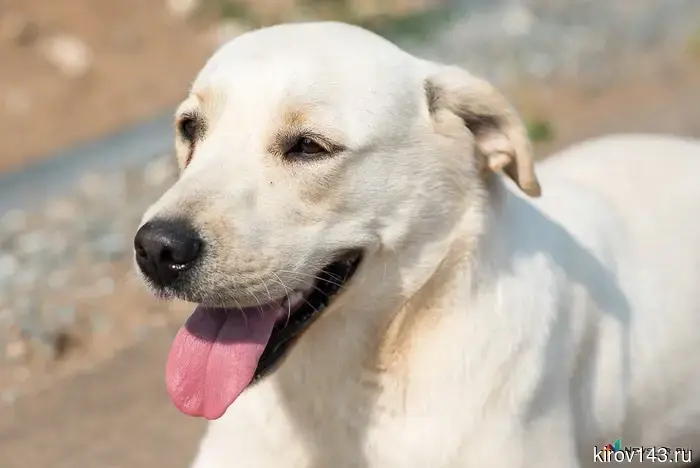 Dog handlers explained how to protect dogs from ticks.
As soon as the snow melts and the ground warms up to 5 degrees, ticks awaken. Their peak activity in the central region occurs in April-May, but the parasites are already starting to hunt now.
Dog handlers explained how to protect dogs from ticks.
As soon as the snow melts and the ground warms up to 5 degrees, ticks awaken. Their peak activity in the central region occurs in April-May, but the parasites are already starting to hunt now.
 In Kirov, a sham marriage ended with the deportation of a foreigner.
In the Kirov region, cases of fictitious marriages, concluded for the purpose of obtaining permits and residing in Russia, continue to be identified.
In Kirov, a sham marriage ended with the deportation of a foreigner.
In the Kirov region, cases of fictitious marriages, concluded for the purpose of obtaining permits and residing in Russia, continue to be identified.
 A Kirov resident returned with two medals from the Wushu Spartakiad.
Darya Semakina competed against 160 athletes from 33 regions of Russia, as well as from the People's Republic of China.
A Kirov resident returned with two medals from the Wushu Spartakiad.
Darya Semakina competed against 160 athletes from 33 regions of Russia, as well as from the People's Republic of China.
 During the special military operation, a resident of the Zuevsky district was killed.
Officials reported the death of a serviceman.
During the special military operation, a resident of the Zuevsky district was killed.
Officials reported the death of a serviceman.
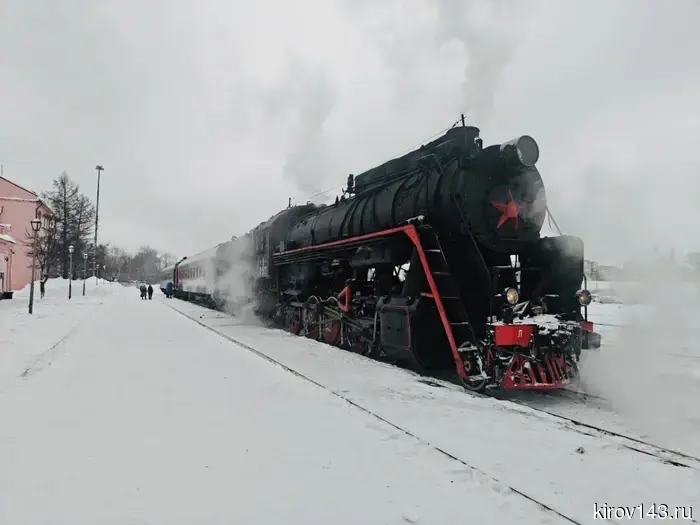 More than 2,000 tourists have taken rides on retro trains in the Kirov region since the beginning of the year.
Since the beginning of 2026, more than 2,100 passengers have used the retro trains here.
More than 2,000 tourists have taken rides on retro trains in the Kirov region since the beginning of the year.
Since the beginning of 2026, more than 2,100 passengers have used the retro trains here.
Gasoline prices are creeping up: what will happen to gas station prices in the coming months
The global fuel market is in turmoil. Due to the Middle Eastern conflict, gasoline shortages are being felt from Europe to Australia, and prices are rising. Russia is not staying out of it — authorities are already considering the possibility of limiting fuel exports. Experts have explained what motorists can expect at gas stations in the coming months.