

On October 24 the Bank of Russia is due to make another decision on the key rate. We asked analysts what decision they expect and why.
Vladimir Chernov, analyst at Freedom Finance Global:
"The Bank of Russia will most likely keep the key rate at 17%. The regulator has no reason to rush into cuts while inflation expectations of businesses and households remain high. According to the latest Bank of Russia survey, companies are factoring in cost and price increases in the range of 8–9% in the coming months (3–6). This is a signal that cost pressure persists, which means the risks of second-round effects remain. I think that in these conditions the central bank will prefer to hold current parameters to consolidate the effect of tight policy and prevent a reversal of the inflation trend.
In October I expect a pause; in December the rate will probably be cut by 100 basis points if data on core inflation and expectations confirm a sustained slowdown. Annual inflation at 8.16% y/y could fall to 6.7–6.9% by year-end. Sharper moves now would seem premature until businesses rework pricing strategies and begin to lower their forecasts for cost growth."
Olga Belenkaya, head of macroeconomic analysis at FG "Finam":
Annual inflation continued to slow in September due to a higher base in September last year, but the number of factors that could affect the outcome of the upcoming Bank of Russia meeting on October 24 has increased: in the medium term, based on the draft budget for the next three years (2026–2028), fiscal policy will not amplify inflationary risks and will allow the cycle of key rate cuts to continue, but in the near term inflationary risks have increased: the acceleration of inflation in September and notably at the start of the next month, another historical low in unemployment, further acceleration in wage growth, fuel costs, new rules for the utilization fee, and an increase in VAT from the start of next year.
Although many of these factors are regarded as temporary, they may affect inflation expectations, including slowing their decline from high levels. Meanwhile the new set of data on household inflation expectations is not yet available; it will be published during the "quiet week", as will the most recent weekly inflation data before the meeting.
Factors supporting a continuation of key rate cuts include a slowdown in corporate lending growth in September from the high levels of July–August and a relatively stable dynamic of the persistent components of inflation. In our view, the central bank may slow the pace of key rate cuts until the end of the year and into early 2026, with possible pauses, while awaiting the impact of the VAT increase on inflation and inflation expectations, and then, depending on the completion of the inflationary effect, it will be able to resume active cuts of the key rate. Thus the regulator, as at the meeting earlier in the autumn, may choose on October 24 between a pause and a further rate cut, but in this case the reduction may be more cautious and amount to 0.5 percentage points. Our expectations for the key rate at the end of 2025 were 15–16%, but 16% seems the more likely option in the current situation.
Analysts' forecasts now envisage two main scenarios: 1) keeping the key rate at 17%; 2) cutting it by 50–100 basis points. Now, with expectations for the pace of monetary policy normalization having become significantly more moderate than before the September meeting, what matters to the markets is not so much the immediate decision as confirmation of the central bank's intent to continue lowering the key rate, including at upcoming meetings. This confirmation can be given, if not in the signal itself (the central bank has preferred to maintain a neutral signal since April), then in rhetoric and in the macro forecast (for example, indicating the possibility of a rate cut at the December meeting, as well as a new forecast for the average key rate in 2026).
A cut in the key rate is expected to gradually ease constraints on the economy; however this will not happen quickly, given monetary policy lags and tighter fiscal policy in 2026.
Другие Новости Кирова (НЗК)
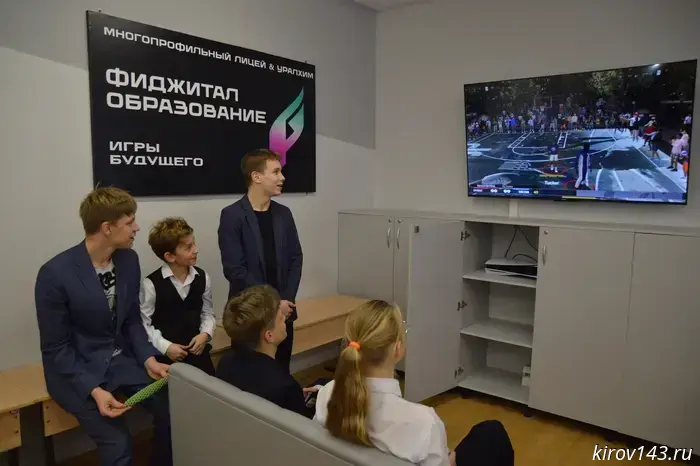 In Kirovo-Chepetsk, the results of projects from Uralchem's grant competition were evaluated.
In Kirovo-Chepetsk, the implementation of educational projects under a grant competition from the KChKhK branch of JSC OHK "Uralchem" was evaluated. The city's school principals presented their results.
In Kirovo-Chepetsk, the results of projects from Uralchem's grant competition were evaluated.
In Kirovo-Chepetsk, the implementation of educational projects under a grant competition from the KChKhK branch of JSC OHK "Uralchem" was evaluated. The city's school principals presented their results.
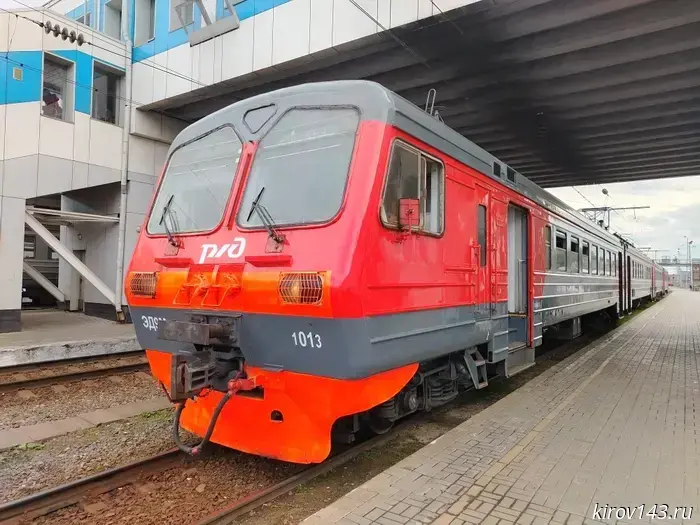 Starting October 26, the number of commuter trains between Kirov and Chepetskaya will increase.
Gorky Railway announced an expansion of the suburban train schedule on the Kirov–Chepetskaya route. The changes will take effect on October 26, 2025, and are aimed at improving transport accessibility in the region.
Three rivals of "Rodina"
The schedule for the Volga-Sport-Arena Ice Palace Cup has been announced.
The price of a liter of gasoline rose by 35 kopecks.
On Tuesday, October 21, car owners in Kirov once again saw updated price tags at gas stations: the price of a liter of gasoline rose by 35 kopecks.
Starting October 26, the number of commuter trains between Kirov and Chepetskaya will increase.
Gorky Railway announced an expansion of the suburban train schedule on the Kirov–Chepetskaya route. The changes will take effect on October 26, 2025, and are aimed at improving transport accessibility in the region.
Three rivals of "Rodina"
The schedule for the Volga-Sport-Arena Ice Palace Cup has been announced.
The price of a liter of gasoline rose by 35 kopecks.
On Tuesday, October 21, car owners in Kirov once again saw updated price tags at gas stations: the price of a liter of gasoline rose by 35 kopecks.
 They want to provide free legal assistance to Kirov residents who have been deprived of parental rights.
The Legislative Assembly committee considered the submitted initiative.
They want to provide free legal assistance to Kirov residents who have been deprived of parental rights.
The Legislative Assembly committee considered the submitted initiative.
Experts explained what to expect from the upcoming meeting on the key interest rate.