
The Deputy Head of the Ministry of Industry and Trade assessed the production of tobramycin at "Vostok".
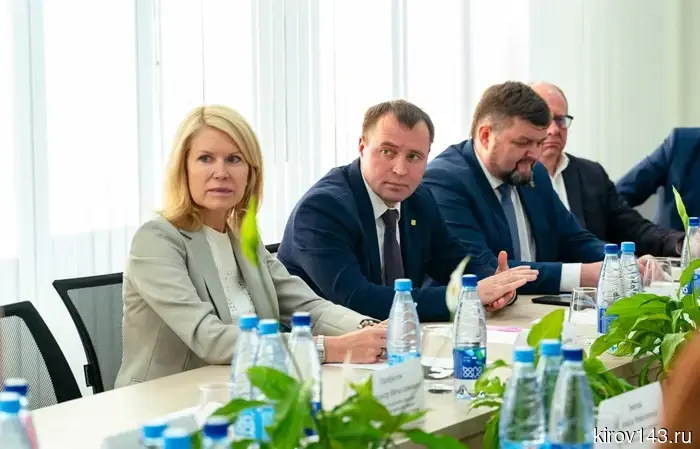
A working meeting dedicated to the creation of a proactive biological protection framework in pediatric and hospital practice took place at the enterprise site in the settlement of Vostochny. Representatives from federal and regional government bodies, leading medical and scientific centers, and specialists in pharmacology, pulmonology, pediatrics, military medicine, and biological protection participated in it.
One of the features of the meeting was the direct dialogue between the manufacturer and the medical community. Experts discussed in which areas domestic tobramycin is most in demand by the healthcare system and what dosage forms are necessary for practical medicine.
As a result of the discussion, priority areas were identified, including the treatment of respiratory organ diseases and the use of the antibiotic in military medicine. For specific areas, specialists determined the forms of the drug that may be in demand by the healthcare system. The recommendations obtained are planned to be taken into account by the enterprise in the further development of its production strategy.
"The full cycle ensures technological sovereignty"
Ekaterina Priezzheva noted that the development of production at "Vostok" corresponds to several strategic directions of state policy — the development of domestic full-cycle pharmaceutical production, combating the resistance of pathogens to antibacterial drugs, and the tasks of the national project "New Technologies for Health Preservation."
"Investments in the full cycle are long and not easy. But it is precisely the full cycle of drug production that ensures the technological sovereignty of our country," emphasized the deputy minister.
According to her, domestic production is also fundamentally important for the accessibility of antibacterial therapy to Russian patients and reducing dependence on foreign supplies.
The production of the antibiotic at the Kirov enterprise includes all the main stages — from obtaining the active pharmaceutical ingredient by biotechnological methods to the release of the finished dosage form. The capacity of the enterprise is up to 5,000 kg of substance and up to 3 million doses of the finished drug per year.
The drug belongs to the third generation of aminoglycosides. It is used in the treatment of a number of severe bacterial infections caused by microorganisms sensitive to it, including infections of the lower respiratory tract, central nervous system, skin, bones, and soft tissues.
At the same time, Ekaterina Priezzheva pointed out that the organization of production is only part of the drug's journey to the patient. Further work is needed on the registration of dosage forms, inclusion of drugs in clinical recommendations and necessary lists, as well as interaction with the medical community.
"It is very important to have the trust of the medical community in domestic drugs. This is also one of the tasks we face," noted the deputy minister.
From preserving production to development
Denis Pestrikov, Deputy Chairman of the Government of the Kirov Region, noted that "Vostok" has gone through many years of development of the production site. He reminded that the enterprise is among those from the Soviet period that have not only been preserved but also continue to develop.
According to Pestrikov, the projects currently being implemented in the region in the field of bioeconomics are aimed, among other things, at import substitution, and the practice of bioeconomics development formed in the Kirov region has previously been recognized as model and recommended for dissemination in other subjects of the Russian Federation.
The general director of the enterprise, Dmitry Panteleev, informed the meeting participants about the further development of the production site. They do not intend to limit themselves to one drug: the existing capacities allow for the expansion of the line of biopharmaceutical products. Other drugs and vaccines are among the promising directions being considered.
The Ministry of Industry and Trade is preparing new support measures
At the end of the meeting, Ekaterina Priezzheva spoke about new tools for state support of domestic pharmaceutical development.
According to her, the Ministry of Industry and Trade plans to support the costs of the most expensive third phase of clinical trials of innovative drugs. A draft of the corresponding resolution has already been submitted to the government. At the first stage, 21 areas have been identified, but the list is expected to be expanded in the future.
In addition, a decision has been made to extend support to the first and second phases of research.
Priezzheva explained the necessity of such an approach by forming a full-fledged "funnel" of domestic developments: without support for drugs in the early stages, an insufficient number of Russian projects will reach the third phase. New tools are planned to be offered to Russian manufacturers, scientists, and research institutions.
Thus, the meeting held in Vostochny became not only a presentation of the enterprise's production capabilities. The medical community outlined practical directions for the further development of the drug, while representatives of the federal authorities indicated mechanisms that could help Russian pharmaceutical manufacturers move from development and production to the real application of domestic medicines.
Другие Новости Кирова (НЗК)
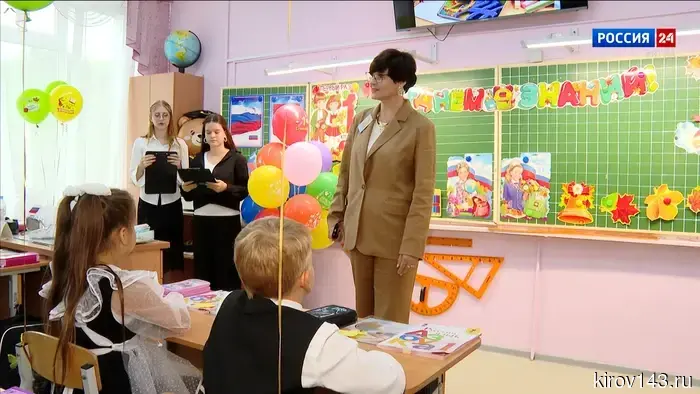 В Кировской области за школьные парты сели более 11 тысяч первоклассников.
Сегодня в России отмечают День знаний. В новый учебный год вступили почти восемнадцать миллионов учащихся со всей страны. В Кировской области за парты впервые сели более одиннадцати тысяч первоклассников. Как прошёл праздник — смотрите в нашем репортаже. ЕКАТЕРИНА КУДРИНА: «Первое сентября для
В Кировской области за школьные парты сели более 11 тысяч первоклассников.
Сегодня в России отмечают День знаний. В новый учебный год вступили почти восемнадцать миллионов учащихся со всей страны. В Кировской области за парты впервые сели более одиннадцати тысяч первоклассников. Как прошёл праздник — смотрите в нашем репортаже. ЕКАТЕРИНА КУДРИНА: «Первое сентября для
 The Deputy Head of the Ministry of Industry and Trade assessed the production of tobramycin at "Vostok".
The Deputy Minister of Industry and Trade of the Russian Federation, Ekaterina Priezzheva, visited the production site of the "Vostok" enterprise in the Kirov region, where the full-cycle production of domestic antibiotics has been restored. According to her, it is the full cycle of pharmaceutical production that ensures the technological sovereignty of the country and reduces dependence on foreign supplies.
The Deputy Head of the Ministry of Industry and Trade assessed the production of tobramycin at "Vostok".
The Deputy Minister of Industry and Trade of the Russian Federation, Ekaterina Priezzheva, visited the production site of the "Vostok" enterprise in the Kirov region, where the full-cycle production of domestic antibiotics has been restored. According to her, it is the full cycle of pharmaceutical production that ensures the technological sovereignty of the country and reduces dependence on foreign supplies.
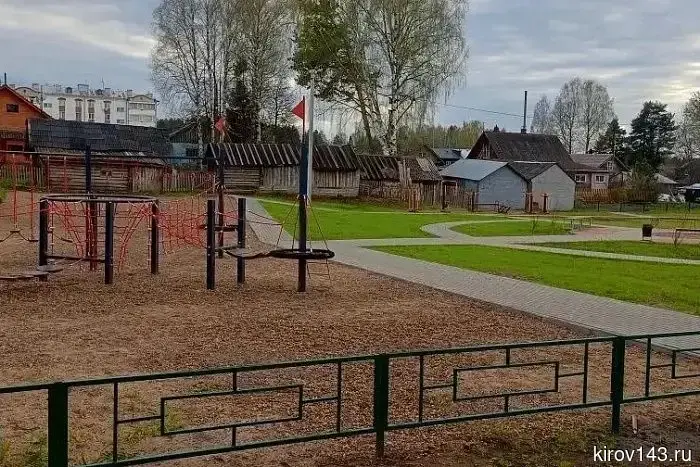 В Барановщине и Нижнеивкино были открыты спортивно-игровые площадки.
В Барановщине и Нижнеивкино Куменского района были открыты спортивно-игровые площадки, сообщают в областном правительстве. Идея о создании современных площадок исходила от местных жителей. На площадках предусмотрены зоны для детей младшего и среднего возраста, а также современный комплекс уличных тренажеров. Кроме того,
В Барановщине и Нижнеивкино были открыты спортивно-игровые площадки.
В Барановщине и Нижнеивкино Куменского района были открыты спортивно-игровые площадки, сообщают в областном правительстве. Идея о создании современных площадок исходила от местных жителей. На площадках предусмотрены зоны для детей младшего и среднего возраста, а также современный комплекс уличных тренажеров. Кроме того,
 На сцене ОДНТ состоится показ рок-драмы «Орфей и Эвридика», представленная театральной труппой из Нижнего Новгорода.
В Кирове 4 сентября в Областном доме народного творчества состоится показ рок-драмы «Орфей и Эвридика» театральной группы из Нижнего Новгорода. Спектакль начнется в 13:00. Режиссёр Михаил Кулалаев предлагает современную интерпретацию одноимённого мифа, в центре которого находится история двух.
На сцене ОДНТ состоится показ рок-драмы «Орфей и Эвридика», представленная театральной труппой из Нижнего Новгорода.
В Кирове 4 сентября в Областном доме народного творчества состоится показ рок-драмы «Орфей и Эвридика» театральной группы из Нижнего Новгорода. Спектакль начнется в 13:00. Режиссёр Михаил Кулалаев предлагает современную интерпретацию одноимённого мифа, в центре которого находится история двух.
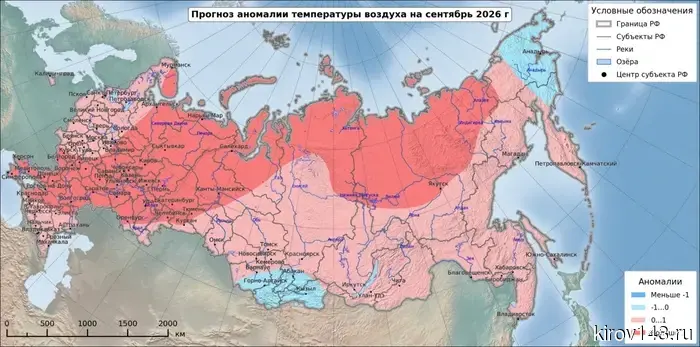 September in Kirov may become abnormally warm.
According to the calculations of the Hydrometeorological Center of Russia, the first month of autumn in the Kirov region may deviate from the climatic norm in terms of temperature background. Precipitation is expected to be no more than usual.
September in Kirov may become abnormally warm.
According to the calculations of the Hydrometeorological Center of Russia, the first month of autumn in the Kirov region may deviate from the climatic norm in terms of temperature background. Precipitation is expected to be no more than usual.
The Deputy Head of the Ministry of Industry and Trade assessed the production of tobramycin at "Vostok".
The Deputy Minister of Industry and Trade of the Russian Federation, Ekaterina Priezzheva, visited the production site of the "Vostok" enterprise in the Kirov region, where the full-cycle production of domestic antibiotics has been restored. According to her, it is the full cycle of pharmaceutical production that ensures the technological sovereignty of the country and reduces dependence on foreign supplies.