
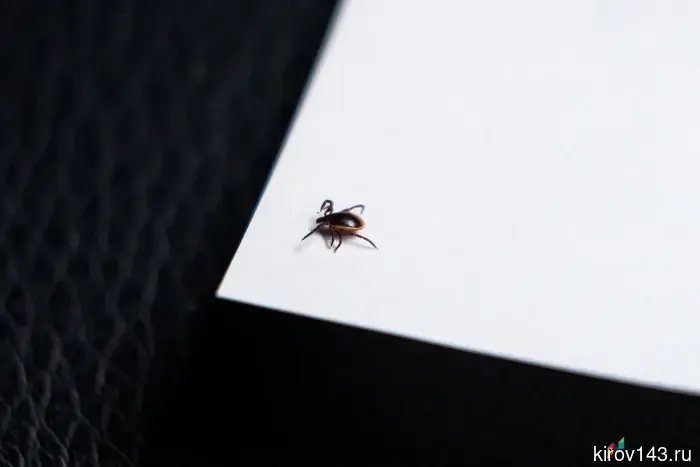
Ticks are returning: doctor warns of autumn peak danger
While many believe the tick season is over, Ixodes ticks are becoming active again. According to infectious disease specialist and medical science candidate Andrey Pozdnyakov, the second peak occurs at the end of August — autumn. Depending on the weather, it can last until stable cooling, and in warm regions — even until November.
In spring and early summer, mainly adult ticks are active, but by the end of August, a new generation appears, including nymphs — young ticks smaller than a poppy seed. They are almost invisible on the skin. Additionally, after the summer heat and dryness, ticks come out onto the grass and bushes when the temperature drops to about 10–20 degrees and humidity rises.
"The tick does not look at the calendar; it reacts to temperature and humidity," noted the specialist.
According to the doctor, the main danger in autumn lies not only in the ticks themselves but also in the decreased vigilance of people. In spring, a person usually knows they are in a risk zone, checks themselves more often, and seeks help more quickly. In autumn, however, a bite often goes unnoticed, and the first symptoms are mistaken for a common cold.
The autumn tick is no less dangerous than the spring one. Tick-borne encephalitis, borreliosis (Lyme disease), anaplasmosis, ehrlichiosis, and other infections can be transmitted through bites. There are also cases of infection with several pathogens at once.
The doctor advises paying special attention to borreliosis. The disease can start with a small redness at the bite site, which gradually increases, along with weakness, aches, and a low temperature. Without timely treatment, the infection can lead to damage to the joints, nervous system, and heart.
The risk also increases due to the autumn lifestyle: people are mass going mushroom picking, spending time at dachas, walking in the forest and underbrush, and walking dogs. At the same time, nymphs are so small that their attachment often goes unnoticed.
What to do after a bite
If a tick does attach, it must be removed as quickly as possible. It is better to go to a trauma center. When removing a tick yourself, it is not recommended to smear it with oil or try to crush it. It is advised to keep the parasite in a closed container — it can be tested by PCR for pathogens of infections.
If the tick is lost or damaged, the person should be examined. However, immediately after a bite, tests may be uninformative: antibodies do not appear right away. Typically, tests are conducted no earlier than 10–14 days later, and if borreliosis is suspected, repeated diagnostics may be required.
The doctor also recommends not waiting for pronounced symptoms to appear and not delaying seeking medical help.
Autumn, according to the specialist, is also suitable for planned vaccination against tick-borne encephalitis: a course started in September or October will help form protection for the next spring season. However, there is currently no vaccine for borreliosis.
Therefore, during autumn walks, doctors advise wearing closed clothing, using repellents, and regularly checking oneself. It is essential to check not only exposed areas of skin but also hair, the area behind the ears, armpits, groin, and popliteal fossae. After returning home, it is advisable to inspect clothing, backpacks, and pets.
Другие Новости Кирова (НЗК)
 Ticks are returning: doctor warns of autumn peak danger
The second wave of parasite activity begins at the end of August and can last until October and even November.
Ticks are returning: doctor warns of autumn peak danger
The second wave of parasite activity begins at the end of August and can last until October and even November.
 Residents of the Darovsky district will have their garbage collection fees recalculated.
The Prosecutor's Office of the Darovsky District achieved a recalculation of the fees for the removal of solid municipal waste for residents of four settlements. The total amount of the adjustment was over 544 thousand rubles.
Sokolov went to the Nizhny Novgorod region.
The governor explained why he temporarily left the region.
Residents of the Darovsky district will have their garbage collection fees recalculated.
The Prosecutor's Office of the Darovsky District achieved a recalculation of the fees for the removal of solid municipal waste for residents of four settlements. The total amount of the adjustment was over 544 thousand rubles.
Sokolov went to the Nizhny Novgorod region.
The governor explained why he temporarily left the region.
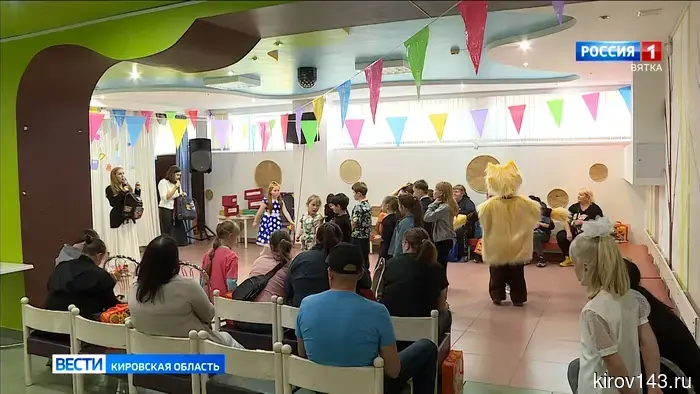 В УМВД по Кировской области организовали праздник для первоклассников из семей, которые требуют помощи.
В преддверии Дня знаний в УМВД по Кировской области совместно с Общественным советом устроили праздник для первоклассников из семей, нуждающихся в помощи. Мероприятие было организовано в рамках акции «Помоги пойти учиться». Более подробно — в нашем репортаже. Владислав с детства увлекается пением и выступлениями перед публикой.
В УМВД по Кировской области организовали праздник для первоклассников из семей, которые требуют помощи.
В преддверии Дня знаний в УМВД по Кировской области совместно с Общественным советом устроили праздник для первоклассников из семей, нуждающихся в помощи. Мероприятие было организовано в рамках акции «Помоги пойти учиться». Более подробно — в нашем репортаже. Владислав с детства увлекается пением и выступлениями перед публикой.
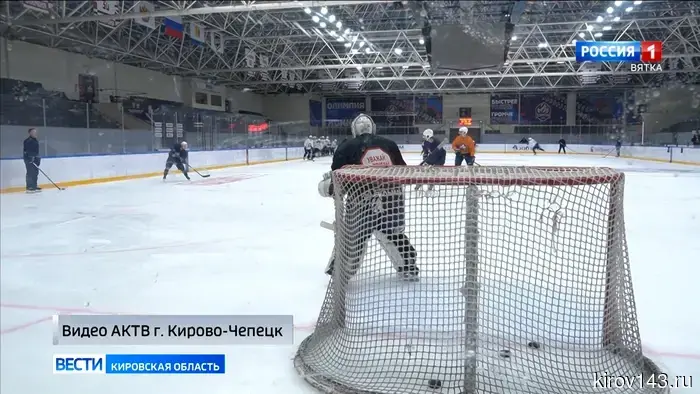 Кирово-Чепецкая команда «Олимпия» активно готовится к грядущему сезону.
В предстоящем сезоне во Всероссийской хоккейной лиге Кирово-Чепецкая "Олимпия" будет выступать с несколькими игроками, имеющими опыт игры в КХЛ. Опытные хоккеисты сделают всё возможное, чтобы команда оказалась в числе 16 лучших клубов ВХЛ по результатам сезона. Под руководством Михаила
Кирово-Чепецкая команда «Олимпия» активно готовится к грядущему сезону.
В предстоящем сезоне во Всероссийской хоккейной лиге Кирово-Чепецкая "Олимпия" будет выступать с несколькими игроками, имеющими опыт игры в КХЛ. Опытные хоккеисты сделают всё возможное, чтобы команда оказалась в числе 16 лучших клубов ВХЛ по результатам сезона. Под руководством Михаила
 A cultural heritage site has been registered in the region - the grave of a Red Army soldier.
The object has been registered in the cadastre.
A cultural heritage site has been registered in the region - the grave of a Red Army soldier.
The object has been registered in the cadastre.
Ticks are returning: doctor warns of autumn peak danger
The second wave of parasite activity begins at the end of August and can last until October and even November.