

Kirov teenagers were explained how to save themselves from internet recruiters.
The Investigative Committee of Russia for the Kirov Region states: cases of involving minors in illegal activities through the internet have increased. Recruiters operate through fake pages on social networks, gaming chats, and messengers, targeting teenagers as victims. The scheme is well-established — the child is promised quick earnings without hassle, and then given tasks: from photographing infrastructure objects to arson or delivering certain items.
The main danger, according to investigators, is that young people rarely realize the legal consequences of their actions. Meanwhile, such assignments can fall under articles on terrorism, extremism, and sabotage, with penalties being among the harshest in the Criminal Code.
The agency listed what should categorically not be done: agreeing to dubious tasks from strangers, forwarding suspicious links or messages, spreading calls for violence and extremist instructions. If an offer has already been received — the algorithm is simple and clear: refuse, end communication, save screenshots, block the sender, and immediately inform parents, teachers, or the police about what happened.
The Investigative Committee emphasizes: timely seeking help is not a sign of weakness, but a conscious position that can prevent tragedy and protect dozens of people.
Parents, in turn, are advised not to leave their children's virtual lives unchecked, to talk to them more often about the risks posed by the internet, and to closely monitor their child's social circle online.
Другие Новости Кирова (НЗК)
 A big belly with normal weight — is it a reason to check the liver?
Many are convinced that fatty liver disease is an issue exclusively for obese individuals. However, doctors warn that the condition is increasingly being diagnosed in seemingly slim patients.
A big belly with normal weight — is it a reason to check the liver?
Many are convinced that fatty liver disease is an issue exclusively for obese individuals. However, doctors warn that the condition is increasingly being diagnosed in seemingly slim patients.
 The aspen mushroom celebrates its 400th anniversary.
The residents of the village were congratulated by the deputy of the Legislative Assembly, the deputy director of the branch of the company "URALCHEM," Boris Vesnin.
The aspen mushroom celebrates its 400th anniversary.
The residents of the village were congratulated by the deputy of the Legislative Assembly, the deputy director of the branch of the company "URALCHEM," Boris Vesnin.
 В селе Калинино Малмыжского района состоялся межрегиональный Сабантуй.
В Год единства народов России село Калинино Малмыжского района стало площадкой для проведения межрегионального праздника Сабантуй. Это событие для тружеников села собрало 20 тысяч гостей из различных уголков страны, представляющих разнообразные народы и культуры. Праздник стартовал с торжественного шествия и...
В селе Калинино Малмыжского района состоялся межрегиональный Сабантуй.
В Год единства народов России село Калинино Малмыжского района стало площадкой для проведения межрегионального праздника Сабантуй. Это событие для тружеников села собрало 20 тысяч гостей из различных уголков страны, представляющих разнообразные народы и культуры. Праздник стартовал с торжественного шествия и...
 A big belly with normal weight — is it a reason to check the liver?
Many are convinced that fatty liver disease is an issue exclusively for obese individuals. However, doctors warn that the condition is increasingly being diagnosed in seemingly slim patients.
A big belly with normal weight — is it a reason to check the liver?
Many are convinced that fatty liver disease is an issue exclusively for obese individuals. However, doctors warn that the condition is increasingly being diagnosed in seemingly slim patients.
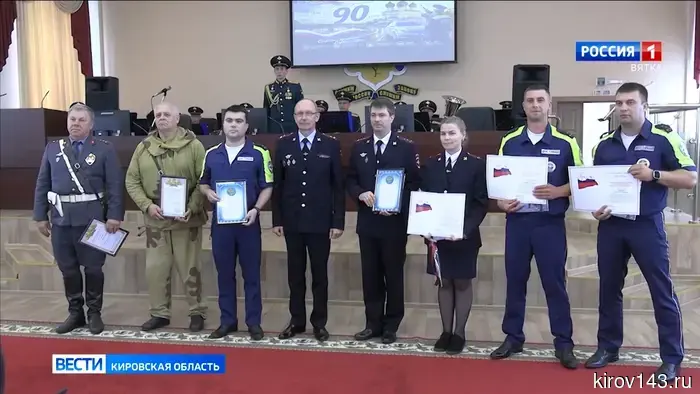 Госавтоинспекция сегодня празднует свое 90-летие.
В областном управлении МВД с юбилеем и профессиональным праздником сотрудников, действующих и ветеранов, поздравили руководство регионального Управления МВД, представители областной администрации, а также ветеранских и общественных организаций. Награды были вручены отличившимся сотрудникам Госавтоинспекции и ветеранам.
Госавтоинспекция сегодня празднует свое 90-летие.
В областном управлении МВД с юбилеем и профессиональным праздником сотрудников, действующих и ветеранов, поздравили руководство регионального Управления МВД, представители областной администрации, а также ветеранских и общественных организаций. Награды были вручены отличившимся сотрудникам Госавтоинспекции и ветеранам.
 Kirov teenagers were explained how to save themselves from internet recruiters.
Fake accounts, enticing job offers, and requests that seem harmless at first glance are how criminals lure students into crimes. The regional investigative department has published a memo on how to recognize threats and not pay with your freedom for someone else's idea.
Kirov teenagers were explained how to save themselves from internet recruiters.
Fake accounts, enticing job offers, and requests that seem harmless at first glance are how criminals lure students into crimes. The regional investigative department has published a memo on how to recognize threats and not pay with your freedom for someone else's idea.
Kirov teenagers were explained how to save themselves from internet recruiters.
Fake accounts, enticing job offers, and requests that seem harmless at first glance—this is how criminals draw students into crimes. The regional investigative department has published a memo on how to recognize threats and not pay with your freedom for someone else's idea.