

"The Law on Grandmothers" - for election rhetoric?
Despite the "rawness" of the parliamentary initiative established the day before at the "social" committee meeting, the elected representatives, likely inspired only by the idea of upcoming praise from federal and partly local voices and agencies, eagerly rejected the second reading of the future "amended" law. Although they are granted a legal right for an entire month—until the new plenary session—to clarify the meaning and parameters of the Regulation, its financial viability, and to submit competent corrective proposals, this is merely to satisfy personal interests, let alone the public interest.
By the way, the voting process recorded the absence of the mandatory "subordinate government act" explaining the overall meaning and details of the "newborn law." Without it, the status of the supposedly "benefited grandmothers" is no higher than that of a witness or someone who "passed by and heard something."
A Beautiful Wrapper
If we delve into the essence of the "grandmother law," its populist side is indeed pleasant: a mother or father of an infant can return to work by taking maternity leave for a grandmother or grandfather. One of them will receive an additional payment of up to 45,800 rubles to their pension, provided that the mother is under 24 years old. However, if the mother is 25 or older, the subsidy along with the pension will amount to 38,200 rubles.
Deputy Albert Bikalyuk called the new "grandmother" law a "hollow wrapper," noting the "haste of its introduction and adoption," citing the lack of financial and economic justification. As Bikalyuk explained to the Legislative Assembly, the Ministry of Finance of the Russian Federation instructed regional ministries to "halve the budget deficit." In particular, this should be achieved by reducing expenditures on "unprotected items": co-financing of the PPMI, organizing holidays, purchasing representations, and so on, rather than burdening it with new expenses for the "whims of demagogues."
Moreover, the highly hypothetical proportionality of the "grandmother law," defined by budget expenditures of 41.8 million rubles (for 2027), is supposed to be compensated (to reduce the budget deficit) by the income tax from the mother returning to work, calculated at 8,900 rubles per month. So, with simple calculations, the monthly income tax collection should come from almost 400 mothers whose children are between zero and three years old. And each of these young mothers should earn no less than... 70,000 rubles. This is unattainable for students, saleswomen, or nurses. Moreover, it is also beyond the reach of the absolute majority of Kirov's youth, especially those living in the regions of the area, let alone in rural areas.
The Law is More Likely Dead
By the way, special attention should be paid to the age of the mothers. If we consider "under 24 years," or even from 25, then the grandmother at the time of the grandchild's birth is unlikely to be over fifty. And even if she is, she will have a good decade or slightly less until reaching retirement age. It is unlikely that any of the "grandmothers" would agree to interrupt their pension experience. Thus, the degree of populism of the "law" tends towards, probably with rare exceptions, almost absolute zero.
The deputy also pointed out the situation related to the child's illness. And when he asked about "sick leave": who will receive the sick leave? he could not assess the answer—"of course, the grandmother." He reminded that, according to the Federal Law, every mother has the right to apply for paid sick leave to care for a child. Thus, budget expenditures, albeit temporarily—if the child, God forbid, is ill for a short time—still double. And the clarification "about sick leave" in the new law is not regulated in any way.
By the way, in response to the unheard arguments about the need to refine the "grandmother law," Bikalyuk thanked the assembly "for your approval." He explained to Newsler.ru that the current Legislative Assembly finds it easier to adopt laws that do not raise doubts and do not require discussions. For example, to adopt a law on kisses and awards for the fifth anniversary of the authorities, where none of its adopters will argue about the passion or duration of kisses, which, like in the thick Brezhnev period, serve as a kind of "standard of managerial stability."
Другие Новости Кирова (НЗК)
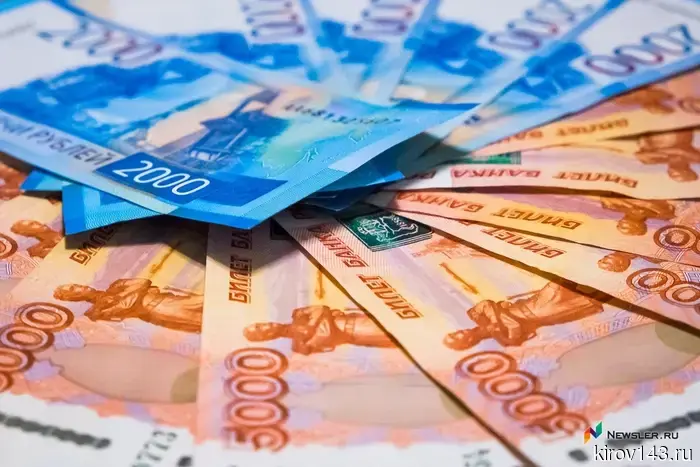 Insurance instead of arrest: Kirov bailiffs sent one million rubles from the debtor to the budget.
In the Kirov region, bailiffs collected a tax debt from an individual entrepreneur without waiting for the money to arrive in his account. The reason for the collection was an insurance payout for a car involved in an accident.
Insurance instead of arrest: Kirov bailiffs sent one million rubles from the debtor to the budget.
In the Kirov region, bailiffs collected a tax debt from an individual entrepreneur without waiting for the money to arrive in his account. The reason for the collection was an insurance payout for a car involved in an accident.
 Специалист Роспотребнадзора опровергла мифы о ВИЧ-инфекции.
Анастасия Покровская, руководитель клинико-диагностического отделения специализированного научно-исследовательского отдела по профилактике и борьбе со СПИДом, разрушила 5 мифов о ВИЧ. Информация предоставлена Управлением Роспотребнадзора по Кировской области. Миф №1. ВИЧ можно заразиться в быту — через
Специалист Роспотребнадзора опровергла мифы о ВИЧ-инфекции.
Анастасия Покровская, руководитель клинико-диагностического отделения специализированного научно-исследовательского отдела по профилактике и борьбе со СПИДом, разрушила 5 мифов о ВИЧ. Информация предоставлена Управлением Роспотребнадзора по Кировской области. Миф №1. ВИЧ можно заразиться в быту — через
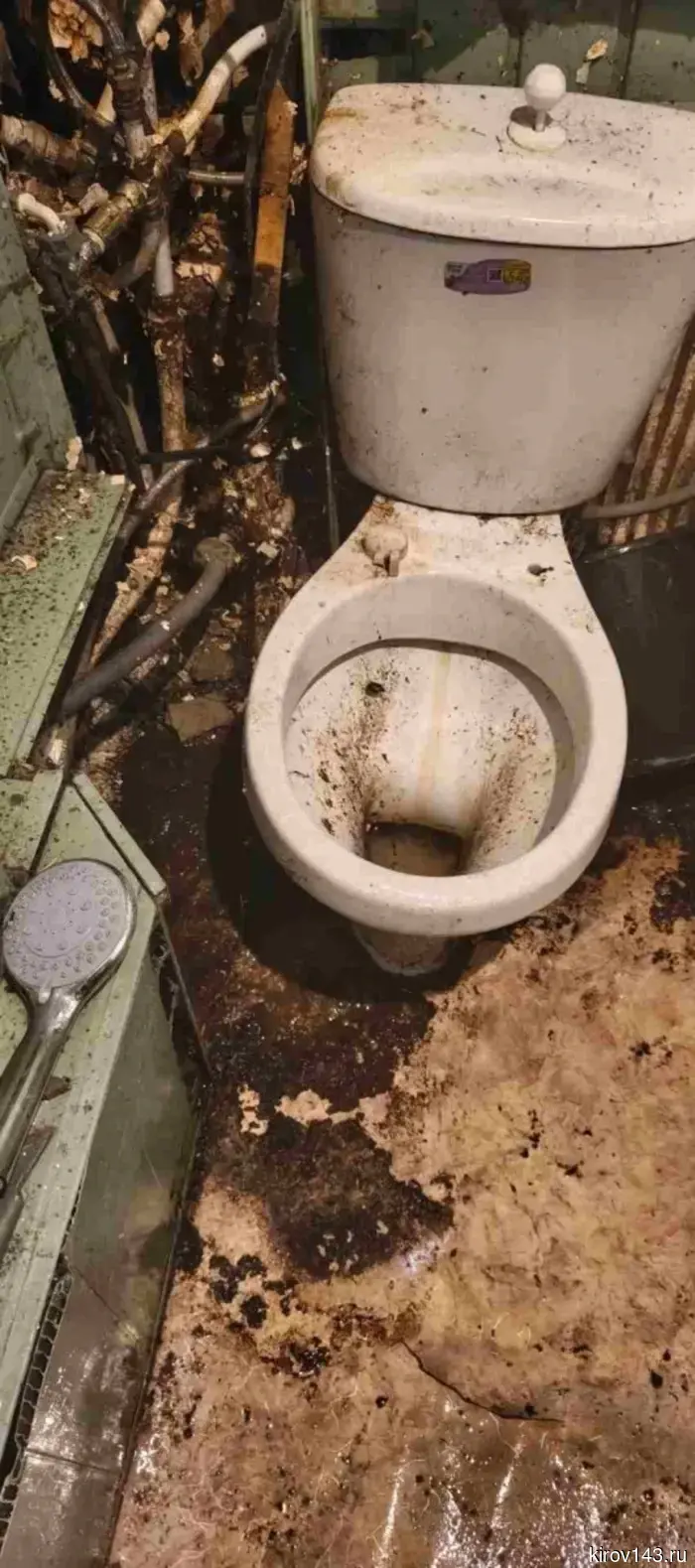 The Housing Inspectorate will check the house where a large family lives among sewage drains.
The State Housing Inspection of the Kirov Region responded to the situation in the house on Ordzhonikidze Street in Novovyatsk, where a large family has been living in unsanitary conditions for over a year due to leaking sewage.
The Housing Inspectorate will check the house where a large family lives among sewage drains.
The State Housing Inspection of the Kirov Region responded to the situation in the house on Ordzhonikidze Street in Novovyatsk, where a large family has been living in unsanitary conditions for over a year due to leaking sewage.
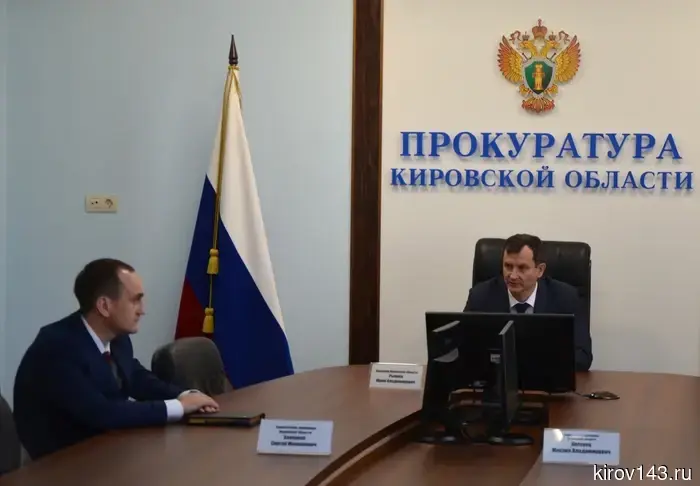 A new deputy has been appointed in the Prosecutor's Office of the Kirov Region.
The agency announced the appointment of Klopunov.
A new deputy has been appointed in the Prosecutor's Office of the Kirov Region.
The agency announced the appointment of Klopunov.
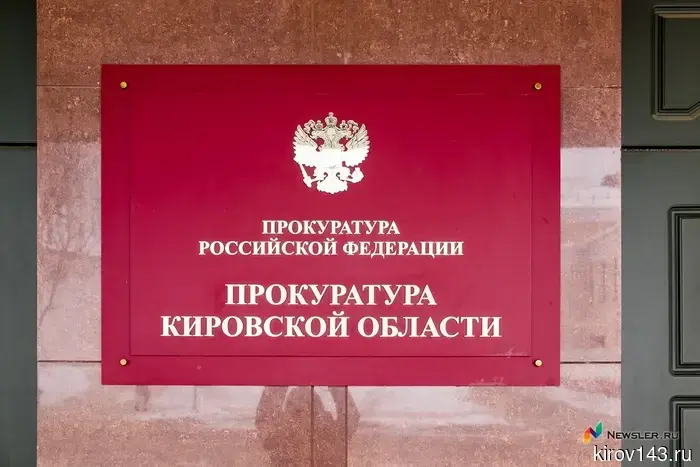 The widow and the two-year-old son of the fighter from the special military operation in the Kirov region have been granted access to the deceased's account.
A woman from the Bogorodsky district could not access nearly 400 thousand rubles remaining in her husband's bank account, despite having already formalized her rights to other inherited property. The issue was resolved after a lawsuit from the prosecutor's office.
The widow and the two-year-old son of the fighter from the special military operation in the Kirov region have been granted access to the deceased's account.
A woman from the Bogorodsky district could not access nearly 400 thousand rubles remaining in her husband's bank account, despite having already formalized her rights to other inherited property. The issue was resolved after a lawsuit from the prosecutor's office.
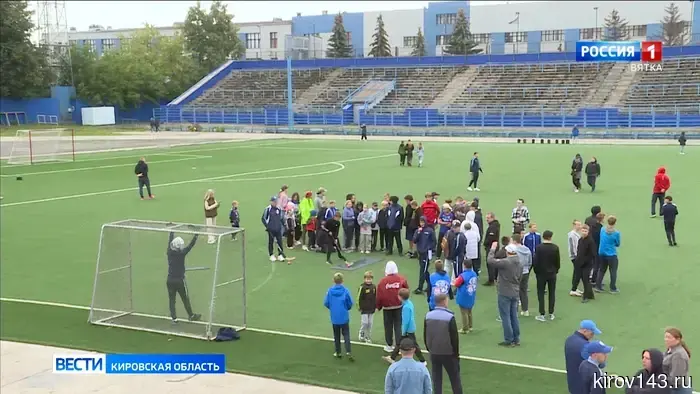 Спортивное мероприятие на «Родине»: кировчан приглашают на фестиваль «Будь ближе».
5 июля на стадионе «Родина» в Кирове состоится летний фестиваль молодёжи и спорта «Будь ближе». Об этом информировали в администрации областного центра. Приглашаются все желающие: профессиональные атлеты, любители активного времяпрепровождения и семьи с детьми. Вход бесплатный, но требуется предварительная регистрация.
Спортивное мероприятие на «Родине»: кировчан приглашают на фестиваль «Будь ближе».
5 июля на стадионе «Родина» в Кирове состоится летний фестиваль молодёжи и спорта «Будь ближе». Об этом информировали в администрации областного центра. Приглашаются все желающие: профессиональные атлеты, любители активного времяпрепровождения и семьи с детьми. Вход бесплатный, но требуется предварительная регистрация.
"The Law on Grandmothers" - for election rhetoric?
On May 21, 2026, the deputies of the Legislative Assembly of the Kirov Region hurriedly voted "in favor" of amendments to the regional law "On the Measure of Social Support for Families with Children," conveniently referred to as the "grandmothers' law," during the first reading.