
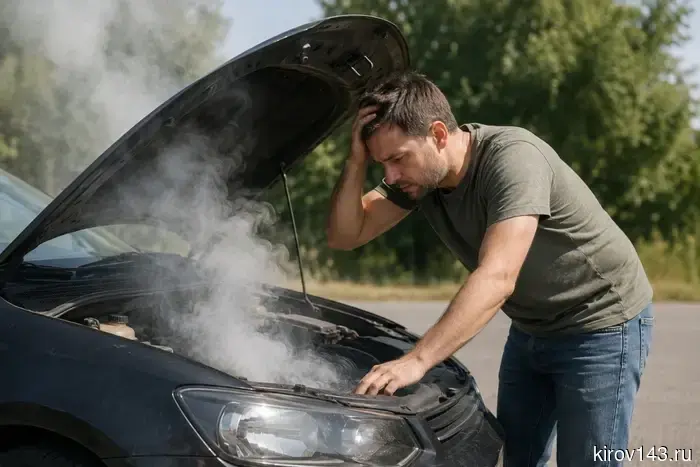
Expensive foreign cars with powerful engines: which cars are almost guaranteed to become victims of Euro-3
On the risks for cars and which vehicles are almost guaranteed to "die" on Euro-3 standard gasoline, we learned from Kirov resident Vadim Fedotov — a racing car pilot, two-time champion of Russia in rally raids in the "T3" class, and a master of sports.
"Zhiguli" will not suffer
As Vadim Fedotov reported, everything depends on the age of the car, its model, and the manufacturer. "If we are talking about 'Zhiguli', then nothing will happen. Nothing terrible will happen to cars produced by the Volga Automobile Plant until 2026, or even until 2029 — technologically, nothing changes significantly there. They continue to produce engines that are not specifically 'tuned' for Euro-5. It's more marketing than technology. With Chinese brands, in principle, nothing should happen because almost all their engines are assembled using old technology," said Vadim Fedotov.
"Young" cars, those under five years old, especially well-known European brands with powerful engines, may face problems with Euro-3. "Due to lower quality fuel, such cars may experience increased engine wear, 'scoring' of the cylinder block, and, consequently, subsequent engine failure. These are cars from popular European, German brands, for example, BMW, Mercedes, Audi, Porsche, especially modern models. That is, the newer the car, the more horsepower the engine has, the higher the requirements for fuel quality," noted Fedotov.
Modern "Zhiguli", for example, the "Lada Vesta", should also not "die" from Euro-3 standard gasoline. "For this manufacturer, Euro-3 should not cause any serious damage, since technologically this unit has not undergone significant changes between Euro-3 and Euro-5. Yes, owners of 'VAZ' cars may face consequences from low-quality gasoline, but they will not be fatal. This means more frequent maintenance or replacement of certain components and assemblies, but nothing critical will happen to them," says Fedotov.
"Chinese" cars turned out to be resilient
As for cars from Chinese brands, Kirov racer Vadim Fedotov believes that they should not face any serious problems either. He noted that modern "Chinese" cars may experience accelerated wear of certain components, contamination of the engine injectors, but nothing more than that. Although some media and among car owners, there are rumors that "Chinese" cars will "fail" first.
"Everyone is just waiting for them to start breaking down, so that one day all Chinese cars will break down. But, as practice shows, Chinese cars, which, for example, are parked in the garages of various government agencies, drive more and are more resilient than, for example, the beloved Japanese manufacturers without repairs," noted Vadim Andreyevich.
What to do
In the current situation with gasoline — both in terms of quantity and quality, car owners have a limited choice of actions. The most obvious one is to switch to public transport. But this, unfortunately, is not suitable for everyone. Another option is to buy for an amount within 100-150 thousand rubles a fast electric bicycle or a "kopeck", "six" or another car from the Soviet era. Such cars "consume" practically everything. And Euro-3 will not affect their engine in any way. However, in this case, the car owner may incur additional expenses: a second transport tax, a second OSAGO policy, costs for spare parts, which will need to be replaced very often on such an old car.
And one more option — additives. "Personally, I buy and use additives that increase the octane number of the fuel. That is, I fill the car with fuel and immediately pour the additive into the tank. But you need to buy a good additive from a well-known and reliable brand. Order in advance in the required quantity and add to the tank at each refueling, according to the instructions," noted Vadim Fedotov.
Другие Новости Кирова (НЗК)
 Семь студентов колледжа присоединились к кировским народным дружинам.
В торжественной атмосфере в Кировском технологическом колледже пищевой промышленности учащимся были вручены удостоверения народных дружинников. В мероприятии принимали участие исполняющий обязанности заместителя начальника полиции городского УМВД подполковник полиции Константин Пономарёв и директор колледжа Светлана Печёнкина.
Семь студентов колледжа присоединились к кировским народным дружинам.
В торжественной атмосфере в Кировском технологическом колледже пищевой промышленности учащимся были вручены удостоверения народных дружинников. В мероприятии принимали участие исполняющий обязанности заместителя начальника полиции городского УМВД подполковник полиции Константин Пономарёв и директор колледжа Светлана Печёнкина.
 Dirty teeth — a sick heart?
Many perceive dental plaque as a common aesthetic problem or at most as a cause of cavities. But dentists warn: the consequences can be much more serious.
Dirty teeth — a sick heart?
Many perceive dental plaque as a common aesthetic problem or at most as a cause of cavities. But dentists warn: the consequences can be much more serious.
 The main task is the playoffs: season results for "Olimpia"
The director, head coach, and players of Kirovo-Chepetsk's "Olympia" spoke about the features of the past season, its challenges, and future plans.
The main task is the playoffs: season results for "Olimpia"
The director, head coach, and players of Kirovo-Chepetsk's "Olympia" spoke about the features of the past season, its challenges, and future plans.
 The authorities announced sufficient fuel supplies in the region.
The Ministry of Energy and Housing and Utilities of the Kirov Region reported that fuel supplies to the region are ongoing without interruptions, and the tanks at gas stations are regularly replenished.
The authorities announced sufficient fuel supplies in the region.
The Ministry of Energy and Housing and Utilities of the Kirov Region reported that fuel supplies to the region are ongoing without interruptions, and the tanks at gas stations are regularly replenished.
 The Vyatka sharply "went up" due to rain floods.
According to amateur meteorologists, a sharp wave of rising water levels has been recorded on the Vyatka River near Kirov.
The Vyatka sharply "went up" due to rain floods.
According to amateur meteorologists, a sharp wave of rising water levels has been recorded on the Vyatka River near Kirov.
 Why exes suddenly remind us of themselves: the stars respond
Have you noticed a strange pattern? As soon as you finally exhale, calm down, and start a new life — suddenly a message arrives. From an ex. Or from someone who once disappeared without explanation.
Why exes suddenly remind us of themselves: the stars respond
Have you noticed a strange pattern? As soon as you finally exhale, calm down, and start a new life — suddenly a message arrives. From an ex. Or from someone who once disappeared without explanation.
Expensive foreign cars with powerful engines: which cars are almost guaranteed to become victims of Euro-3
Due to the legalized production of Euro-3 standard gasoline disguised as Euro-5, motorists have expressed concerns about the safety of their vehicles and the risks posed to the engine, as well as the fuel system of cars refueled with "diluted" gasoline of a lower standard.