
.jpg)
Elections-2026: digital breakthrough or old rules in new packaging? (Part I)
Prologue: elections that are never the same
In Russian political tradition, there is an unwritten rule: no federal elections are held under the same rules as the previous ones. The elections to the State Duma of the IX convocation, scheduled for September 20, 2026, are no exception. In the five years since the last Duma campaign, electoral legislation has been supplemented by two dozen federal laws. The scale of changes is such that even the organizers of the elections sometimes struggle to keep up with them.
"Since 2021, the procedure has become more technological, the rules for candidate admission have changed, as well as the voting process itself," notes "Rossiskaya Gazeta." But what lies behind this "technological" aspect? And how do those directly involved in organizing the elections view the situation?
I managed to talk to two well-known experts in the field of the electoral process. Alexey Mukhin is the general director of the Political Information Center. Alexey Martynov is the director of the Institute of New States and an associate professor at the Financial University under the Government of the Russian Federation. Their views—sometimes coinciding, sometimes diametrically opposed—allow for a comprehensive picture of what is happening with Russian elections in 2026.
Part One. Digitalization: convenience for the voter or a new tool for control?
From the COVID experiment to federal norm
Three-day voting, which will become a familiar format in 2026, emerged as a forced measure. "Do you remember when there was a referendum on the amendments to the Constitution? At that time, it was a forced measure due to the pandemic situation," recalls Alexey Martynov. However, according to him, "citizens appreciated this story": the opportunity to vote on Friday, Saturday, or Sunday turned out to be in demand.
The Central Election Commission (CEC), in turn, officially confirms: the multi-day format "remains in demand among citizens and contributes to increased convenience in participating in elections." On June 17, the commission approved three-day voting from September 18 to 20.
The story with Remote Electronic Voting (REV) is more complicated. The technology, which was an experiment in certain regions in 2021, has turned into a mass practice by 2026.
"Starting about ten years ago with an experiment in Moscow... With the development of relevant technologies, a technological solution was found through blockchain," says Mukhin.
However, not everyone shares this optimism.
Views on "transparency"
Both experts insist on the fundamental transparency of REV.
"When you identify yourself on the State Services portal and then enter a blockchain environment where no one knows who you are voting for... This is confirmed not only by our experts but also by all international specialists," notes Martynov.
With the development of digital technologies, "the human factor has less influence on the result," and abuses have decreased—simply because it has become much more complicated from a technological standpoint.
However, Alexey Mukhin, for his part, acknowledges that the question of the capabilities and attitudes towards these technologies remains "sensitive" for many regions: "The more digitalization penetrated the process, the less the human factor influenced the result. The results became significantly more accurate." At the same time, he emphasizes that the technical capabilities of regions vary: "Not all regions can afford REV—it is quite an expensive thing."
At the same time, for a complete picture, let us present the opinion of analysts who see the situation somewhat differently. Their report mentions "increasingly opaque and increasingly unaccountable procedures." A particular concern is the combination of REV with three-day voting, when "the majority of 'electronic' votes are clearly cast from workplaces" (the elections will take place on Friday, Saturday, and Sunday).
"One should not forget about the fear of voters that their will may become known to their superiors or authorities," the analysts add.
Part Two. New districts: geography as a weapon
Seven new districts and a reshaping of the map
One of the most significant changes in 2026 is the emergence of seven new single-member districts in four new subjects of the Russian Federation: the DNR (three), LNR (two), and the Zaporizhzhia and Kherson regions (one each).
At the same time, a number of regions lost one district: the Altai and Transbaikal territories, Volgograd, Voronezh, Ivanovo, Kaluga, Rostov, Smolensk, Tambov, and Tomsk regions.
"Redistricting is indeed a very delicate matter, which many specialists and participants in the processes understand as preparation for a certain result," acknowledges Alexey Mukhin. "I have been involved in these processes since the 1990s; I understand that redistricting significantly affects the result."
The "shamanism" technology with borders
How exactly does this mechanism work? Mukhin explains: "If you know the electoral history of this territory, you can 'shaman' the circles, and happiness will come to you. It is enough to know how many votes to add where to get through and obtain a mandate."
At the same time, experts insist that in this situation, the new "cut" is determined only by human/quantitative factors (the annexation of new subjects, population migration, etc.)
However, CEC Secretary Natalia Budarina explains the changes formally: the new scheme is developed "based on the current number of voters registered in the territories of the subjects of the Russian Federation."
At the same time, among deputies, political technologists, and other people forced to take one side in the political arena, one can hear assertions that "the redistricting is always carried out with the interests of the ruling party and regional elites in mind."
Part Three. Primaries and "locomotives": a drama lasting two weeks
A "locomotive" is a technology where a popular politician (a federal "heavyweight") runs for election simultaneously on a party list and in a single-member district. He attracts votes for the party and then, having obtained a mandate, transfers it to a less well-known associate.
In 2026, "United Russia" announced a reform: the candidate must choose one trajectory—either a list or a district.
"The combination that was possible in 2021 is now not allowed," the media reported in early March.
A dramatic turn
However, on March 18, just two weeks later, the rule was canceled. The ban was lifted for elections to the State Duma but retained for regional and municipal elections.
"They brought the provision in line with the legislation," the party stated. But sources from "Kommersant" explained: the ban was inconvenient for "locomotives"—popular deputies who want to run simultaneously in both a district and on a list.
Alexey Mukhin reacted to the question about the cancellation of "locomotives" with irony: "And I will report to you that in 'United Russia,' number one will be Dmitry Anatolyevich Medvedev, and number two will be Sergey Semenovich Sobyanin. What do you think, will they leave their posts for a deputy mandate?" His conclusion was harsh: "I wouldn't particularly hope that they would refuse, because this is an effective factor."
Martynov, on the contrary, sees a positive meaning in the refusal to combine: "This is honest. On the one hand, it is a convenient practice of using administrative resources, and on the other—a serious demand for fairness from voters."
He also points to the intra-party movement of veterans of the SVO, which "gives a tilt towards justice."
The price of the question: the voter is not a fool
At the same time, both experts acknowledge: the game with "locomotives" is risky. "The population reacts very poorly to this kind of technology. It works well once. But when you apply it two or three times, people already understand everything," warns Mukhin.
"The voter is already sophisticated. He does not want to be made a fool of. This affects protest voting," he adds.
Martynov believes that the new model "one candidate—one trajectory" changes the quality of elections: "This is not a quantitative but a qualitative change. The voter sees a specific candidate and understands that nothing is decided without him."
Part Four. Predictions and reality: is 50% achievable or not?
The numbers being discussed
In May 2026, experts set a target for "United Russia" at 50% of the votes on party lists. Alexey Martynov believes this is achievable: "A large systemic party with serious not only administrative but also intellectual and expert resources." According to him, a well-conducted campaign can add another 15-17 percentage points to the party's current rating (about 35% according to VTsIOM).
Alexey Mukhin is more cautious: "It's always a surprise. Because the setups break against reality. On one side, there is a setup, and on the other side—a demand for a legitimate result."
At the same time, sociology gives more modest figures. According to FOM at the end of May, the rating of "United Russia" is 36%—a drop of 3 percentage points. Meanwhile, the number of Russians preferring not to vote in the State Duma elections is growing, reports "Kommersant."
Four challenges for the campaign
At the All-Russian Electoral Forum in May 2026, Alexander Kharichev, head of the Presidential Administration of the Russian Federation for monitoring and analyzing social processes, identified four key challenges:
Information-psychological warfare against Russia
Escalation of the terrorist threat
Growth of the influence of new
Другие Новости Кирова (НЗК)
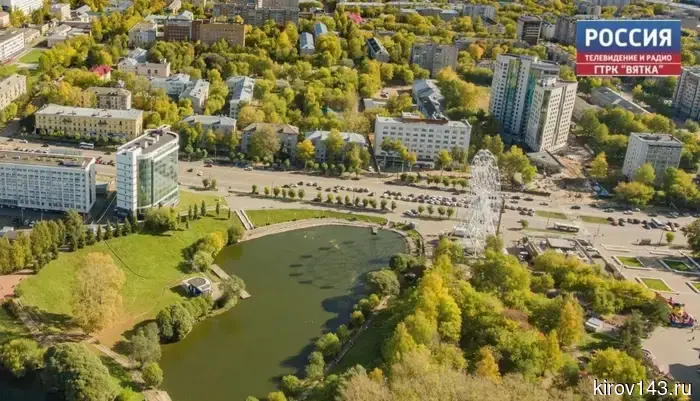 Жителям Кирова расскажут о истории Октябрьского проспекта.
25 июня 2026 года в 18:00 кировчан приглашают на краеведческую прогулку «Октябрьский проспект. Советская эпоха», сообщают в Управлении культуры администрации Кирова. Участникам предложат узнать об истории возникновения улицы на городской карте и особенностях формирования её современного архитектурного облика.
Жителям Кирова расскажут о истории Октябрьского проспекта.
25 июня 2026 года в 18:00 кировчан приглашают на краеведческую прогулку «Октябрьский проспект. Советская эпоха», сообщают в Управлении культуры администрации Кирова. Участникам предложат узнать об истории возникновения улицы на городской карте и особенностях формирования её современного архитектурного облика.
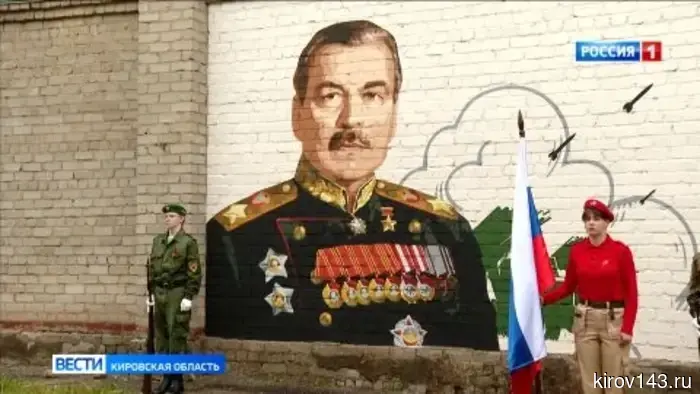 Кировчане отдали дань памяти героям Великой Отечественной войны.
Накануне вся страна отмечала начало Великой Отечественной войны. В разных регионах состоялись торжественные митинги, цветочные церемонии, памятные мероприятия и, безусловно, минута молчания в память о 27 миллионах жертвах. Алина Смирнова поделится подробностями. АЛИНА СМИРНОВА, КОРРЕСПОНДЕНТ: «22 июня — это дата,
Кировчане отдали дань памяти героям Великой Отечественной войны.
Накануне вся страна отмечала начало Великой Отечественной войны. В разных регионах состоялись торжественные митинги, цветочные церемонии, памятные мероприятия и, безусловно, минута молчания в память о 27 миллионах жертвах. Алина Смирнова поделится подробностями. АЛИНА СМИРНОВА, КОРРЕСПОНДЕНТ: «22 июня — это дата,
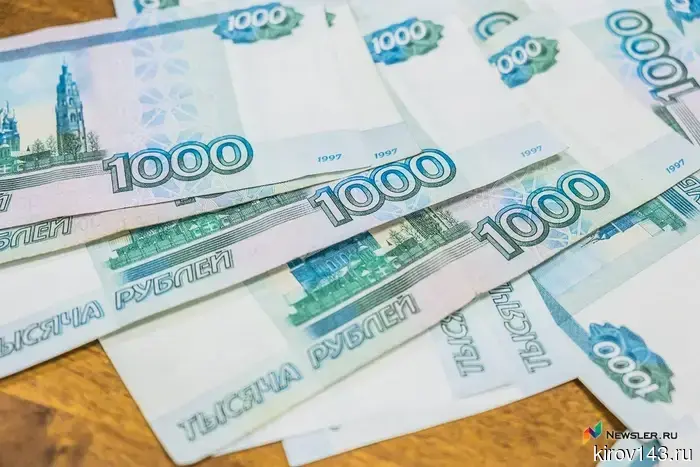 The annual inflation in the Kirov region has decreased to 6%.
In a month, prices increased by 0.12%.
The annual inflation in the Kirov region has decreased to 6%.
In a month, prices increased by 0.12%.
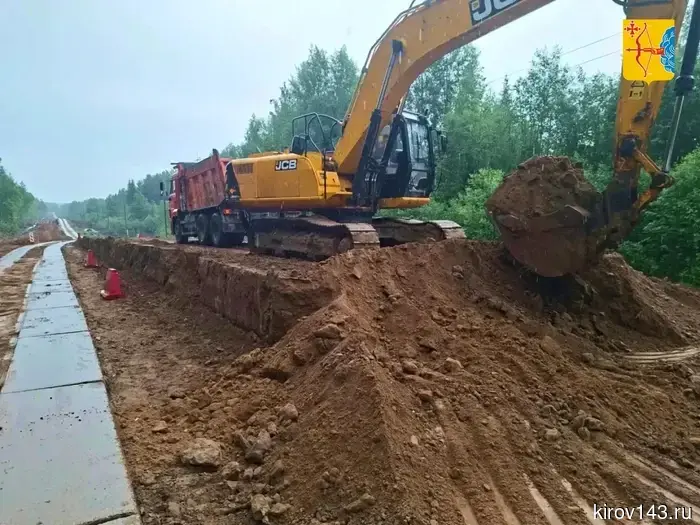 В Кировской области продолжается обновление дороги «Пинюг – Скрябино».
В Подосиновском районе продолжается обновление 16-километрового участка дороги Пинюг – Скрябино. Эта дорога является частью трассы, ведущей на северо-запад региона. Работы проводятся по инициативе губернатора Александра Соколова в рамках национального проекта «Инфраструктура для жизни». В данный момент трудящиеся укладывают песчаное и
В Кировской области продолжается обновление дороги «Пинюг – Скрябино».
В Подосиновском районе продолжается обновление 16-километрового участка дороги Пинюг – Скрябино. Эта дорога является частью трассы, ведущей на северо-запад региона. Работы проводятся по инициативе губернатора Александра Соколова в рамках национального проекта «Инфраструктура для жизни». В данный момент трудящиеся укладывают песчаное и
 A Kirov resident will be tried for the murder of his cohabitant.
The investigation into the criminal case against a 51-year-old resident of Kirov has been completed, who in April 2026, during a drunken argument, dealt a fatal knife blow to his 58-year-old partner.
A Kirov resident will be tried for the murder of his cohabitant.
The investigation into the criminal case against a 51-year-old resident of Kirov has been completed, who in April 2026, during a drunken argument, dealt a fatal knife blow to his 58-year-old partner.
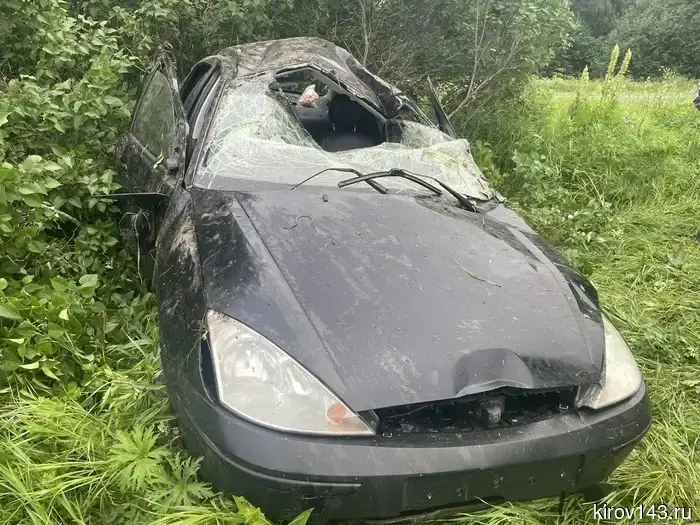 В Уржумском районе авария с пострадавшими произошла из-за неудачного маневра женщины без водительских прав.
В понедельник, 22 июня, в 4:40 в Уржумском районе на 178 км автодороги «Киров – Малмыж – Вятские Поляны» произошло overturning автомобиля. Согласно предварительным данным сотрудников ГИБДД по Кировской области, 47-летняя женщина, управлявшая автомобилем «Форд Фокус» без прав, съехала с дороги с
В Уржумском районе авария с пострадавшими произошла из-за неудачного маневра женщины без водительских прав.
В понедельник, 22 июня, в 4:40 в Уржумском районе на 178 км автодороги «Киров – Малмыж – Вятские Поляны» произошло overturning автомобиля. Согласно предварительным данным сотрудников ГИБДД по Кировской области, 47-летняя женщина, управлявшая автомобилем «Форд Фокус» без прав, съехала с дороги с
Elections-2026: digital breakthrough or old rules in new packaging? (Part I)
How the electoral system has changed over five years and what those who build it think about it.