
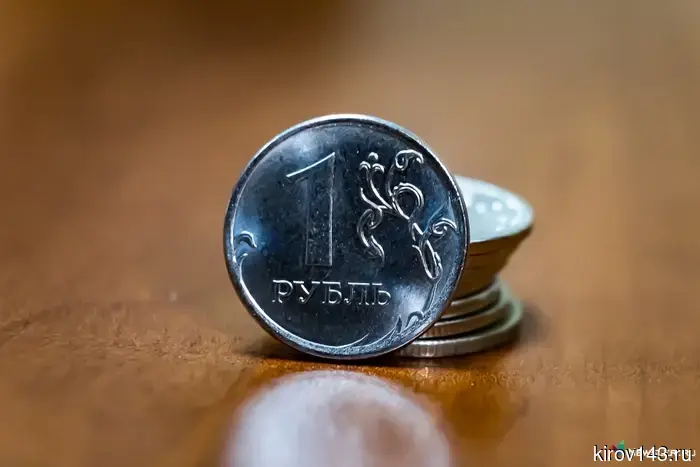
The Central Bank lowered the key rate to 14.25%, but warned of the risk of returning to tightening.
The Board of Directors of the Bank of Russia concluded its meeting on June 19 by lowering the key rate to 14.25% per annum. This decision was anticipated by market participants; however, the tone of the subsequent press conference by the head of the regulator, Elvira Nabiullina, was more restrained than the step taken to lower the rate. The regulator explained the current easing by a number of temporary factors. In April and May, there was indeed a slowdown in price growth, aided by the seasonal decline in the prices of vegetables and fruits, as well as the strengthening of the ruble against the backdrop of commodity conditions. Estimates of so-called stable inflation also slightly decreased — to a range of 4-5%. However, according to Nabiullina, these positive shifts are already being offset by new risks that require the Central Bank to exercise particular caution.
The main concern of the regulator is related to three interconnected processes. The first is fiscal policy. As stated by the head of the Central Bank, the budget parameters for the next three years have been revised towards greater stimulation compared to what was laid out in the baseline forecast of the April meeting. This creates additional demand in the economy.
The second process is the sharp activation of bank lending in April-May. Both corporate borrowing and retail segments, including auto loans and market mortgages (excluding subsidized programs), have accelerated. The Central Bank notes that if this surge turns out to be a sustainable trend rather than a one-off event after the lull at the beginning of the year, it will signal that current monetary conditions are no longer perceived by businesses and the population as restrictive.
The third factor is the growth of the money supply. The combined influence of fiscal and credit channels has already pushed this indicator to the upper limit of the Bank of Russia's forecasts, and in some places even exceeded it. In these conditions, Nabiullina emphasized, greater rigidity in monetary policy may be required to stabilize prices than was expected in April.
At the same time, the regulator pointed out a statistical nuance that could mislead observers. In July, annual inflation may show a temporary decline; however, this will be caused solely by the transfer of utility tariff indexing from July to October. Last year, the increase occurred in July, but this year there will be none. The Central Bank explicitly referred to this as a redistribution effect of prices within the year, rather than a slowdown in inflation.
The external context was also addressed. The situation in the Middle East has led to rising commodity prices, prompting a tightening of policies by several foreign central banks. For Russia, disinflationary consequences currently prevail — the rising cost of exports strengthens the ruble. However, in the future, this could transform into higher import costs and increased logistics expenses.
In her speech, the head of the Central Bank specifically addressed the heterogeneity in the economy. While some sectors are reviving after the winter slump (for example, construction), others are experiencing structural difficulties. The gap in wage dynamics is growing, and the shortage of personnel in the regions is decreasing very slowly. In these conditions, according to the regulator, the key to controlling costs lies in increasing labor productivity, rather than simply raising wages.
The main signal for the market was sounded in the final part of the speech. Nabiullina emphasized that further rate reductions are not predetermined, and the size of the step at each subsequent meeting will depend on incoming data. The regulator directly allowed for the possibility of pauses to assess the effect of already adopted decisions and the dynamics of credit activity. This approach, according to the head of the Central Bank, is the only feasible one in conditions of high uncertainty, to prevent a new round of inflation.
Другие Новости Кирова (НЗК)
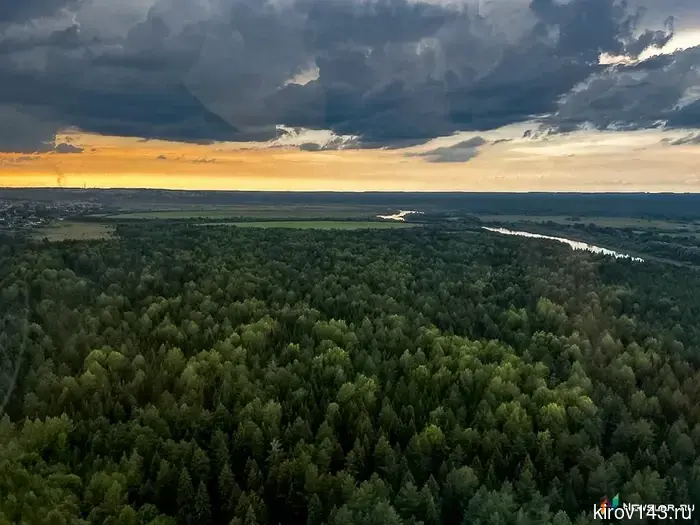 Kirov will wet and "ruffle"
Kirov energy workers are preparing for the impact of the elements.
Kirov will wet and "ruffle"
Kirov energy workers are preparing for the impact of the elements.
 In Kirovo-Chepetsk, water and soil samples were taken at the beach.
Currently, specialists are conducting research.
In Kirovo-Chepetsk, water and soil samples were taken at the beach.
Currently, specialists are conducting research.
 Road milling has begun in Kirovo-Chepetsk.
The authorities reported on the progress of the work.
Road milling has begun in Kirovo-Chepetsk.
The authorities reported on the progress of the work.
 A drunk driver from Luza lost his Subaru worth 1.8 million.
In Luza, the court confiscated a Subaru car worth 1.8 million rubles from a 56-year-old local resident.
A drunk driver from Luza lost his Subaru worth 1.8 million.
In Luza, the court confiscated a Subaru car worth 1.8 million rubles from a 56-year-old local resident.
 The driver of "Gordormoststroy" fell from a ladder and sustained a traumatic brain injury.
In Kirov, the investigation into the serious accident involving a driver of JSC "Gordormoststroy" has been completed.
The driver of "Gordormoststroy" fell from a ladder and sustained a traumatic brain injury.
In Kirov, the investigation into the serious accident involving a driver of JSC "Gordormoststroy" has been completed.
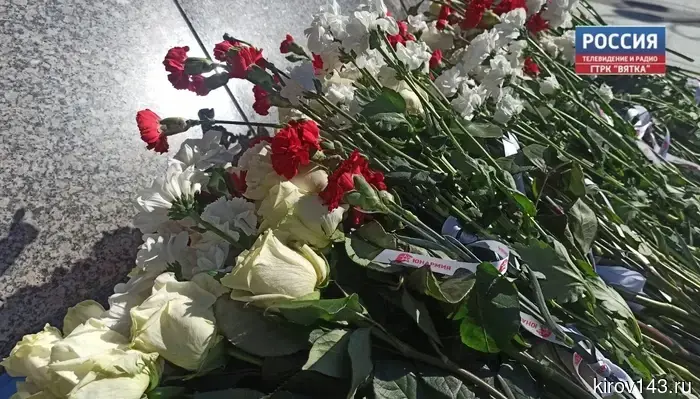 22 июня в Кирове состоится церемония возложения цветов к Вечному огню.
В День памяти и скорби, 22 июня, в Кирове пройдет церемония возложения цветов к Вечному огню на набережной Грина. Об этом сообщили в городской администрации. Мероприятие начнется в 09:00. В то же время с 07:30 и до завершения церемонии будет ограничено движение транспорта по улице Московской от Казанской до.
22 июня в Кирове состоится церемония возложения цветов к Вечному огню.
В День памяти и скорби, 22 июня, в Кирове пройдет церемония возложения цветов к Вечному огню на набережной Грина. Об этом сообщили в городской администрации. Мероприятие начнется в 09:00. В то же время с 07:30 и до завершения церемонии будет ограничено движение транспорта по улице Московской от Казанской до.
The Central Bank lowered the key rate to 14.25%, but warned of the risk of returning to tightening.
The Bank of Russia has decided to reduce the key rate by 50 basis points. However, in the accompanying statement, the regulator emphasized not the successes in combating inflation, but a new threat: the acceleration of lending and the revision of budget parameters may force the Central Bank to halt the easing cycle or even raise borrowing costs.