
"This is something incredible": veterans saw what the factory in Vostochny has become
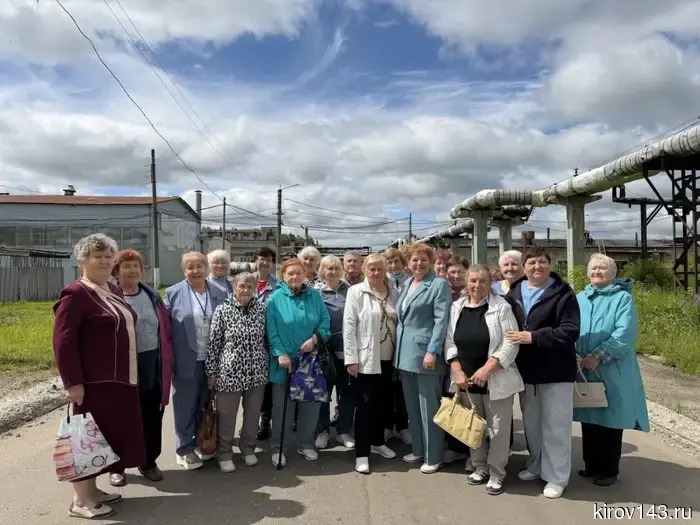
On the eve of the anniversary, the veterans of the enterprise were able to visit the updated production facilities of the plant for the first time in a long time. For many, this excursion became a real journey through time.
A Journey Through Time
When the veterans entered the workshops, some fell silent for a few seconds. They remembered these buildings very differently.
They recalled how, as young specialists, they came to the still-under-construction Vostochny from all over the country. How they received their first apartments. How they launched equipment that was considered cutting-edge at the time. How they created not only the plant but also the village itself.
For many of them, the history of the enterprise is the history of their own lives.
This meeting was especially significant for Nadezhda Nikolaevna Zmeeva. She came to the plant as a young specialist in 1976, and since then her life has been inextricably linked with the enterprise.
At the meeting, they reminisced about how, after studying, as young people, they came here, started working, and then received their first apartments from the enterprise. How they started families, had children... And their whole lives were connected to the plant. There are hundreds of such stories in Vostochny.
Some came here after university from Moscow, Leningrad, Perm, or Kirov. Some came to the plant right after the army. Some met their future spouses here. For an entire generation of Vostochny residents, the plant was much more than just a workplace. It was the center of life. Families were created here, children grew up, houses were built, and lifelong friendships were formed.
A Plant of All-Union Significance
Once, the Omutninsky Chemical Plant was not just a district enterprise. It was part of the VNIIM and NPO "Biopreparat" system — one of the largest scientific and production structures in the Soviet Union. Young scientists, engineers, technologists, and microbiologists from all over the country came to Vostochny. Many planned to work for a few years and then move on, but they stayed for decades.
Because there was work that mattered. Because a great cause was being built here. Because there was a young village where everyone knew each other.
In the 1970s and 1980s, the enterprise underwent multiple reconstructions and increased its capacity. In the first twenty years of operation, the volume of product sales grew by 337.1 percent, and 31 product names were mastered.
The scale of the enterprise is confirmed by other facts. The plant won the socialist competition 49 times, and its director, Vladimir Valov, was awarded the title of Hero of Socialist Labor. For Soviet industry, this was a sign of an enterprise of union significance.
At the OHC, they produced the antibiotic Gigromicin-B, enzyme preparations, biochemical reagents, products for agriculture and veterinary medicine, and later — pharmaceuticals and medical devices.
The figures from the early 1990s are particularly impressive. At that time, the enterprise produced up to 470 million disposable syringes annually and was among the largest producers of such products in Russia. That's more than 1.3 million syringes per day.
In the best years, thousands of specialists worked here. It is not surprising that for many residents of Vostochny, the history of the village and the history of the plant are almost inseparable.
But the veterans remember not only production records. They remember the people. Shift supervisors who taught young workers. Engineers who could spend days in the workshop during the launch of new equipment. Holidays, demonstrations, tourist gatherings, and community workdays. The feeling that many years of work and development lay ahead.
A Story of Salvation: Almost Lost, but Found New
The events of the early 2000s were felt all the more painfully when the enterprise found itself in deep crisis. Production was shrinking, debts were accumulating, and infrastructure was deteriorating. Many seriously feared that the unique industrial complex would be lost forever.
Today, it is enough to look at archival photographs from those years to understand the scale of what happened. Broken windows, destroyed buildings, rusted equipment, desolation where thousands of people once worked.
It seemed that the history of the plant had come to an end. But it was then that another chapter began. A chapter about recovery.
Not about quick victories and beautiful reports. But about years of hard work, when the buildings had to be literally reclaimed from time, and the equipment had to be restored or replaced almost from scratch.
“Thank God you didn’t see what it was like fifteen years ago,” says Nadezhda Nikolaevna Zmeeva.
According to her, many facilities had to be literally saved. The buildings were restored step by step, equipment was repaired or replaced, creating modern production almost from scratch.
The Plant Lives a New Life
That is why the tour of the updated production facilities was so emotional.
It lasted almost two hours. During this time, the veterans were able to see new production lines, modern laboratories, water treatment systems, ventilation, and product packaging.
Many admitted that they could hardly recognize the familiar buildings. “This is something incredible,” was often heard during the tour.
But for the guests, the most important thing was not the new technologies and equipment. They saw that the plant is alive. That people are working in the workshops again. That production is developing. That the enterprise to which they dedicated the best years of their lives has not disappeared.
After the tour, the veterans gathered around a common table for tea. And perhaps it was here that the most important part of the meeting began.
The Story Continues
They reminisced about colleagues and leaders, shared stories from their youth, talked about how the village was built and how the plant changed. Many had not seen each other for years, so the conversations continued for a long time.
A special moment was the congratulations to Valentina Nikolaevna Alalykina, who once worked as the head of the production and technical department of the enterprise. On this day, her colleagues congratulated her on her birthday, wishing her health, well-being, and many more years of life.
Over cups of tea, conversations about the past seamlessly transitioned into discussions about the future. The veterans were interested in the new projects of the enterprise, asked questions about modernization, and shared memories of the time when they themselves launched new productions and mastered advanced technologies.
It is in such moments that you particularly acutely understand: the plant is not just buildings, equipment, and production indicators. The plant is people.
People who once came to the young village from all over the country, built an enterprise of union significance here, raised children, and tied their fate to Vostochny.
And as long as these people gather together, remember, argue, laugh, and rejoice in the successes of their native plant, its history continues.
Другие Новости Кирова (НЗК)
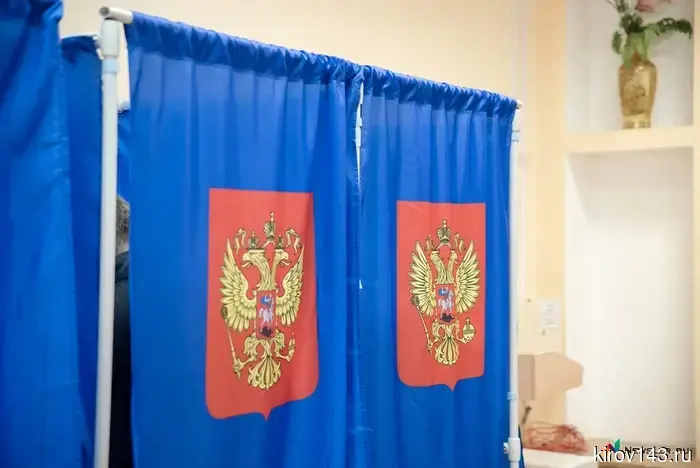 It became known who determines the electors for electronic preliminary voting in district councils.
Electors are not registered in the system; they are determined by local political councils, and the acceptance of documents from candidates ends on June 11.
It became known who determines the electors for electronic preliminary voting in district councils.
Electors are not registered in the system; they are determined by local political councils, and the acceptance of documents from candidates ends on June 11.
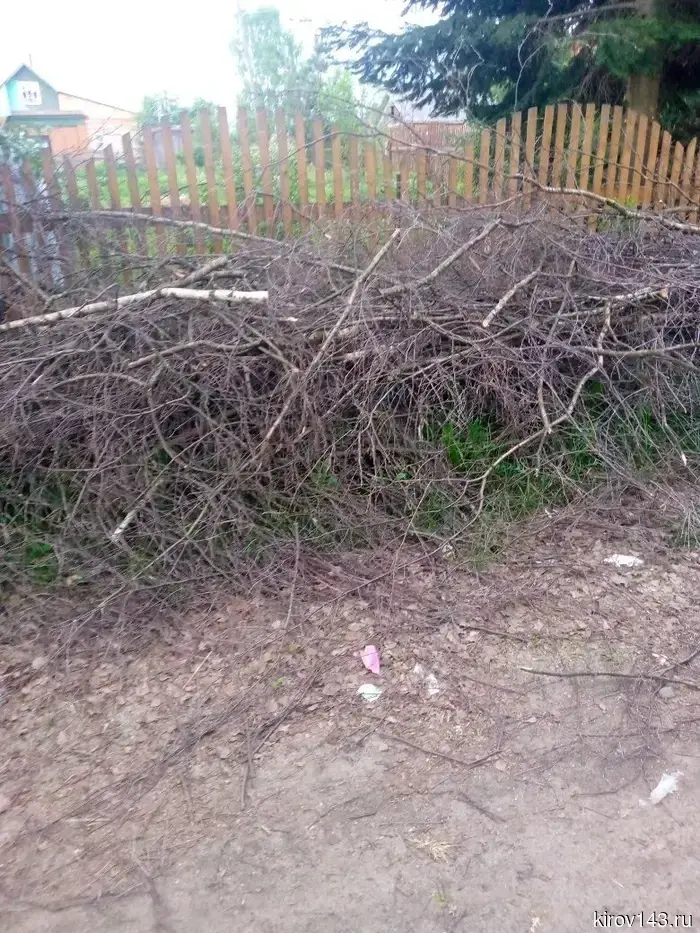 In Luza, they have not been able to remove the piles of branches for five months.
Residents of Luza have been struggling with piles of branches near their homes for several months. They fear that the dry wood could catch fire.
In Luza, they have not been able to remove the piles of branches for five months.
Residents of Luza have been struggling with piles of branches near their homes for several months. They fear that the dry wood could catch fire.
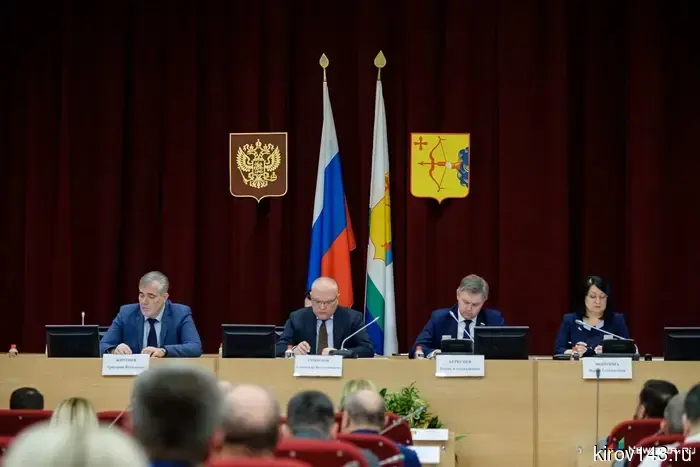 Churina, Galitsky, and Vasnetsov are to be made honorary citizens of the region.
The deputies will consider several new initiatives.
Churina, Galitsky, and Vasnetsov are to be made honorary citizens of the region.
The deputies will consider several new initiatives.
 The prosecutor's office wants to make the Capital Repair Fund "kick" its contractors.
The agency's employees have developed a new draft law.
The prosecutor's office wants to make the Capital Repair Fund "kick" its contractors.
The agency's employees have developed a new draft law.
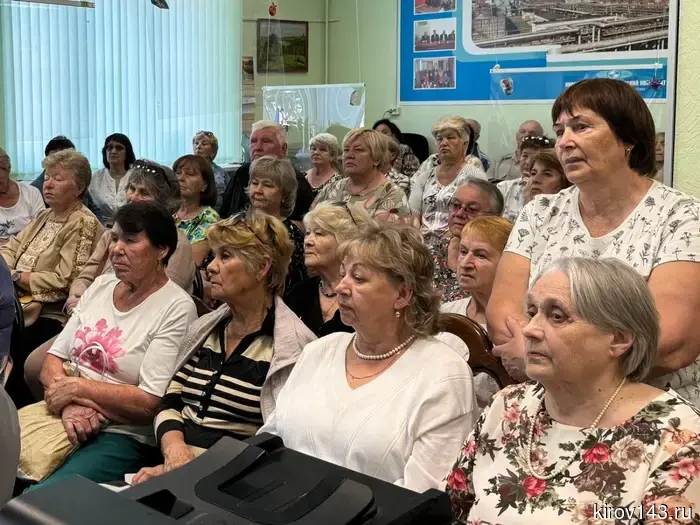 "Uralchem" supports veteran chemists
The branch "KCHHK" of JSC "OHC "Uralchem" carried out repairs in the premises of the Veterans Council of KCHHK.
"Uralchem" supports veteran chemists
The branch "KCHHK" of JSC "OHC "Uralchem" carried out repairs in the premises of the Veterans Council of KCHHK.
 Churina, Galitsky, and Vasnetsov are to be made honorary citizens of the region.
The deputies will consider several new initiatives.
Churina, Galitsky, and Vasnetsov are to be made honorary citizens of the region.
The deputies will consider several new initiatives.
"This is something incredible": veterans saw what the factory in Vostochny has become
In 2026, the village of Vostochny and the "Vostok" factory will celebrate their 65th anniversary. For many residents, this is not just a date. It is the history of several generations of people who built the enterprise, created the village, and tied their lives to it.