

Primaries of the United Russia party in the Kirov region: a course for renewal or fine-tuning?
A total of 277 people participated in the procedure. Among them were not only party members but also independent candidates and supporters of United Russia (ER). Every third participant in the primaries is not a party member, indicating a desire to expand the personnel reserve beyond the party's active members.
One of the main outcomes was the potential renewal of the deputy corps. Out of 25 current deputies of the Legislative Assembly, only 15 participated in the preliminary voting. Of these, 14 emerged victorious. Another ten parliamentarians chose not to participate in the procedure. If the results of the primaries are largely retained in the formation of the final list of candidates, the renewal of the faction could be around 40 percent.
However, it is premature to speak of a complete change in the political elite. Most of the current deputies who decided to go through the preliminary voting confidently confirmed their positions. This indicates that the party is betting on a combination of continuity and renewal.
Particular attention should be paid to candidates who are not party members. In several districts, independent candidates and supporters of ER won. Among them are business leaders, representatives of the social sphere, doctors, participants in the special military operation, and young candidates. This approach aligns with the federal trend of attracting publicly recognized figures and expanding the party's social base.
One of the most discussed topics of the campaign has been the political fate of State Duma deputy Oleg Valenchuk. The politician, who has represented the Kirov region in the lower house of parliament since 2003, participated in the primaries of the Legislative Assembly for the first time. His possible transition to the regional level has already become one of the main intrigues of the current political season.
Among the new faces, the victory of Yeremey Bushmelev in district No. 23 stands out. The candidate, born in 2003, became the youngest winner of the primaries in the region. This is yet another signal of the course towards gradual rejuvenation of the personnel.
Another trend has been the participation of veterans and participants in the special military operation. Four candidates associated with the special military operation won in the primaries. However, their presence cannot yet be called a dominant factor: in most districts, victories were still claimed by current deputies, municipal leaders, and candidates with significant administrative experience.
The party will approve the final list of candidates later. Nevertheless, the primaries already allow us to see the main outlines of the future electoral campaign: cautious renewal, preservation of the current core, and the search for new public leaders. Pavel Dorofeev, coordinator of the Kirov regional branch of the LDPR and deputy of the Kirov Legislative Assembly, commented on the results of the United Russia primaries and discussed the party's strategy for the upcoming elections. Regarding whether the results of the United Russia primaries will influence the formation of the candidate pool from the LDPR, Dorofeev noted: "Naturally, it is always necessary to know information about political opponents, and we certainly take this data into account, but it will not affect the list of candidates." Commenting on the renewal of the United Russia deputy corps by about 40%, the politician believes that this is not a "purge," but a standard rotation: "The politics and position of United Russia are quite measured, calculated, and consistent regardless of who the deputy is. This is definitely not a purge, but a standard rotation and renewal of faces, as the illusion of changeability is necessary. The party's politics or voting on key issues will not change because of this." The absence of 10 out of 25 current United Russia deputies in the primaries, Dorofeev links to the public demand for renewal: "This is a desire to respond appropriately to the public demand for renewal. There is currently a high level of anxiety in society, and new elections are an element of managing voters' hopes for an improvement in the situation." When asked about the predominance of representatives from the budget sphere among the winners of the primaries, the deputy replied cautiously: "I don't think that during negotiations or proposals to enter the primaries, the question is posed in that way. But there are offers that are not refused — perhaps these are them." Regarding the high percentage of independent participants in the preliminary voting (42%) and their victories in certain districts (No. 8, No. 19, No. 27), Pavel Dorofeev suggested: "I think this is an element of managed democracy within the party." He paid special attention to the situation in district No. 23, where a student — a supporter of Bushmelev (born in 2003) — won: "There cannot be locomotive technologies here because this is a single-mandate district. In 2021, the victory in this territory was claimed by deputy Olga Borisova, who is running this year from the LDPR party. She is a strong deputy, has support in the district, and has real cases. And this is one of those districts where United Russia may face problems due to strong competition. I think that in this case, United Russia decided not to spend many resources on this district, understanding that winning it would be extremely difficult." Speaking about the opposition's chances of winning mandates after United Russia lost 40% of its current deputies, Dorofeev outlined the LDPR's priorities: "I already mentioned district No. 23 — this is the territory we are betting on. These are districts where current deputies will be represented: Vladimir Ponaryev, Olga Tyrykina. Overall, we are aiming for victory in four to five single-mandate districts and obtaining three mandates on the list to form the second-largest faction." The LDPR does not plan inter-party agreements on non-opposition in districts with "weak" candidates from United Russia: "No," Dorofeev replied briefly. Finally, assessing the overall chances of United Russia in the elections (considering that in the last elections the party received less than 30% of the votes), the deputy emphasized: "A lot will depend on the domestic political situation, on what will happen with price increases, inflation, and living standards. It is too early to make predictions."
Ekaterina Kolotova, head of the Kirov regional branch of the Fair Russia Party, noted that she does not consider it appropriate to discuss the policies of other parties.
"I will say directly that we do not consider it correct to criticize the policies of other parties, including their personnel policies. Our party, Fair Russia, has its own programs and its own guidelines aimed at building fair and honest management processes in the region and the country. And we adhere to it.
As for the personnel shortage — it exists in all parties. Because people have started to believe less in the authorities, both executive and legislative. Understanding this, we are trying to regain the trust of voters and strive to fulfill the promises we make, and as far as possible, we try to solve the problems of the population.
Regarding the "strong" candidates put forward by the ruling party in some districts, we will not adapt to "strong" or "weak": we are forming our own team of candidates for the elections — those who work with the population, and people themselves assess the results of their many years of work. We attract caring people — those who want to change something in the life of the Kirov region, to be useful to society — we do not force or coerce anyone. And we sincerely hope for fair elections and believe that people evaluate each candidate by their deeds, not by bright advertising," noted Ekaterina Vitalyevna.
Andrey Iglin, a representative of the New People party, refrained from commenting and asked to "understand him correctly."
Albert Bikalyuk, a deputy of the Legislative Assembly, noted that the team presented by United Russia is "extremely weak." "Among the winners of the primaries, there are no representatives of large industrial holdings, people who deeply understand the region's budget and legislation. The renewal of the deputy corps by 40% is not a purge, but a replacement of one obedient group with another. In the current convocation, there were deputies (Kiselev, Churin) who began to express disagreement. They are not on the lists. Loyal ones are needed, who will not delve into issues from different angles but will raise their hands as party discipline dictates. As for the 10 deputies who did not participate in the primaries — this is both a conflict and the wisdom of older people who see that fighting is useless. You say a word — you get a reprimand or become unshakeable. The victory of budget workers (chief doctors, school directors) is a direct consequence of pressure. A budget sphere worker has an employment contract with the ministry. Can he control and criticize his superiors? He will immediately have a resignation letter placed on his desk. Look at the City Duma: not a single speech on pressing issues can be heard from them. They are there for show and to raise hands.
The victory of independents in several districts is not a personnel shortage, but a tactic. They need to show the appearance of pluralism. But these "independents" will not remain so until the end. They will join the faction and adopt the rule of unanimous voting. There are no random people there. Budget workers have come to me and told how they were forced to vote.
The victory of student Bushmelev is also a predictable result. This is a picture: the doors are open for everyone, both for youth and for veterans. But will they let him open his mouth independently later? I doubt it.
Are there chances for the opposition to win mandates? As one
Другие Новости Кирова (НЗК)
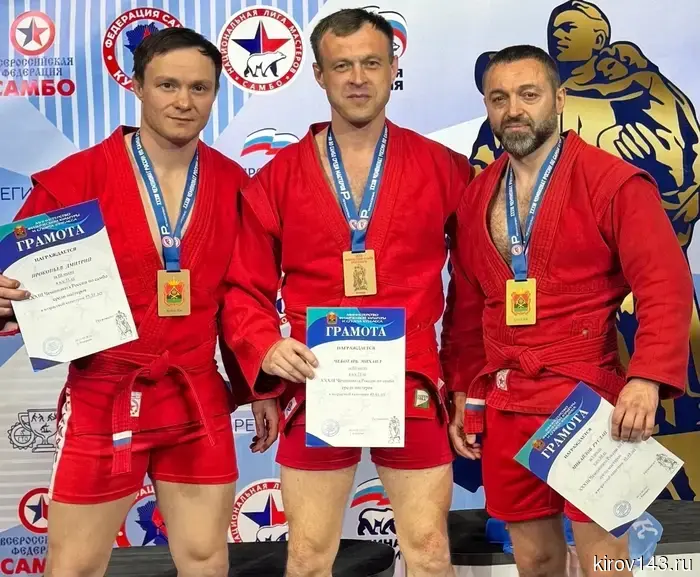 Kirov sambists got the full treatment.
Our athletes won medals at the Russian Championship.
Kirov sambists got the full treatment.
Our athletes won medals at the Russian Championship.
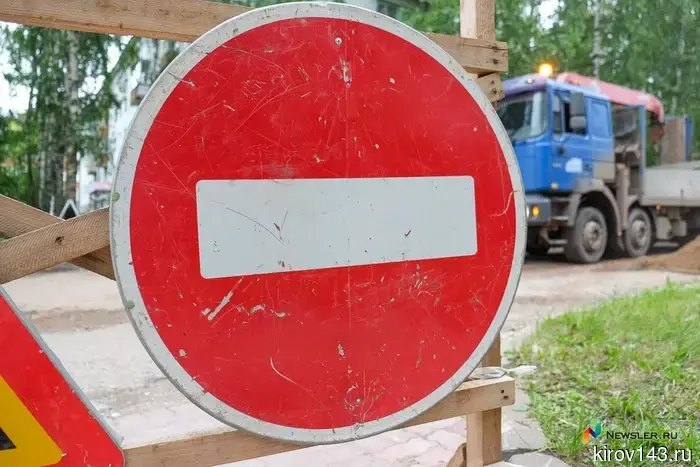 In the center of Kirov, traffic will be blocked on several streets for Russia Day.
In connection with the celebration of Russia Day, the city administration is introducing temporary traffic restrictions.
In the center of Kirov, traffic will be blocked on several streets for Russia Day.
In connection with the celebration of Russia Day, the city administration is introducing temporary traffic restrictions.
 Love horoscope: Aries will receive a pleasant surprise, while Gemini are advised to enjoy a good meal.
Astrologers revealed how the personal life of each zodiac sign will unfold this coming Saturday.
Love horoscope: Aries will receive a pleasant surprise, while Gemini are advised to enjoy a good meal.
Astrologers revealed how the personal life of each zodiac sign will unfold this coming Saturday.
 Primaries of the United Russia party in the Kirov region: a course for renewal or fine-tuning?
The preliminary voting of "United Russia" in the Kirov region revealed several trends that could determine the configuration of the future Legislative Assembly.
Primaries of the United Russia party in the Kirov region: a course for renewal or fine-tuning?
The preliminary voting of "United Russia" in the Kirov region revealed several trends that could determine the configuration of the future Legislative Assembly.
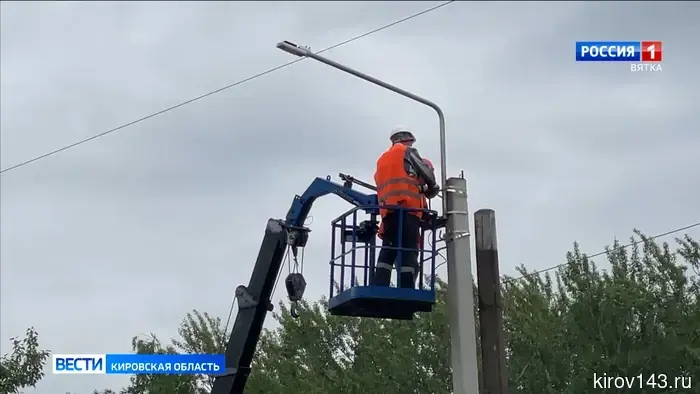 Обзор новостей из Кировской области.
Комфортная обстановка, новые достижения в сельском хозяйстве и чистая экосистема. Как изменяются районы Кировской области — в нашем новостном обзоре. Теперь в темное время суток стало светло и безопасно. В Кировской области продолжается выполнение программы губернатора по освещению дорог. Поступила новая партия фонарей.
Обзор новостей из Кировской области.
Комфортная обстановка, новые достижения в сельском хозяйстве и чистая экосистема. Как изменяются районы Кировской области — в нашем новостном обзоре. Теперь в темное время суток стало светло и безопасно. В Кировской области продолжается выполнение программы губернатора по освещению дорог. Поступила новая партия фонарей.
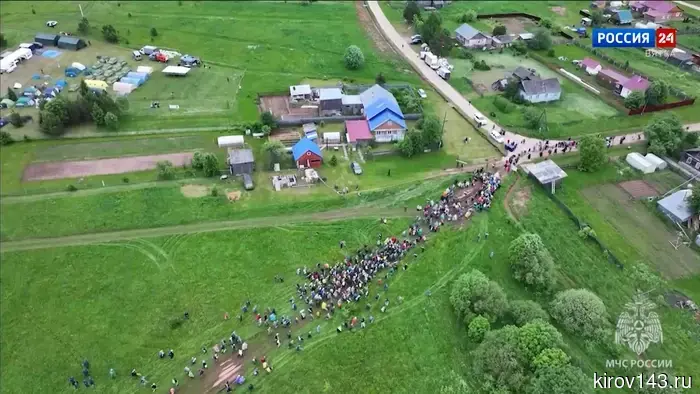 В селе Великорецком был встречен крестный ход.
Сегодня вечером в селе Великорецком состоялся прием крестного хода. Паломники принесли ковчег с Великорецкой иконой Николая Чудотворца к месту ее чудесного явления, которое произошло шесть веков назад. За вчерашний день они прошли 36 километров, в основном по полевым и лесным участкам маршрута. Из-за частых дождей
В селе Великорецком был встречен крестный ход.
Сегодня вечером в селе Великорецком состоялся прием крестного хода. Паломники принесли ковчег с Великорецкой иконой Николая Чудотворца к месту ее чудесного явления, которое произошло шесть веков назад. За вчерашний день они прошли 36 километров, в основном по полевым и лесным участкам маршрута. Из-за частых дождей
Primaries of the United Russia party in the Kirov region: a course for renewal or fine-tuning?
The preliminary voting of "United Russia" in the Kirov region revealed several trends that could determine the configuration of the future Legislative Assembly.