
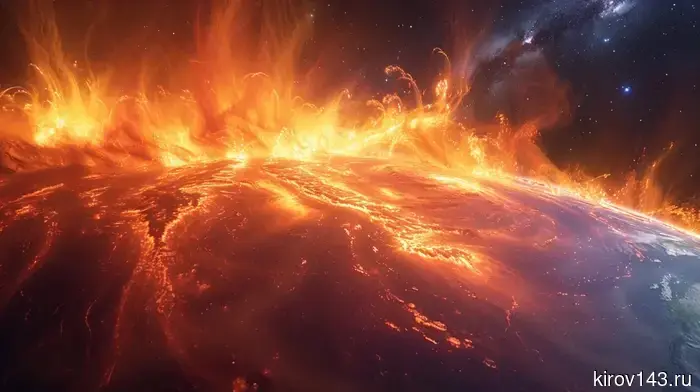
Solar flare: only 7% short of catastrophe
The Laboratory of Solar Astronomy of IKI RAN recorded an M9.3 level flare the day before — a record for the last month and a half. It was only 7% short of the maximum X-class. The event occurred exactly in the center of the disk, which means the plasma could be heading straight for Earth. However, scientists do not yet see any clear signs of particle ejection, so panic is premature.
How does the "solar kitchen" work?
Imagine a giant nuclear boiler with invisible magnetic bundles. When they twist to the limit, an explosion occurs.
Charged particles travel to us for 1-2 days, hitting the magnetosphere — and geomagnetic disturbances begin. The real damage: disruptions in radio communication and GPS errors (navigators may lie). That's all.
And what about headaches?
A popular myth: magnetic storm = migraine. Scientists are skeptical. Physically, radiation cannot affect the body at a depth of 50 km from the earth.
Candidate of Medical Sciences Valery Litvinov (PNIPU), quoted by the portal transsibinfo.com, claims: headaches are psychosomatic. The body reacts to anxiety from changes in the weather, stuffiness, or bright light, not to solar wind.
Stress and overload of the nervous system are the main culprits. External factors simply trigger an already tired body.
When is it really scary?
In March of this year, high-level dangerous events occurred — radiation storms that could indeed damage satellites and disrupt the operation of power grids. But this is rare.
As soon as you "googled" the symptoms — the internet has already suggested a version about a magnetic storm. But science debunks this myth. Perhaps instead of pills, it is better to simply slow down the pace of life and learn to cope with stress? Our health depends on inner calm much more than on flares 150 million km away.
Другие Новости Кирова (НЗК)
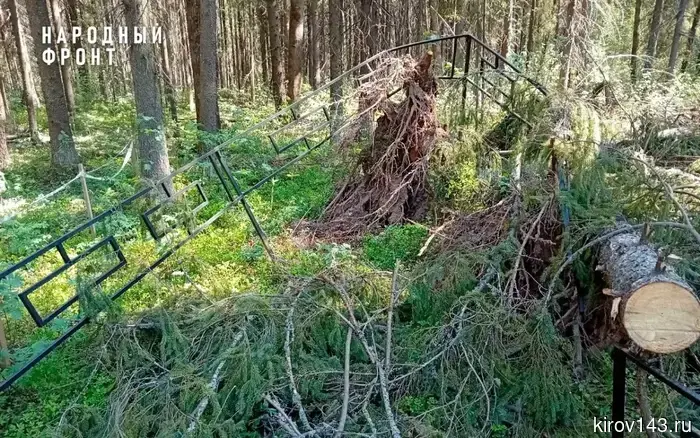 In Mitino, fallen trees at the cemetery damaged the grave of a WWII veteran.
The authorities promised to evacuate them within a month.
In Mitino, fallen trees at the cemetery damaged the grave of a WWII veteran.
The authorities promised to evacuate them within a month.
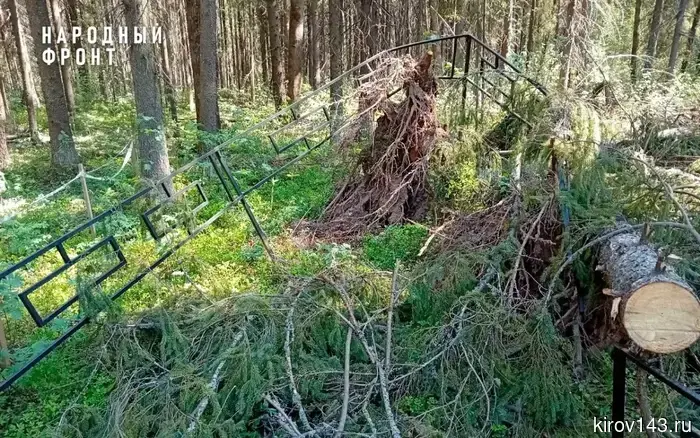 In Mitino, fallen trees damaged the grave of a WWII veteran at the cemetery.
The authorities promised to evacuate them within a month.
In Mitino, fallen trees damaged the grave of a WWII veteran at the cemetery.
The authorities promised to evacuate them within a month.
 Experts named the reasons for the closure of the "Maxi" hypermarket on Moskovskaya in Kirov.
The retail outlet on Moskovskaya Street, 102 ceased operations on May 31. Market analysts believe that the closure is a logical step for the chain.
Experts named the reasons for the closure of the "Maxi" hypermarket on Moskovskaya in Kirov.
The retail outlet on Moskovskaya Street, 102 ceased operations on May 31. Market analysts believe that the closure is a logical step for the chain.
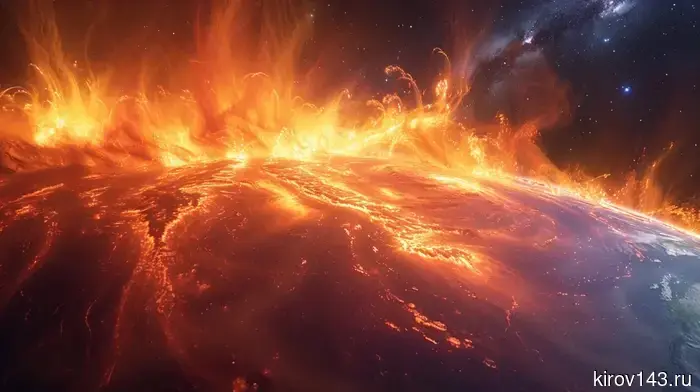 Solar flare: only 7% short of disaster
Space is once again stirring minds — our star has unleashed a powerful energy burst, and scientists are closely monitoring its behavior. But are magnetic storms really as frightening as they are portrayed by social media? Let's find out if they affect our well-being and whether we should be worried about technology.
Solar flare: only 7% short of disaster
Space is once again stirring minds — our star has unleashed a powerful energy burst, and scientists are closely monitoring its behavior. But are magnetic storms really as frightening as they are portrayed by social media? Let's find out if they affect our well-being and whether we should be worried about technology.
 Experts named the reasons for the closure of the "Maxi" hypermarket on Moskovskaya in Kirov.
The retail outlet on Moskovskaya Street, 102 ceased operations on May 31. Market analysts consider the closure a logical step for the chain.
Experts named the reasons for the closure of the "Maxi" hypermarket on Moskovskaya in Kirov.
The retail outlet on Moskovskaya Street, 102 ceased operations on May 31. Market analysts consider the closure a logical step for the chain.
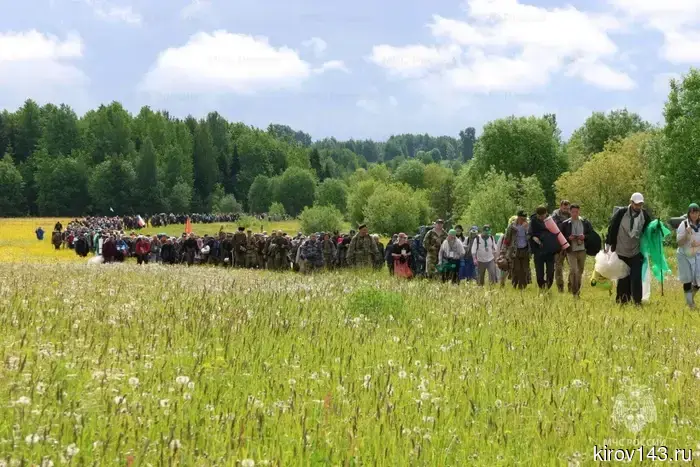 Второй день Великорецкого крестного хода является самым трудным.
На второй день своего пути паломники делают самый долгий и тяжелый переход от села Бобино через Загарье в Монастырское. Дистанция составляет около 45 километров по бездорожью: через леса и поля. В четверг, в 3 часа ночи, крестоходцы отправились из Бобино в Загарье. Переход занял 6 часов. В пути верующие уже
Второй день Великорецкого крестного хода является самым трудным.
На второй день своего пути паломники делают самый долгий и тяжелый переход от села Бобино через Загарье в Монастырское. Дистанция составляет около 45 километров по бездорожью: через леса и поля. В четверг, в 3 часа ночи, крестоходцы отправились из Бобино в Загарье. Переход занял 6 часов. В пути верующие уже
Solar flare: only 7% short of catastrophe
Space is once again stirring minds — our star has unleashed a powerful energy burst, and scientists are closely monitoring its behavior. But are magnetic storms really as frightening as they are portrayed by social media? Let's find out if they affect well-being and whether we should be worried about technology.