

100 kg of meat per person: why do we eat more while businesses complain?
By the end of 2025, the Ministry of Agriculture of the Russian Federation reported a level of self-sufficiency in meat at 102%. Pork is produced in abundance: over the past five years, production volume has increased from 5.5 to 6.3 million tons. However, in 2025, the increase was only 12.5 thousand tons. The reason is the high saturation of the domestic market.
The leader in pork production is the Central Federal District (3.4 million tons in live weight, 53% of the market). The second is the Volga Federal District (1 million tons, 16%). The largest volumes traditionally come from Mordovia and Bashkortostan, according to statistics from volga.news.
As for beef, self-sufficiency has not yet been achieved. Over five years, the production of cattle for slaughter in live weight increased from 1.65 to 2.7 million tons, but 2025 turned out to be unsuccessful: beef production decreased by about 200 thousand tons.
The Volga Federal District leads in beef production — 700 thousand tons (27% of the market). The largest producing regions are Tatarstan and Bashkortostan.
Margin under pressure
Experts describe the Russian meat market as developed but heterogeneous. Pork production remains the most stable. The situation is different for beef: it requires higher capital investments and a longer cycle, hence the difference in profitability.
"The Russian meat market by 2025-2026 has finally become industrial and consolidated. Key volumes are concentrated among large agricultural holdings with vertical integration, especially in pork and poultry. Small farms remain in niches — primarily in beef and local farm products," notes Yaroslav Kabakov, director of strategy at Finam Investment Company.
At the same time, the profitability of producers is under pressure. High credit costs limit investments, feed, energy, and logistics costs are rising, there is a persistent labor shortage, and a strong ruble reduces export earnings.
Additional risks are associated with biosecurity and structural stagnation in the cattle segment. The market is growing moderately — by 1-3% per year, with pork and poultry contributing the most.
Agricultural holdings and farmers: competition or coexistence?
According to Maxim Ginzburg, director of one of the regional meat processing enterprises, farmers are finding it increasingly difficult to get their products to market. Competition is virtually absent.
Five to seven large agricultural holdings form the backbone of meat production in Russia. They have vertically integrated operations: breeding, slaughter, cutting, and processing. Farmers most often specialize only in breeding and then resell animals to intermediaries or processors. It is practically impossible for farmers to get their products to market independently — such a chain does not exist.
Nevertheless, the role of farmers in raising cattle for slaughter remains significant. There are few holdings in Russia specializing in beef, so the procurement of this meat comes from all available sources.
The advantage of agricultural holdings is better provision of industrial safety: sterile living conditions, protection against infections. The advantage of farmers is food safety due to natural feeds. However, the expert warns that the "eco" label is not always a marketing gimmick.
Meat consumption is rising
Russians have started eating more meat. In 2020, the figure was 77 kg in slaughter weight per person, and by 2025 it is expected to be nearly 100 kg. Consumption of both pork (up to 17.4 kg) and beef (up to 9.4 kg) has increased. At the Financial University under the Government of the Russian Federation, the trend is explained by market saturation and a shift towards healthy eating. Despite rising prices, meat remains a relatively affordable product, although the conditions for price increases persist.
What is happening with prices
Inflation and a high key interest rate have contributed to the rising cost of meat. According to the National Meat Association, over the past five years, prices for pork have increased by about 25%, and for beef by 27%. This trend is expected to continue into 2026.
RANEPA expert Alexander Kudryashov explains: the price of meat is made up of costs for feed, veterinary drugs, breeding stock, salaries, loans, slaughter, processing, storage, transportation, and trade markup. In pig farming, the influence of these factors is smoothed by a short cycle and a high degree of industrialization. In beef production, the cost burden is higher. Import plays a restraining role: for 2026, a tariff quota for beef imports of 570 thousand tons has been maintained.
Retail chains do not expect significant price changes in the near future. Large retailers limit markups on pork and beef (except for boneless meat) as socially significant goods.
Export and prospects for farmers
According to Alexander Kudryashov, the outlook for the meat industry in 2026 is cautious: for pork — a stable situation, for beef — cost pressure on profitability and price.
Associate Professor at the Financial University Lyubov Adamskaya believes that the market is moving towards qualitative transformation. The success of players will depend on their adaptation to price sensitivity: optimizing supply chains, investing in biotechnology and deep processing, developing exports, and monitoring consumer trends (demand for functional products, ethical production). Risks are mitigated by government support and technological modernization.
Meat exports are growing: by the end of 2025, Russia exported over 911 thousand tons of meat and meat products (+10.6%). The largest buyers of pork are Belarus, Vietnam, and China; for beef — China and Saudi Arabia.
Yaroslav Kabakov adds: the industry is already mature, and growth is ensured not by expansion but by increasing efficiency and consolidation. Imports are insignificant due to self-sufficiency, except for beef (supplies from Latin America and Belarus). The main vector is export to China, Vietnam, and the Middle East.
Farmers also have prospects. The market is becoming more technological and consumer culture-oriented. To compete on the shelf of finished products, farms must align with the trends of vertically integrated production: independently handling slaughter, processing, modern packaging (vacuum, design), and establishing sales. They will achieve what agricultural holdings do, but on a smaller scale. An emphasis on eco-friendliness will add value to price and demand.
Другие Новости Кирова (НЗК)
 A 20-year-old resident of Kotel'nich, accused of murdering her son, has been taken into custody.
The investigation of the criminal case is ongoing.
A 20-year-old resident of Kotel'nich, accused of murdering her son, has been taken into custody.
The investigation of the criminal case is ongoing.
 A 20-year-old resident of Kotelnich, accused of murdering her son, has been taken into custody.
The investigation of the criminal case is ongoing.
A 20-year-old resident of Kotelnich, accused of murdering her son, has been taken into custody.
The investigation of the criminal case is ongoing.
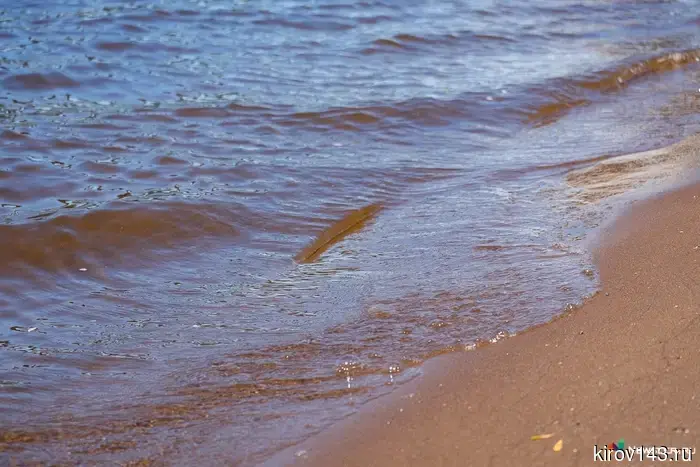 The water in the Chumovitsa River in Novovyatsk has turned green.
Specialists have gone back to the site.
The water in the Chumovitsa River in Novovyatsk has turned green.
Specialists have gone back to the site.
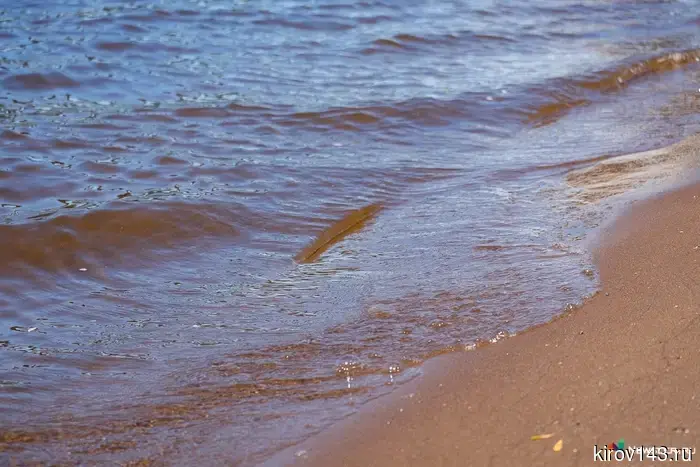 The water in the Chumovitsa River in Novovyatsk has turned green.
Specialists have gone back to the site.
The water in the Chumovitsa River in Novovyatsk has turned green.
Specialists have gone back to the site.
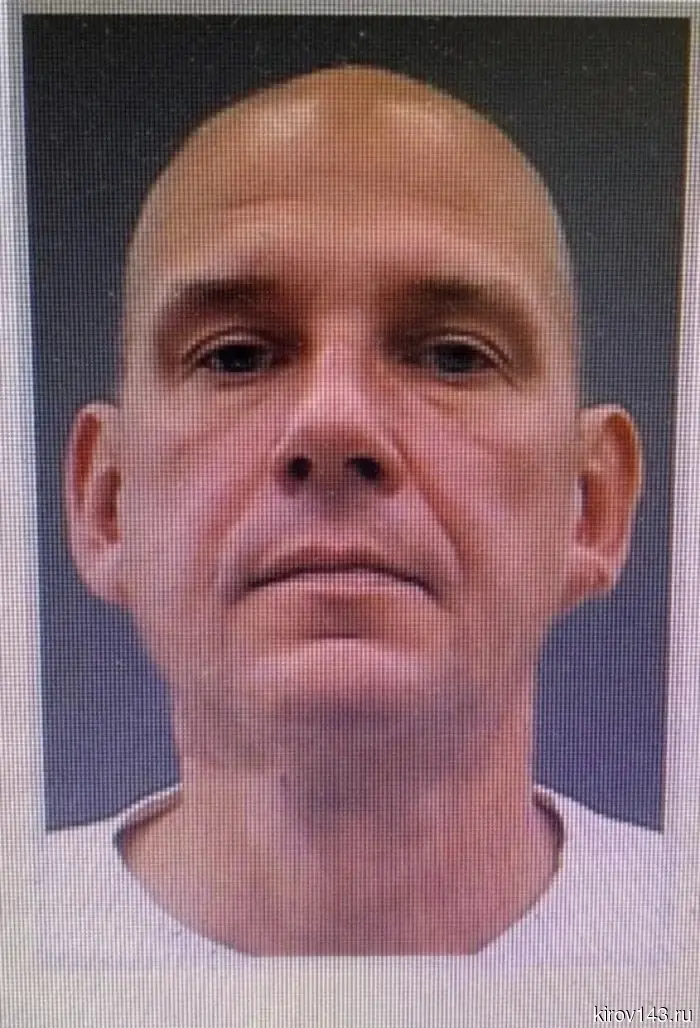 In Kirov, a man is wanted for owing a child nearly one million rubles.
The Main Directorate of the Federal Bailiff Service for the Kirov Region has put Artyom Dmitrievich Shamov on the wanted list for evading alimony obligations.
In Kirov, a man is wanted for owing a child nearly one million rubles.
The Main Directorate of the Federal Bailiff Service for the Kirov Region has put Artyom Dmitrievich Shamov on the wanted list for evading alimony obligations.
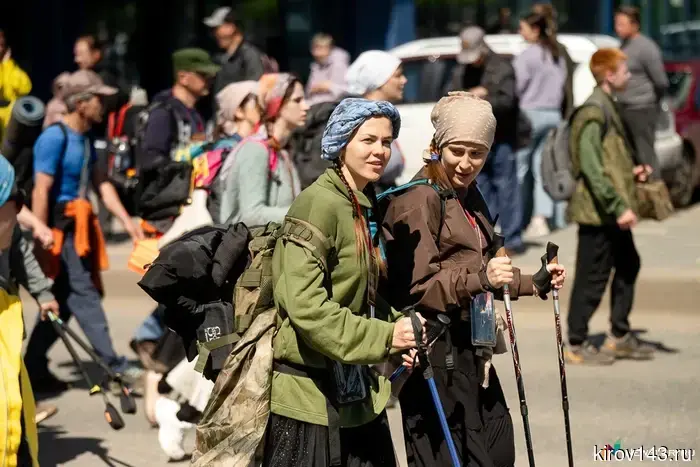 Pilgrims in Gorokhovo: the procession has entered the final stage.
This morning, at 3:00 AM, the column set off from the village of Monastyrskoye. Now, according to the schedule, the procession is in the village of Gorokhovo, where the Divine Liturgy is taking place. Ahead is the most difficult stretch of the journey to Velikoretskoe through forests and rough terrain.
Pilgrims in Gorokhovo: the procession has entered the final stage.
This morning, at 3:00 AM, the column set off from the village of Monastyrskoye. Now, according to the schedule, the procession is in the village of Gorokhovo, where the Divine Liturgy is taking place. Ahead is the most difficult stretch of the journey to Velikoretskoe through forests and rough terrain.
100 kg of meat per person: why do we eat more while businesses complain?
Meat consumption in Russia is growing year by year, which stimulates producers to develop. However, the growth rate of pork production has slowed down, and there has even been a decline in beef production. At the same time, prices continue to rise against the backdrop of ongoing pressure on businesses and the emergence of new risks. Experts have analyzed these contradictory trends and assessed the industry's prospects.