
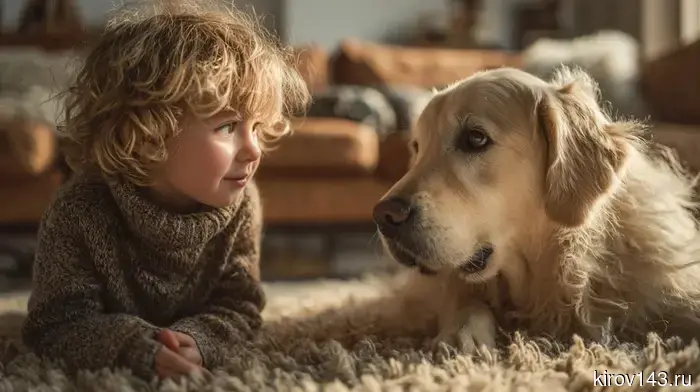
The dog does not know that a child is a human offspring: how pets actually perceive babies.
There are no scientific studies confirming that dogs perceive a baby as a human infant in the same way that humans do. Animals lack abstract thinking, so they are unable to operate with the concept of "biological species." This was stated by Vladimir Golubev, the president of the Russian Cynological Federation.
However, dogs can easily distinguish between adults and children — but based on other, quite specific signs. They rely on smell, body size, a higher-pitched voice, and clumsy movements. From a scientific perspective, an animal identifies a child as "something small and helpless, valuable to the owner." Whether a dog draws a clear species boundary between puppies and children has not yet been proven by science.
Moreover, experiments have shown that dogs react differently to children and puppies. During studies, animals were exposed to recordings of children's cries and animal squeaks. An important nuance here is that pets responded more quickly to the sound of puppies. In contrast, the sound of a child's cry elicited a longer and stronger reaction in dogs that had no experience with infants. Those individuals who had already lived near small children demonstrated habituation.
The fact that many dogs show increased patience towards rough actions from children and sometimes a higher level of protection is true. Dogs were used for guarding homes thousands of years ago, and in some cultures, they were indeed trusted with the safety of children. But this does not mean that any dog will behave this way. It all depends on the level of trust, the age of the pet, its upbringing, and even separation anxiety.
The opposite situation is also common: a dog may show aggression towards a new family member. The reason is often not "malice," but stress from changes in the usual routine: attention decreases, rituals are disrupted, and access to resources changes.
Cynologists emphasize that if a child is soon to appear in the house, preparations should begin in advance. There should be no abrupt changes in the apartment. The introduction to the infant should be conducted under supervision: the owner enters the room first, then the baby is carefully shown from a safe distance, and the dog is praised for calm behavior and interest. It is important to minimize stress from changes: spend time together, involve the pet in simple tasks — for example, sitting nearby while you change diapers.
Even if a dog is very patient, children should not be allowed to violate its boundaries. Play can only happen when the animal wants to, and strictly under adult supervision. If the dog shows clear attempts to bite or a pronounced tendency towards aggression, behavior should be corrected with a specialist and well in advance — this does not resolve quickly.
The conclusion of specialists is as follows: a dog does not identify a baby as a human does, but it does distinguish a child as a special category based on indirect signs. It is not advisable to anthropomorphize the pet — its reaction may not be what you expected, while still being completely normal for it. Any contact between children and animals occurs only under the responsibility of an adult, and it will not be possible to place the "upbringing" of a child on the dog.
Другие Новости Кирова (НЗК)
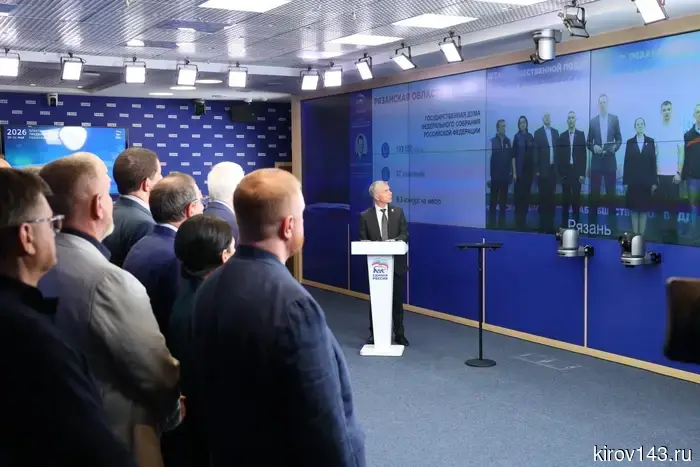 In the preliminary voting, more than 1300 participants of the special operation took part.
More than 10 million residents of our country participated in the preliminary voting of "United Russia." It is important to note that at this stage, voters themselves are forming the list of candidates at all levels. "ER" is the only political party in Russia that regularly conducts open nationwide voting to select candidates.
In the preliminary voting, more than 1300 participants of the special operation took part.
More than 10 million residents of our country participated in the preliminary voting of "United Russia." It is important to note that at this stage, voters themselves are forming the list of candidates at all levels. "ER" is the only political party in Russia that regularly conducts open nationwide voting to select candidates.
 In the Sunsky district, they want to repair the road for 122 million.
The authorities are looking for a contracting organization.
In the Sunsky district, they want to repair the road for 122 million.
The authorities are looking for a contracting organization.
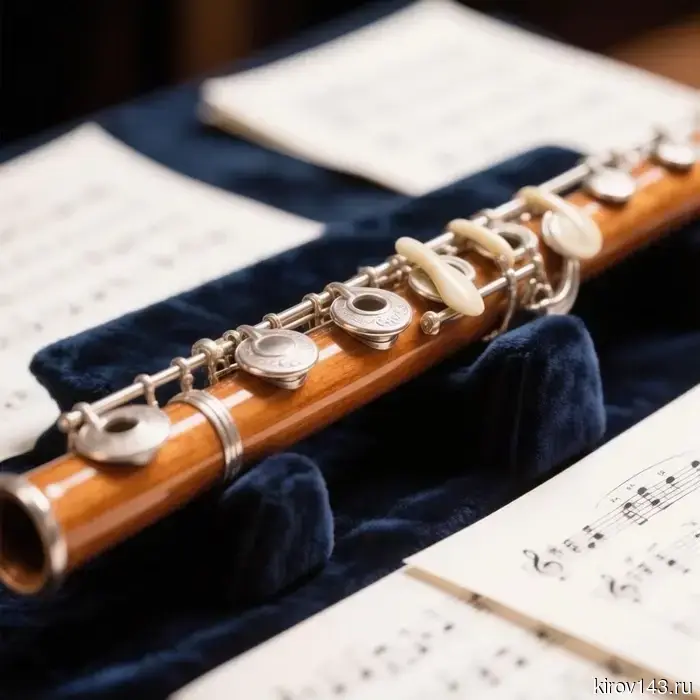 Кировчан зовут на концерт музыки великих композиторов, исполняемой на флейте.
Кировчан приглашают 5 июня в 18:00 в концертный зал Кировского колледжа музыкального искусства имени И.В. Казенина на концерт флейтового класса преподавателя Елены Зюриной. Как сообщили в учебном заведении, на сцене будут исполнены произведения известных композиторов – от Шуберта и Дебюсси до Чайковского и Цыбина.
Кировчан зовут на концерт музыки великих композиторов, исполняемой на флейте.
Кировчан приглашают 5 июня в 18:00 в концертный зал Кировского колледжа музыкального искусства имени И.В. Казенина на концерт флейтового класса преподавателя Елены Зюриной. Как сообщили в учебном заведении, на сцене будут исполнены произведения известных композиторов – от Шуберта и Дебюсси до Чайковского и Цыбина.
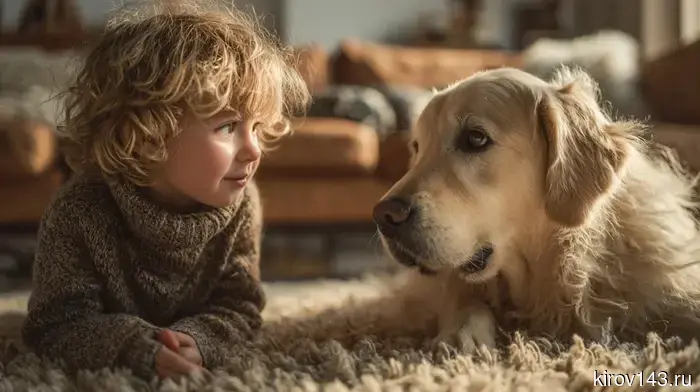 The dog does not know that a child is a human offspring: how pets actually perceive babies.
Many dogs allow children to do things that they wouldn't tolerate from adults: pulling their tails, violating personal boundaries. It seems to prove that the dog understands that a small human is in front of them. However, as explained by the Russian Cynological Federation, the reality is actually more complex and at the same time simpler.
The dog does not know that a child is a human offspring: how pets actually perceive babies.
Many dogs allow children to do things that they wouldn't tolerate from adults: pulling their tails, violating personal boundaries. It seems to prove that the dog understands that a small human is in front of them. However, as explained by the Russian Cynological Federation, the reality is actually more complex and at the same time simpler.
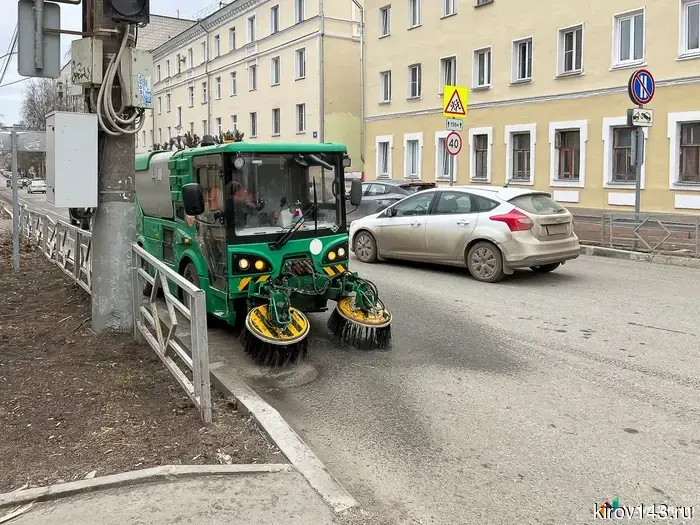 New "cleaners" found for Kirov's sidewalks
The special equipment park for maintaining city streets and sidewalks in Kirov has been replenished with a new vehicle. It is planned to be put into operation on routes in the coming days.
New "cleaners" found for Kirov's sidewalks
The special equipment park for maintaining city streets and sidewalks in Kirov has been replenished with a new vehicle. It is planned to be put into operation on routes in the coming days.
 The Ministry of Health has pushed libido to the background.
Starting from September 1, 2026, a new version of the list of medical positions will come into effect in Russia. The Ministry of Health has removed 16 specialties from it, adding 11 new ones. The most notable loss is the sexologist.
The Ministry of Health has pushed libido to the background.
Starting from September 1, 2026, a new version of the list of medical positions will come into effect in Russia. The Ministry of Health has removed 16 specialties from it, adding 11 new ones. The most notable loss is the sexologist.
The dog does not know that a child is a human offspring: how pets actually perceive babies.
Many dogs allow children to do things that they wouldn't tolerate from adults: pulling their tails, violating personal boundaries. It seems to prove that the dog understands that there is a small person in front of them. However, as explained by the Russian Cynological Federation, the reality is more complex and at the same time simpler.