
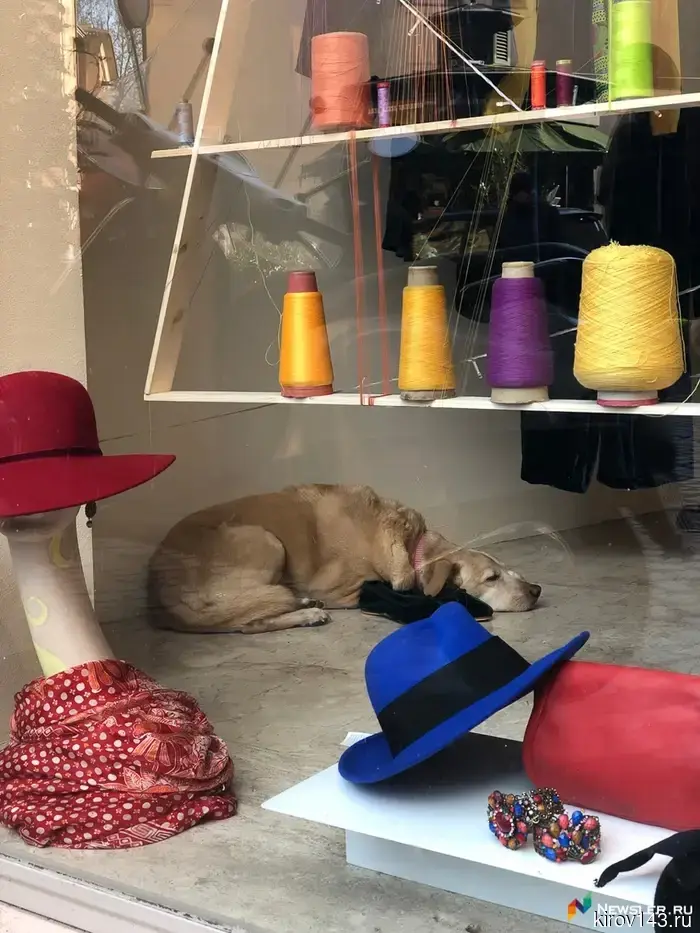
Not morality, but instincts: dog trainers explained who dogs actually consider "bad."
A dog's "sense of bad people" is a topic surrounded by myths. As explained by the Russian Cynological Federation, there is some truth to this belief, but with an important caveat: pets do not attribute moral meaning to human actions. They cannot recognize a deceiver, a trickster, or a poser — that is the domain of humans.
So, on what basis does a dog conclude that it is facing a "bad" person?
RKF President Vladimir Golubev highlights four main indicators. The first is body language. Sudden movements, loud footsteps, a piercing gaze, looming over the animal — all of this is perceived as a direct threat. In such situations, a dog either runs away or prepares to defend itself.
The second factor is smell. Dogs have such a keen sense of smell that they can detect even the release of hormones. An aggressive or drunk person smells different — the animal picks this up perfectly. The third point is the owner's reaction. If the owner tenses up or becomes withdrawn in the presence of someone, the dog immediately adopts their wariness. However, if the owner is happy and affectionate, the pet relaxes.
The fourth is past experience. This is often what confuses things. A dog that was once harmed by a man with a stick may panic at the sight of any similar person with a stick in the future — even if they are completely harmless. Correcting such false associations is difficult and time-consuming.
Thus, a "bad" person in the eyes of a dog is not a villain, but a bearer of frightening signals: an unnatural posture, boundary violations, internal tension that smells of cortisol, or a random coincidence with a traumatic memory.
Yes, pets can notice that something is off with a stranger before their owner does. But their assessment is not always accurate — the influence of past negative experiences cannot be ruled out.
The RKF also reminded about the rules for meeting a dog: do not loom over them, squat down, avert your gaze, and allow them to sniff you. And do not raise your voice at the owner — otherwise, the pet will defend them. Often, people think that the dog has "identified a bad person," when in reality, it has simply assessed danger signals — sometimes mistakenly.
Другие Новости Кирова (НЗК)
 Налоговая служба напомнила о опасностях, связанных с подменой трудовых отношений на отношения с самозанятыми.
Налоговая служба напомнила о возможных рисках замены трудовых отношений на отношения с самозанятыми.
Налоговая служба напомнила о опасностях, связанных с подменой трудовых отношений на отношения с самозанятыми.
Налоговая служба напомнила о возможных рисках замены трудовых отношений на отношения с самозанятыми.
 Inflation in the Kirov region has slowed down to 6.4%.
In April 2026, prices in the Kirov region increased by 0.06% compared to March.
Inflation in the Kirov region has slowed down to 6.4%.
In April 2026, prices in the Kirov region increased by 0.06% compared to March.
 Соколов ожидает предложения по благоустройству набережной и оврагов к середине июля.
Соколов ожидает предложения по обустройству набережной и оврагов к середине июля.
Соколов ожидает предложения по благоустройству набережной и оврагов к середине июля.
Соколов ожидает предложения по обустройству набережной и оврагов к середине июля.
 Inflation in the Kirov region has slowed down to 6.4%.
In April 2026, prices in the Kirov region increased by 0.06% compared to March.
Inflation in the Kirov region has slowed down to 6.4%.
In April 2026, prices in the Kirov region increased by 0.06% compared to March.
 Russians have started to pay more often using QR codes.
Alternative payment methods are gaining increasing popularity.
Russians have started to pay more often using QR codes.
Alternative payment methods are gaining increasing popularity.
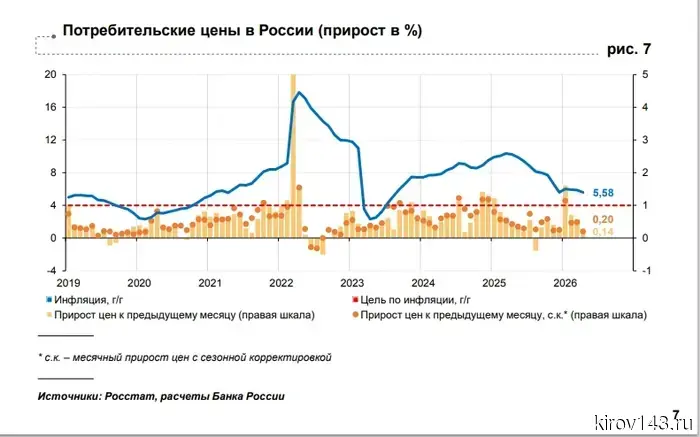 Годовая инфляция в России в апреле составила 5,58%.
Годовая инфляция в России за апрель составила 5,58%.
Годовая инфляция в России в апреле составила 5,58%.
Годовая инфляция в России за апрель составила 5,58%.
Not morality, but instincts: dog trainers explained who dogs actually consider "bad."
The dog growls at the guest, and the owner is sure: "He always senses a bad person." Is this true? The Russian Cynological Federation confirmed: animals can indeed assess a stranger — but not on a scale of good and evil. And their verdict can be mistaken.