
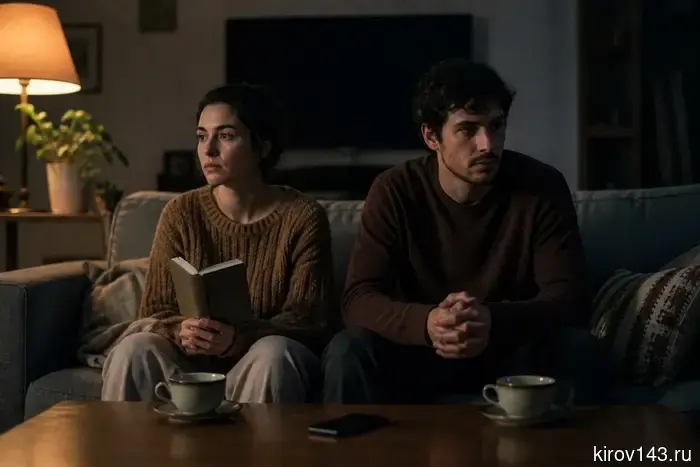
From YA to psychotherapy: why cinema suddenly started talking about feelings
The issue is not nostalgia for "Twilight" (12+) or another wave of fashion for Pattinson. The situation is deeper and more prosaic. The information agenda of recent years is an endless stream of alarming news that makes one want to shut down. People are tired of external chaos and seek refuge not in fantasy worlds (which are also burdened with apocalypses) but in a space where they can exhale. This space has become the psychological exploration of romantic relationships.
Viewers no longer need perfect princes and saviors. They need characters who also don’t know how to do it right but try to talk, listen, and not run away at the first argument. This need is being met by the wave of adaptations of young adult literature in recent years — only now it’s not fantasy sagas but novels about "serious" relationships.
It is noteworthy that even classic gothic plots are being reinterpreted through this lens. The recent adaptation of "Wuthering Heights" (18+, 2026) by Emerald Fennell shifted the focus from romanticized suffering to an analysis of painful attachment. The film does not ask, "Can they be together?" but shows how past traumas make love impossible. This is no longer just a melodrama but almost a clinical case.
The genre of "yearning" has become an independent cultural phenomenon. Unlike classic rom-coms, where everything was built on a series of coincidences and grand gestures, modern films about relationships value what is left unsaid, long pauses, and the electricity of "almost." Screenwriters deliberately stretch the anticipation because, in an era of instant access to anything, viewers have grown tired of slow closeness.
At the same time, therapists have begun recommending couples watch such films together. Cinema is becoming a safe training ground for emotions: seeing on screen how characters destroy relationships with their inability to communicate is much easier than starting a conversation with a partner with complaints. Love films have turned into manuals on emotional literacy.
Of course, this is not an invention of recent years. Relationships have always been at the center of cinema. But earlier, the emphasis was on passion, fateful coincidences, and tragedies. Now, however, the cocktail has changed: psychology, reflection, and a healthy dose of pragmatism have been added to the familiar drama. Even in comedies, characters now not only fall in love but discuss triggers, attachment, and personal boundaries.
However, a natural question arises: is it too much? When every second film turns into a group therapy session, viewers risk getting tired of this itch for self-analysis. Signs of saturation are already noticeable: the ratings of some overtly saccharine projects are falling, and critics grumble that "cinema has forgotten that love can simply be fun."
Другие Новости Кирова (НЗК)
 More than 30 drivers drove drunk in the region this weekend.
From July 25 to 27, 15 traffic accidents occurred in the Kirov region — 22 people were injured, reported the regional State Traffic Safety Inspectorate.
More than 30 drivers drove drunk in the region this weekend.
From July 25 to 27, 15 traffic accidents occurred in the Kirov region — 22 people were injured, reported the regional State Traffic Safety Inspectorate.
 Employees of "Uralchem" joined the celebration of Victory Day.
The branch "KCHHK" of JSC "OHC "Uralchem" participated in the preparation and celebration of the 81st anniversary of Victory in the Great Patriotic War.
Employees of "Uralchem" joined the celebration of Victory Day.
The branch "KCHHK" of JSC "OHC "Uralchem" participated in the preparation and celebration of the 81st anniversary of Victory in the Great Patriotic War.
 13 управленческих решений Кировской области были включены в число 200 лучших проектов России.
13 управленческих решений Кировской области оказались в числе 200 лучших проектов России.
13 управленческих решений Кировской области были включены в число 200 лучших проектов России.
13 управленческих решений Кировской области оказались в числе 200 лучших проектов России.
 A resident of Kirov paid 650,000 rubles after the car was reported missing.
A resident of Kirov paid off more than 650 thousand rubles in debts after the bailiffs announced a search for his car.
A resident of Kirov paid 650,000 rubles after the car was reported missing.
A resident of Kirov paid off more than 650 thousand rubles in debts after the bailiffs announced a search for his car.
 Mass inspections of drivers will be held in the Kirov region.
Traffic inspectors and public activists will catch drunk drivers.
Mass inspections of drivers will be held in the Kirov region.
Traffic inspectors and public activists will catch drunk drivers.
 In Kirov, a piece of plaster fell on a woman on Shchorsa.
The woman sustained injuries.
In Kirov, a piece of plaster fell on a woman on Shchorsa.
The woman sustained injuries.
From YA to psychotherapy: why cinema suddenly started talking about feelings
Just a couple of years ago, it seemed that youth adaptations had become extinct as a genre. Studios buried YA franchises after "The Maze Runner" (16+) and "Divergent" (12+), while serious discussions about relationships were left to festival cinema. But 2026 shows a different picture: adaptations of young adult romance novels are being released one after another, and films where characters visit psychologists and talk about their traumas are making box office returns just as good as superhero blockbusters.