

Already changed tires, but there are frosts at night: what to do and is it safe to drive?
The situation familiar to many drivers in spring: during the day +10°C, sunny, hands itching to "change the tires" — and the tires are already swapped. But the next morning, the thermometer reads -2°C, and there's a thin layer of ice on the roads, especially on bridges and in the shade. The question that concerns drivers on such days: "What to do if you've already changed the tires and the frost has come?"
The answer is short: you can drive, but with significant caveats. And the main thing here is to understand the physics, not to rely on luck.
What really happens to summer tires in freezing temperatures
Many mistakenly think that danger arises only with ice. No. As soon as the temperature drops below +5°C, the summer rubber compound begins to "harden." Elasticity disappears, and the contact patch with the road performs worse. As a result:
the braking distance increases even on dry asphalt;
the steering becomes less informative;
with a sudden movement, the car skids faster than you expect.
Moreover, morning frosts are the most treacherous. They don't last all day, and the driver calms down, but by 7 AM, there is already micro-ice at the exit from the yard.
So, what to do if you've already changed the tires and need to drive
If possible, postpone the trip until the sun warms the road — that’s the safest option.
If you still need to go, remember a few rules (they save you just as well as winter tires):
Reduce speed. The speed that was comfortable on winter tires is now dangerous.
No sudden movements. Sudden acceleration, braking, or steering guarantees a skid.
Distance — at least twice the usual.
Pay special attention to bridges, overpasses, and shaded areas. Ice appears there first and melts last.
Check the tire pressure. With temperature fluctuations, it drops, and under-inflated tires worsen handling even more.
Can you just wait and switch back to winter tires?
Yes, and this is often the most reasonable solution. If the forecast indicates that the frost will last for several days or a week — temporarily "switching back" to winter tires is safer than risking every day. One morning accident can negate any time-saving efforts at the tire shop.
One of the main mistakes drivers make is focusing on the daytime temperature. "Look, it’s +8 during the day, everything is fine." But in the morning it was -3. It’s the morning and nighttime values that are the key factor.
As experts from ROSSKO note, switching to summer tires is not a calendar date, but a stable temperature above +5…+7 °C throughout the day. If the weather is "jumping" — it’s better to wait it out.
Take care of yourself and don’t let early "tire changing" ruin your spring.
Другие Новости Кирова (НЗК)
 Kirov judokas brought home the "gold" and tickets to the Russian national team.
Judoists from Sovetsk, Vyatskiye Polyany, and Kotelnich won 10 medals at the all-Russian competitions in Suzdal. Four athletes qualified for the Russian national team for 2027.
Kirov judokas brought home the "gold" and tickets to the Russian national team.
Judoists from Sovetsk, Vyatskiye Polyany, and Kotelnich won 10 medals at the all-Russian competitions in Suzdal. Four athletes qualified for the Russian national team for 2027.
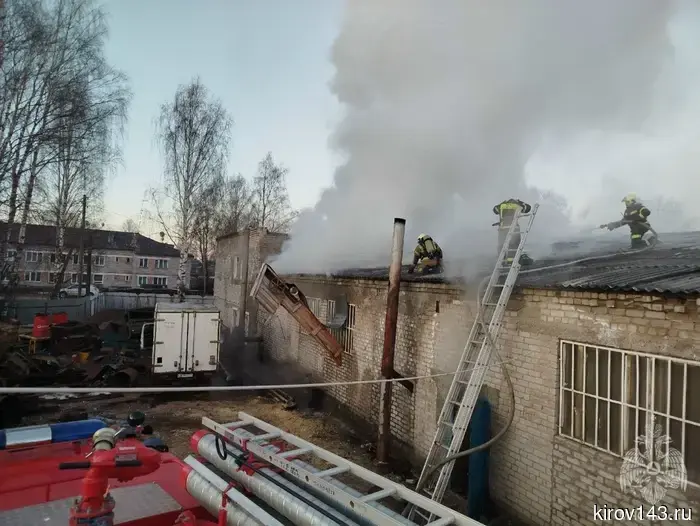 In the Kirov region, fire claimed the life of a person within a day.
The past day has been difficult for the region: in the reports of the Ministry of Emergency Situations, there were nine man-made fires, one human casualty, and two serious incidents in the districts of the region. Firefighters worked in the Yuryansky and Podosinovsky districts and in Kirovo-Chepetsk.
In the Kirov region, fire claimed the life of a person within a day.
The past day has been difficult for the region: in the reports of the Ministry of Emergency Situations, there were nine man-made fires, one human casualty, and two serious incidents in the districts of the region. Firefighters worked in the Yuryansky and Podosinovsky districts and in Kirovo-Chepetsk.
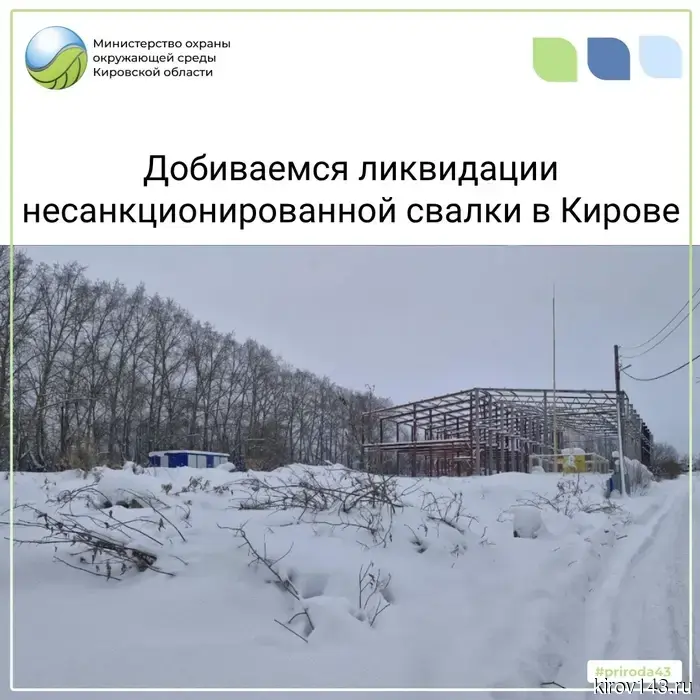 A Kirov resident was forced by the court to remove the dumps.
The Ministry of Natural Resources of the Kirov Region has filed a lawsuit demanding the elimination of unauthorized dumps in Kirov.
A Kirov resident was forced by the court to remove the dumps.
The Ministry of Natural Resources of the Kirov Region has filed a lawsuit demanding the elimination of unauthorized dumps in Kirov.
 С 17 апреля клиентский центр в Малмыже перейдет на новый адрес.
С 17 апреля клиентский центр в Малмыже перейдет на новый адрес.
С 17 апреля клиентский центр в Малмыже перейдет на новый адрес.
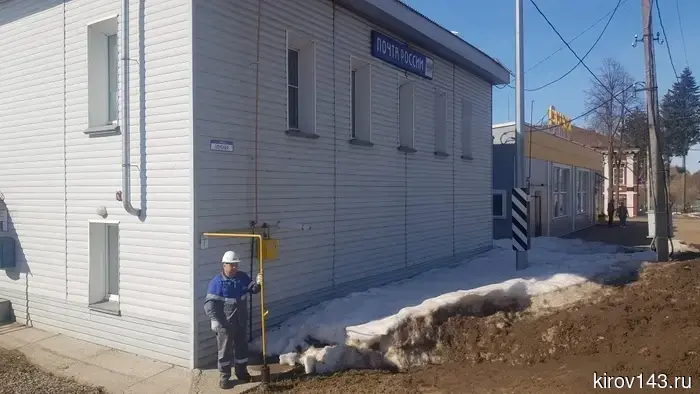 В Кировской области прошла газификация четырех почтовых отделений.
В Кировской области осуществлена газификация четырех отделений почтовой связи.
В Кировской области прошла газификация четырех почтовых отделений.
В Кировской области осуществлена газификация четырех отделений почтовой связи.
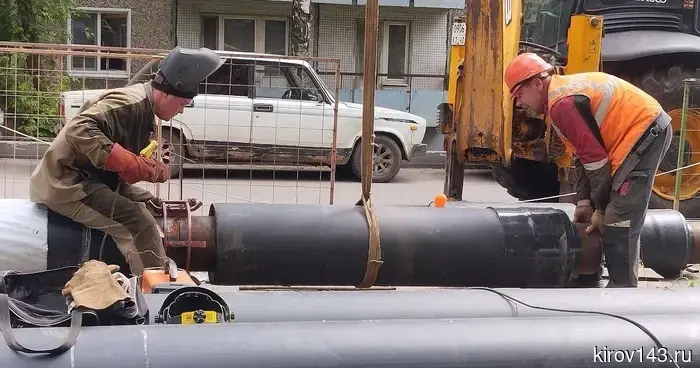 «Т Плюс» в 2026 году модернизирует свыше 9 километров тепловых сетей в Кирове.
В 2026 году компания «Т Плюс» проведет обновление более 9 километров тепловых сетей в Кирове.
«Т Плюс» в 2026 году модернизирует свыше 9 километров тепловых сетей в Кирове.
В 2026 году компания «Т Плюс» проведет обновление более 9 километров тепловых сетей в Кирове.
Already changed tires, but there are frosts at night: what to do and is it safe to drive?
Spring warmth deceived drivers: many have already changed their tires, but at night the temperature dropped below zero. Summer tires stop working properly in freezing conditions — even if the asphalt seems dry.