
Kirov residents less frequently encounter the "defense gene" against severe intestinal disease.
Scientists have discovered why some people can avoid chronic inflammation of the colon for a long time, while others fall into a high-risk group. The key lies in a "break" on the 21st chromosome, specifically in a gene variant designated as rs2836882.
As specialists explain (the study involved geneticists from the company Genotek, who analyzed over 166,000 samples), there are two forms of this DNA segment: "G" and "A." If a person inherits the "aggressive" G variant from their parents, their immune cells begin to operate in hyper-protective mode, attacking their own intestines. However, if the genotype includes the protective version "A" (especially in a double copy — AA), the risk of developing the disease decreases by about 35%.
Who is the luckiest: a ranking of nations
Geneticists compiled a detailed ranking of ethnic groups in Russia, where this "shield" against the disease is most commonly found. The data turned out to be unexpected: the usual division into "North/South" or "West/East" does not apply here.
The absolute record holders for the presence of the protective genotype AA are the Karachays and Balkars — 14.05% of them have two copies of the "beneficial" allele*. This means that among these peoples, the risk of ulcerative colitis is almost one and a half times lower compared to the average Russian. The Yakuts follow closely behind (12.83%) — despite the harsh climate and specific diet, their genetics give them an advantage in protecting the intestines. Rounding out the top three are the Ossetians (12.54%) and Bashkirs (10.23%).
However, the further down the list, the more alarming the picture becomes for some peoples. Russians ranked 13th with a figure of only 6.72% — almost half that of the Karachays. Even lower are the Tatars (6.67%) and Chechens (6.01%).
But the real risk zone is at the bottom of the ranking. Among the Mari, the protective variant is found in only 4.83%. Among Koreans — 3.36%. And the anti-record holders are the Kazakhs: only 2.31% of them can boast the AA genotype. This means that the genetic predisposition to ulcerative colitis among Kazakhs is the highest among all the peoples included in the study. In other words, under otherwise equal conditions (stress, diet, ecology), this group has the highest chances of falling ill.
What does this mean for the average person?
Having the "bad" G variant is not a death sentence, and the absence of the "good" AA is not a diagnosis. The disease is triggered only when heredity combines with external factors: severe stress, dietary errors, intestinal infections, or immune system disorders. However, now doctors and patients from the mentioned groups (especially Kazakhs, Koreans, and Maris) know that they should pay more attention to prevention and not ignore alarming symptoms — for example, blood in the stool or chronic diarrhea.
Kirov residents in the risk group
Returning to city statistics: residents of Kirov found themselves in the zone of least genetic protection. According to published data, only 4.81% of Kirov residents have two copies of the protective allele A. This is one of the lowest figures among all analyzed cities in Russia. Kirov is listed alongside cities like Oryol (4.76%) and Omsk (4.21%), and noticeably lags behind even Yoshkar-Ola (9.54%) or Yakutsk (10.26%). This means that the theoretical predisposition to ulcerative colitis among Kirov residents is higher than that of residents in most other regions.
Другие Новости Кирова (НЗК)
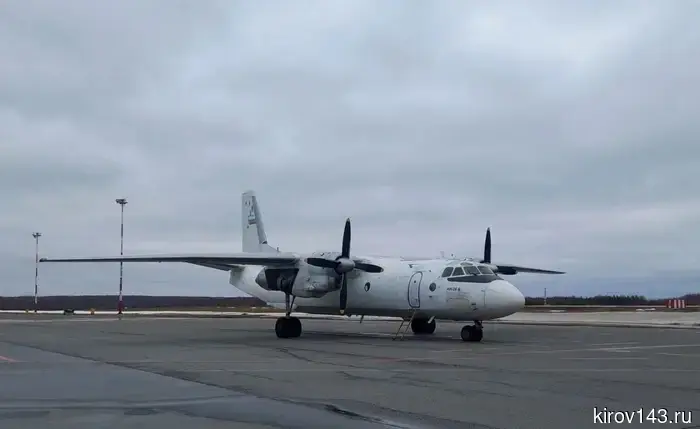 The legendary An-26 made a technical landing at Kirov's Pobedilovo airport.
Kirov Airport Pobedilovo welcomed an aircraft for several hours, which local aviators remember from the Soviet era. The plane, once part of the Kirov aviation enterprise's fleet, returned to the familiar runway — albeit not as a regular carrier, but as an intermediate point in a long flight.
The legendary An-26 made a technical landing at Kirov's Pobedilovo airport.
Kirov Airport Pobedilovo welcomed an aircraft for several hours, which local aviators remember from the Soviet era. The plane, once part of the Kirov aviation enterprise's fleet, returned to the familiar runway — albeit not as a regular carrier, but as an intermediate point in a long flight.
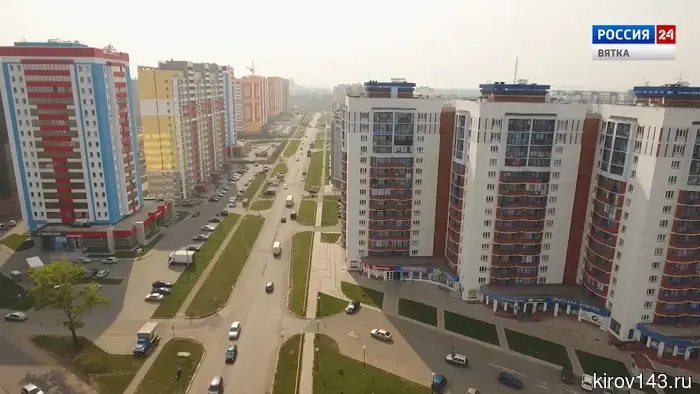 Кировская область занимает лидирующие позиции среди российских регионов по комплексному развитию территорий.
На заседании коллегии Министерства строительства и жилищно-коммунального хозяйства России и комиссии Госсовета РФ по направлению «Инфраструктура для жизни», в котором участвовал губернатор Кировской области Александр Соколов, основной темой обсуждения стало одно из перспективных направлений.
Кировская область занимает лидирующие позиции среди российских регионов по комплексному развитию территорий.
На заседании коллегии Министерства строительства и жилищно-коммунального хозяйства России и комиссии Госсовета РФ по направлению «Инфраструктура для жизни», в котором участвовал губернатор Кировской области Александр Соколов, основной темой обсуждения стало одно из перспективных направлений.
 В Кирове стартовала выставка, посвященная участникам специальной военной операции «Знай своих».
Герои нашего времени. В Кирове открылась выставка в честь участников СВО "Знай своих". Здесь представлены портреты и истории бойцов, которые продолжают службу в самых сложных зонах Специальной Военной Операции. Подробности расскажет Алина Смирнова. Более ста фотографий, на которых запечатлены герои нашего времени.
В Кирове стартовала выставка, посвященная участникам специальной военной операции «Знай своих».
Герои нашего времени. В Кирове открылась выставка в честь участников СВО "Знай своих". Здесь представлены портреты и истории бойцов, которые продолжают службу в самых сложных зонах Специальной Военной Операции. Подробности расскажет Алина Смирнова. Более ста фотографий, на которых запечатлены герои нашего времени.
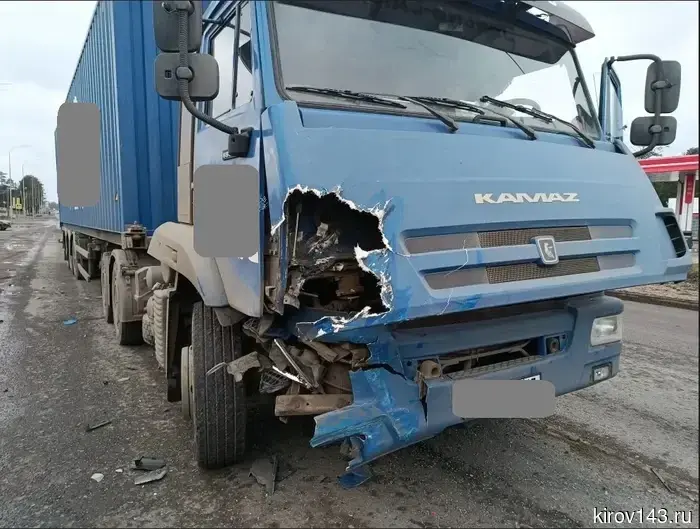 В Белой Холунице произошло столкновение КАМАЗа с легковой машиной: имеются жертвы.
В среду, 8 апреля, в 12:55 на улице Юбилейной в городе Белая Холуница случилось столкновение легкового автомобиля «Лада Гранта», которым управлял 52-летний мужчина, и грузовика «КАМАЗ» с прицепом, за рулем которого находился 38-летний водитель. По предварительным данным, в результате происшествия
В Белой Холунице произошло столкновение КАМАЗа с легковой машиной: имеются жертвы.
В среду, 8 апреля, в 12:55 на улице Юбилейной в городе Белая Холуница случилось столкновение легкового автомобиля «Лада Гранта», которым управлял 52-летний мужчина, и грузовика «КАМАЗ» с прицепом, за рулем которого находился 38-летний водитель. По предварительным данным, в результате происшествия
 After the child's death on the tubing, a verdict has been issued.
In the Kirov region, a verdict has been issued in the criminal case regarding the death of a child during a dangerous winter activity — tubing attached to a car.
After the child's death on the tubing, a verdict has been issued.
In the Kirov region, a verdict has been issued in the criminal case regarding the death of a child during a dangerous winter activity — tubing attached to a car.
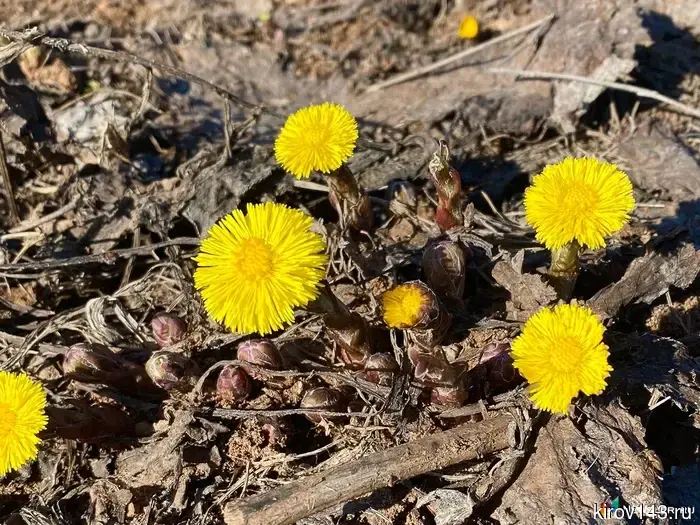 By next Tuesday, it will warm up in Kirov.
Amateur meteorologists reported that on Tuesday, April 14, it will warm up to +15 degrees in the Kirov region.
By next Tuesday, it will warm up in Kirov.
Amateur meteorologists reported that on Tuesday, April 14, it will warm up to +15 degrees in the Kirov region.
Kirov residents less frequently encounter the "defense gene" against severe intestinal disease.
A new large-scale study of the genomes of residents of Russia has shown that the predisposition to autoimmune intestinal inflammation (ulcerative colitis) is directly dependent on ethnic origin and geographical location.