

Gather more at any cost: how authorities are tightening control over taxes and what it means for business
According to experts' estimates, federal budget revenues in 2026 will amount to about 40.3 trillion rubles with expenditures of 44.1 trillion. The gap of almost 4 trillion rubles requires additional sources of income.
Pressure is increasing — businesses are moving to cash
The situation is complicated by changes in the tax system. Starting in 2026, the VAT rate has increased, and the threshold for applying the simplified taxation system has decreased.
As experts note, this has already caused a backlash: in several segments — primarily in retail and the service sector — cash and transfer payments have become more frequent, and additional fees have begun to be charged for cashless payments, writes kursdela.biz.
Thus, the attempt to "whiten" the economy is practically leading to a partial return to the shadows.
Six areas of control
The authorities are preparing a comprehensive plan to combat the shadow economy. Several key areas will come under control:
— trade within the EAEU; — domestic goods market; — labor market; — circulation of cash and digital currencies; — illegal lending; — tobacco market.
The most significant changes will affect foreign trade. Mandatory labeling of goods will be introduced for importers, and the tax service will receive additional powers to control pricing.
At the same time, a new digital interaction system between the Federal Tax Service and the Federal Customs Service — SPOT — is being launched, which will allow tracking the movement of goods and confirming the reality of transactions.
From licenses to criminal cases
Pressure will increase on those operating without registration and not using cash register equipment in the domestic market. Special attention will be paid to employers who substitute labor relations with civil law contracts or abuse the status of self-employed individuals.
A number of measures also concern the financial sector. In particular:
— licensing of tobacco trade is being introduced; — criminal liability is established for illegal consumer lending; — control over transactions with digital currencies, including mining, is being tightened.
Focus on results
The effectiveness of the campaign will be assessed in comparison to 2021, adjusted for changes in tax legislation. Specific indicators will be set for each segment.
According to forecasts, the implementation of measures will reduce the share of the shadow economy in GDP by about 1.5% over three years. From 2027, budgets at all levels could additionally receive up to 1 trillion rubles annually.
Debts: a separate line of pressure
At the same time, work is intensifying to recover already accumulated debts.
The main tool remains bankruptcy: tax authorities initiate up to a quarter of all procedures. In 2024, more than 250 billion rubles were received in the budget this way.
If it is impossible to recover a debt from a company, subsidiary liability is applied — recovery from owners and top managers. In recent years, about 180 billion rubles have been returned through this channel.
An additional mechanism remains criminal cases for tax evasion. In such cases, businesses often prefer to settle debts even at the investigation stage.
Business adapts
Tightening control is changing the market. Demand for accounting and tax services is growing: by the end of 2025, about 9,500 specialized companies were operating in the country — 11% more than the previous year.
This reflects a new reality: the tax environment is becoming more complex and expensive. Business costs increasingly include not only taxes themselves but also expenses for compliance and risk reduction.
Main conclusion
Financial authorities are betting on increased control and "whitening" the economy. However, at the same time, business adaptation is also intensifying, as companies seek ways to reduce their burden.
This balance — between pressure and market response — will determine the actual tax collection in the coming years.
Другие Новости Кирова (НЗК)
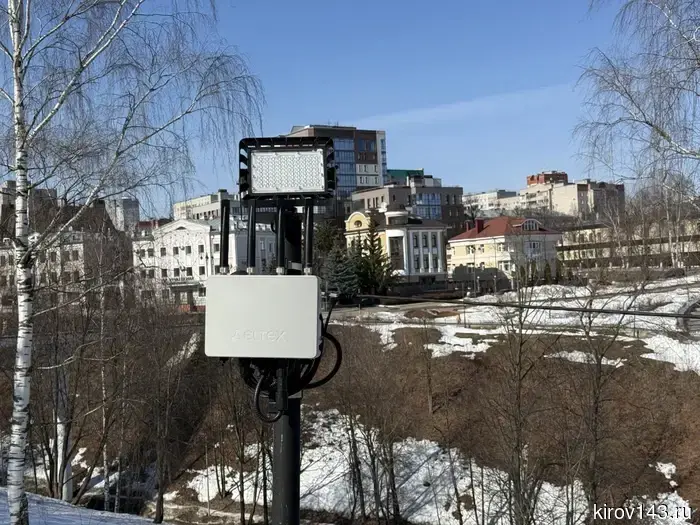 Kirov residents have been provided with express access to the government website.
Kirov residents noticed a router near the Berth Rotunda in Alexander Garden.
Kirov residents have been provided with express access to the government website.
Kirov residents noticed a router near the Berth Rotunda in Alexander Garden.
 Starting in April, Apple IDs will no longer be replenished from mobile.
Starting April 1, Russian iPhone users will lose one of the last ways to pay for Apple services.
Starting in April, Apple IDs will no longer be replenished from mobile.
Starting April 1, Russian iPhone users will lose one of the last ways to pay for Apple services.
 Мама с многодетной семьей из Подосиновца открыла свою кондитерскую.
Мама троих детей из Подосиновца Надежда Медянская развивает свой бизнес в рамках социального контракта, сообщили в правительстве региона. Она занимается кондитерским производством и изготавливает на заказ торты, трайфлы, капкейки, эклеры, хачапури, пиццы, роллы и рулеты из меренги. — Дети с радостью
Мама с многодетной семьей из Подосиновца открыла свою кондитерскую.
Мама троих детей из Подосиновца Надежда Медянская развивает свой бизнес в рамках социального контракта, сообщили в правительстве региона. Она занимается кондитерским производством и изготавливает на заказ торты, трайфлы, капкейки, эклеры, хачапури, пиццы, роллы и рулеты из меренги. — Дети с радостью
 Russians are mass-checking "sorrel" and "catalog."
The portal "Gramota.ru" published a list of words that Russians most often searched for to clarify the correct stress.
Russians are mass-checking "sorrel" and "catalog."
The portal "Gramota.ru" published a list of words that Russians most often searched for to clarify the correct stress.
 Russians are mass-checking "sorrel" and "catalog."
The portal "Gramota.ru" published a list of words that Russians most often searched for to clarify the correct stress.
Russians are mass-checking "sorrel" and "catalog."
The portal "Gramota.ru" published a list of words that Russians most often searched for to clarify the correct stress.
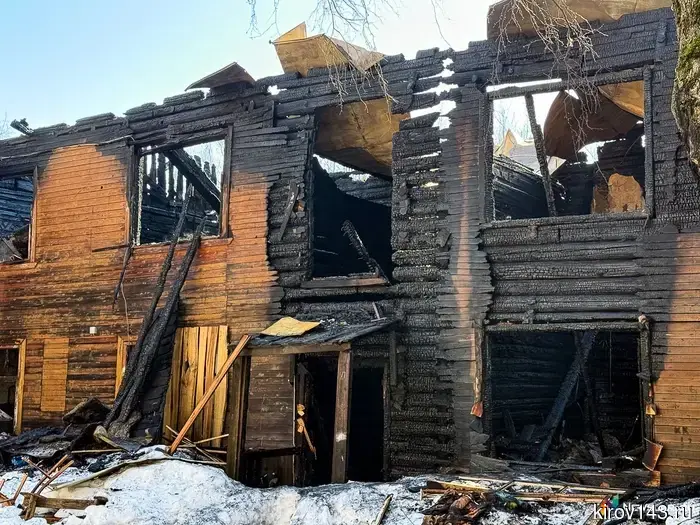 The house in the center of Kirov was extinguished for five hours.
On the night of March 30, a large fire broke out in the center of Kirov. A wooden house on Nikitskaya Street caught fire, reported the Main Directorate of the Ministry of Emergency Situations of Russia for the Kirov Region.
The house in the center of Kirov was extinguished for five hours.
On the night of March 30, a large fire broke out in the center of Kirov. A wooden house on Nikitskaya Street caught fire, reported the Main Directorate of the Ministry of Emergency Situations of Russia for the Kirov Region.
Gather more at any cost: how authorities are tightening control over taxes and what it means for business
Russian President Vladimir Putin instructed the government, the Central Bank, and the regions to sharply increase tax collection. Against the backdrop of a budget deficit, the task has been set firmly: simply meeting the plan is no longer enough — it must be exceeded.