

Conversations about the ban on Telegram: what is really happening with the messenger
However, the latest signals from regulators indicate a more restrained scenario.
Transition period until 2026
The Federal Antimonopoly Service reported that a transition period will be in effect for advertising on Telegram and YouTube until the end of 2026. During this period, liability measures will not be applied.
At the same time, the placements themselves remain under the regulator's scrutiny. The FAS retains the right to check the content of advertisements, the timing of their placements, and the legal grounds - including contracts and the correctness of documentation.
In fact, this means that advertising on Telegram is not prohibited and is carried out within the framework of existing regulations, taking into account the regulator's oversight. The market has been given time
The decision on the transition period gives businesses the opportunity not to urgently revise their advertising strategies. Companies can continue to work with familiar channels while simultaneously assessing risks and gradually adapting marketing budgets.
This is not about a long-term fixation of status, but rather a temporary period during which the market will be restructuring: "It is obvious that economic entities need time to adapt to new rules and to reorient themselves to other advertising channels. Therefore, a transition period until the end of 2026 is necessary for advertising on Telegram and YouTube, during which liability measures for the dissemination of advertisements on such resources will not be applied."
The main risk - tax
Despite the absence of liability measures, a key risk remains - tax.
As market participants note, advertising expenses on platforms that are under restrictions may not be recognized during a tax audit. In this case, the company will not be able to account for them when calculating profit tax, which may lead to additional charges.
To minimize potential risks, market participants are already discussing adjustments to the accounting of advertising expenses. Among the measures being considered are clarifying contractual terms, additional legal processing of placements, and reviewing internal accounting procedures in light of existing restrictions. Final decisions, as experts note, require individual assessment in each specific case.
Telegram - in a separate category
The FAS specifically emphasizes that the transition regime applies specifically to Telegram and YouTube.
At the same time, for platforms that had restrictions imposed earlier - Instagram*, Facebook** and VPN services - control continues with the application of liability measures. No transition period is provided for them.
This means that Telegram is currently not equated with completely banned platforms.
Where the concern arose
The rise in anxious expectations is linked to several factors: discussions about VPN restrictions, the overall rhetoric regarding foreign services, and a lack of clear explanations at an early stage.
As a result, users and businesses have developed a sense of possible rapid and harsh decisions.
However, the current regulatory practice indicates a gradual, phased approach.
What is happening now
At the moment, several key positions can be noted:
Telegram is not banned;
advertising on it is allowed;
liability measures are temporarily not applied (until the end of 2026);
regulatory oversight remains;
tax risks remain relevant.
The situation around Telegram is developing not according to a scenario of sharp restrictions, but in the logic of gradual changes in approaches to regulating digital channels.
For businesses, this means the need for careful adaptation considering legal and tax factors.
The market has received a temporary resource for restructuring - and how it will be used largely depends on the further configuration of the digital environment.
Другие Новости Кирова (НЗК)
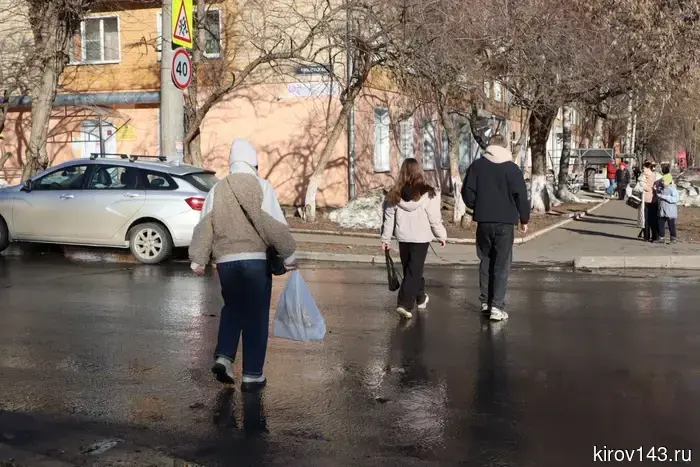 The dangerous intersection near the kindergartens has been promised to be put in order.
Residents of Kirov complained about a dangerous area at the intersection of Nikitskaya and Proletarskaya streets: according to them, the road to the kindergartens and clinic here effectively runs "outside the law." People are forced to risk their lives every day by crossing the roadway without pedestrian crossings.
The dangerous intersection near the kindergartens has been promised to be put in order.
Residents of Kirov complained about a dangerous area at the intersection of Nikitskaya and Proletarskaya streets: according to them, the road to the kindergartens and clinic here effectively runs "outside the law." People are forced to risk their lives every day by crossing the roadway without pedestrian crossings.
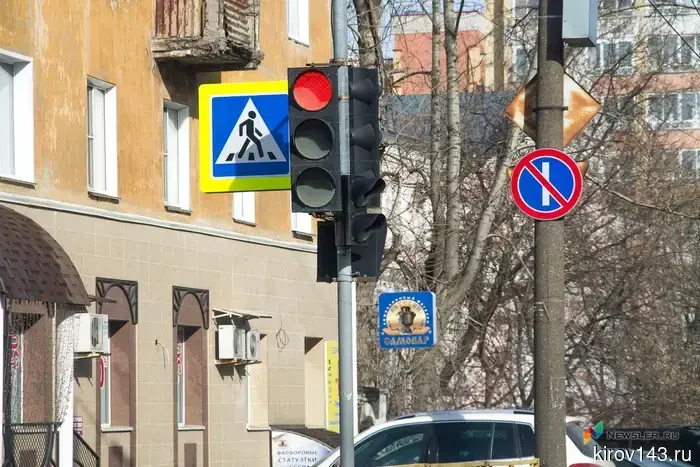 A pedestrian traffic light will be installed on Enthusiasts.
A new traffic light will be installed in Kirov on Enthusiasts Street near house No. 15.
A pedestrian traffic light will be installed on Enthusiasts.
A new traffic light will be installed in Kirov on Enthusiasts Street near house No. 15.
 One held, the other hit: Rosgvardiya officers detained troublemakers in a cafe.
In Kirovo-Chepetsk, Rosgvardiya officers detained women who beat up a café employee.
One held, the other hit: Rosgvardiya officers detained troublemakers in a cafe.
In Kirovo-Chepetsk, Rosgvardiya officers detained women who beat up a café employee.
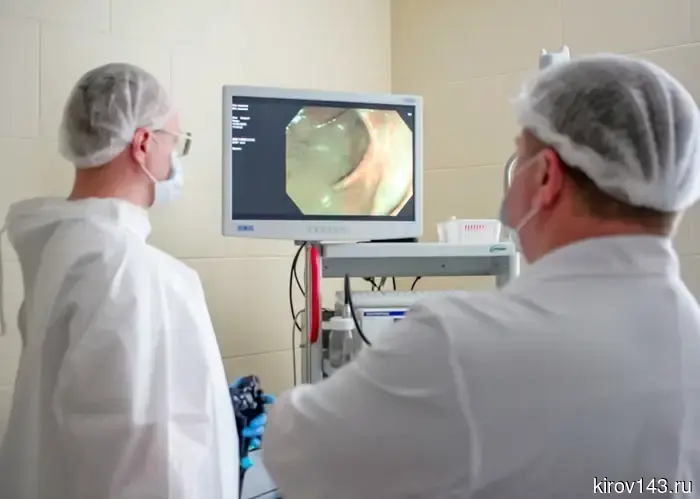 In Kirov, a man had his thick intestine replaced with a thin one.
The surgeon removed the large intestine and formed a "pouch" from the small intestine that performs the same functions.
In Kirov, a man had his thick intestine replaced with a thin one.
The surgeon removed the large intestine and formed a "pouch" from the small intestine that performs the same functions.
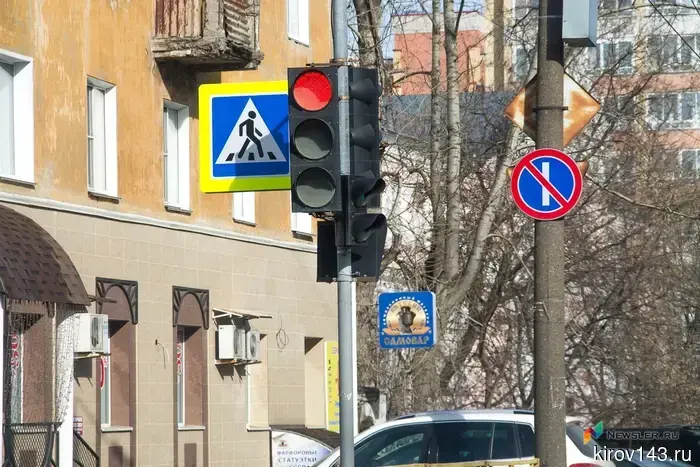 A pedestrian traffic light will be installed on Enthusiasts Street.
A new traffic light will be installed in Kirov on Enthusiasts Street near house No. 15.
A pedestrian traffic light will be installed on Enthusiasts Street.
A new traffic light will be installed in Kirov on Enthusiasts Street near house No. 15.
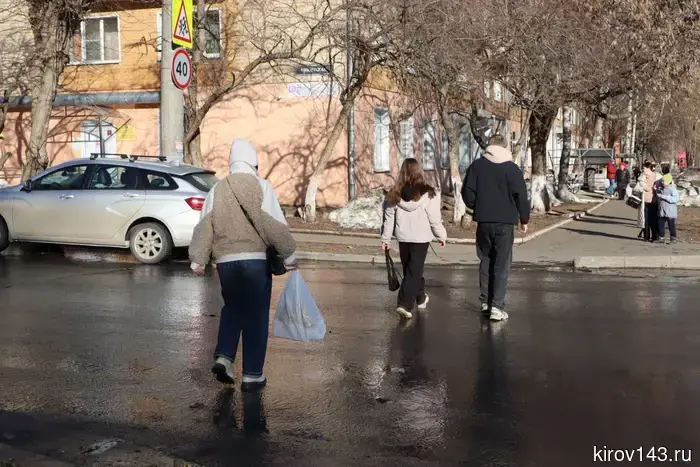 The dangerous intersection near the kindergartens has been promised to be put in order.
Residents of Kirov complained about a dangerous area at the intersection of Nikitskaya and Proletarskaya streets: according to them, the road to the kindergartens and clinic here effectively runs "outside the law." People are forced to risk their lives daily by crossing the roadway without pedestrian crossings.
The dangerous intersection near the kindergartens has been promised to be put in order.
Residents of Kirov complained about a dangerous area at the intersection of Nikitskaya and Proletarskaya streets: according to them, the road to the kindergartens and clinic here effectively runs "outside the law." People are forced to risk their lives daily by crossing the roadway without pedestrian crossings.
Conversations about the ban on Telegram: what is really happening with the messenger
In recent weeks, there has been an increase in information noise surrounding Telegram: discussions about VPN restrictions, possible blocks, and risks for businesses. Against this backdrop, the market has found itself in a state of uncertainty — from expectations of strict bans to assumptions about a complete overhaul of digital advertising.