
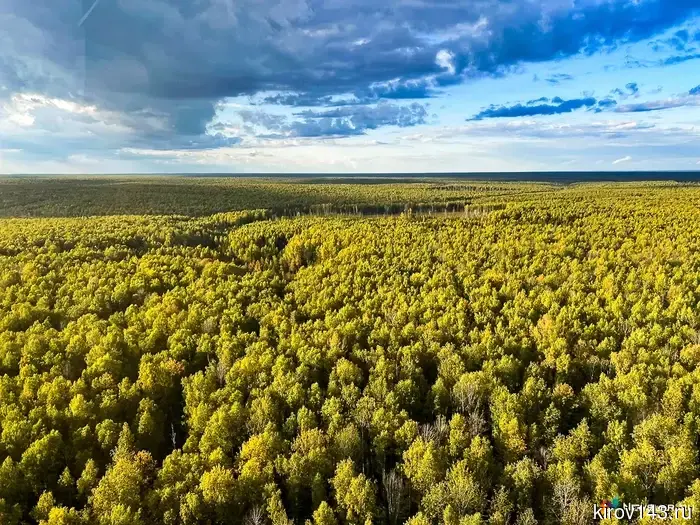
The Kirov region has entrusted the restoration of forests to rain and sunshine.
The Kirov region remains one of the most forested areas in the country, with 63% of its territory covered by green spaces. However, the methods of managing this wealth changed significantly last year. Instead of active human intervention, forest ecosystems are increasingly being encouraged to cope on their own. According to the regional Ministry of Forestry and Kirovstat, in 2025, natural forest regeneration accounted for 85.6% of all areas where relevant work was carried out. This means that in most of the territory, specialists simply allowed nature to regenerate itself—without seedlings, without planting, relying on rain, sun, and natural seeding. Traditional artificial reforestation accounted for only 13.4%. The combined method, which combines manual labor and natural processes, took a symbolic 1%. The total volume of reforestation activities amounted to 27.7 thousand hectares, which is 4.1% less than the previous year. Funding for this area also decreased to 210.7 million rubles, which is 3% lower than the 2024 figure. The activity in thinning operations decreased even more dramatically. In 2025, such work took place on 16.6 thousand hectares—8.6% less than a year ago. Almost half of these were thinning and cleaning operations aimed at forming young growth. Expenditures on forest care also decreased, dropping to 219.2 million rubles. The most dramatic reduction affected sanitary and health improvement activities. Their volumes collapsed almost by half—to 0.2 thousand hectares. At the same time, preventive work to protect against pests was maintained almost at last year's level: 7.9 thousand hectares were treated. The region's forestry strategy in 2025 appears to be a gradual retreat of humans and a transfer of initiative to nature. The question is how quickly the forest can adapt to such trust and whether the savings in budget funds will lead to long-term ecological risks.
Другие Новости Кирова (НЗК)
 Reference point: what the spring equinox will bring
From an astronomical perspective, the day of the spring equinox is the moment when the Sun, in its apparent motion along the ecliptic (the path among the stars), crosses the celestial equator. In 2026, this event occurred on March 20 at 14:46 Moscow time.
Reference point: what the spring equinox will bring
From an astronomical perspective, the day of the spring equinox is the moment when the Sun, in its apparent motion along the ecliptic (the path among the stars), crosses the celestial equator. In 2026, this event occurred on March 20 at 14:46 Moscow time.
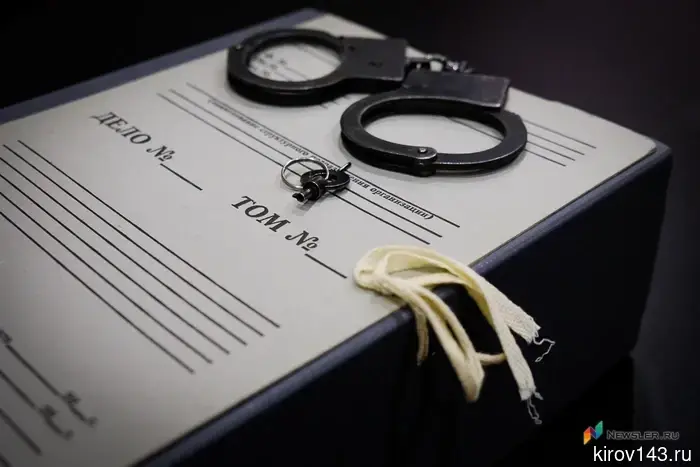 A resident of Borovitsa received nearly 10 years for attempted murder and theft.
In the Slobodsky district, a sentence has been handed down to a 45-year-old resident of the village of Borovitsa, accused of attempted murder and a series of thefts.
A resident of Borovitsa received nearly 10 years for attempted murder and theft.
In the Slobodsky district, a sentence has been handed down to a 45-year-old resident of the village of Borovitsa, accused of attempted murder and a series of thefts.
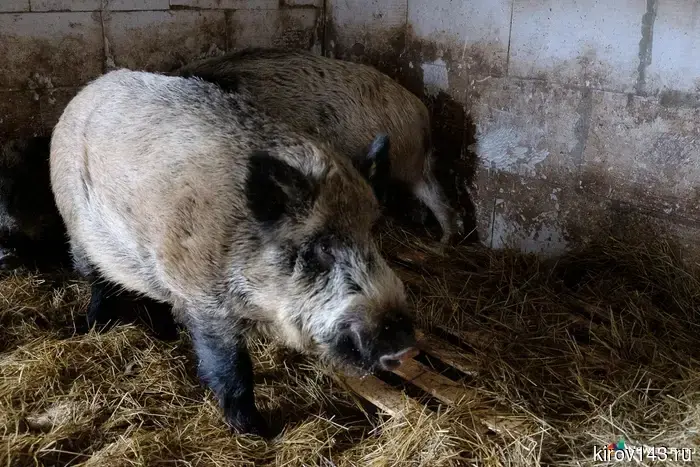 In the Kotelnichsky district, a pig owner was fined for 43 unaccounted heads and unsanitary conditions.
A resident of the Komsomolsk rural settlement did not comply with the order of the Rosselkhoznadzor, ignoring the requirements for animal husbandry. The result is an administrative fine for numerous violations of veterinary regulations.
In the Kotelnichsky district, a pig owner was fined for 43 unaccounted heads and unsanitary conditions.
A resident of the Komsomolsk rural settlement did not comply with the order of the Rosselkhoznadzor, ignoring the requirements for animal husbandry. The result is an administrative fine for numerous violations of veterinary regulations.
 In the Kirov region, tax conditions for small and medium-sized businesses have changed.
The Ministry of Industry and Trade spoke about innovations for entrepreneurs.
In the Kirov region, tax conditions for small and medium-sized businesses have changed.
The Ministry of Industry and Trade spoke about innovations for entrepreneurs.
 Version: the arrest of Lieutenant Colonel Ovsyannikov — the first step of investigative interest?
The detention and arrest (March 11 and 13) of the head of the industrial department of the Department of Economic Security and Anti-Corruption (UESAC), Lieutenant Colonel Denis Ovsyannikov, provoked numerous private information flows related to the discussion of high-ranking police candidates, whose names may begin to appear in the materials of individual or group criminal cases.
Version: the arrest of Lieutenant Colonel Ovsyannikov — the first step of investigative interest?
The detention and arrest (March 11 and 13) of the head of the industrial department of the Department of Economic Security and Anti-Corruption (UESAC), Lieutenant Colonel Denis Ovsyannikov, provoked numerous private information flows related to the discussion of high-ranking police candidates, whose names may begin to appear in the materials of individual or group criminal cases.
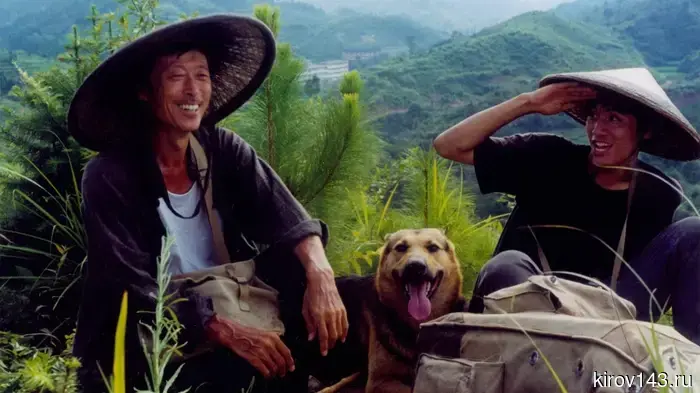 Postmen in the Mountains: 115 km of Silence and Chinese Wisdom
There are movies that sound like a punishment in the description: "an elderly postman takes his son on a mountain route, and along the way, they talk about life." You yawn even before you hit "watch."
Postmen in the Mountains: 115 km of Silence and Chinese Wisdom
There are movies that sound like a punishment in the description: "an elderly postman takes his son on a mountain route, and along the way, they talk about life." You yawn even before you hit "watch."
The Kirov region has entrusted the restoration of forests to rain and sunshine.
The results of the forestry year have been summarized in the region. It turned out that nature was allowed to work on its own: artificial plantings gave way to natural regeneration. At the same time, funding for the industry has decreased, and the volumes of thinning cuts have noticeably dropped.