
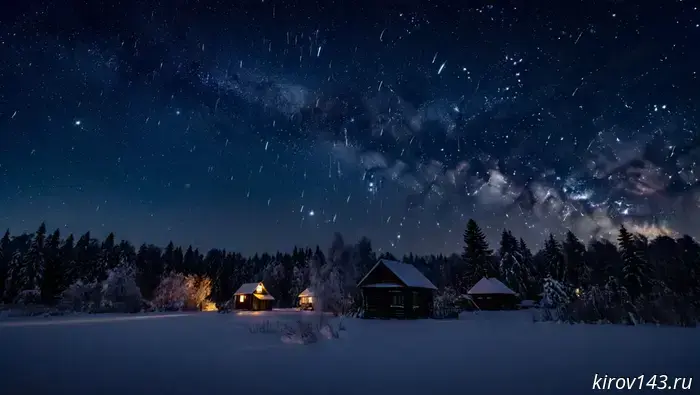
Residents of Kirov Oblast will be able to see the Quadrantids meteor shower.
On the night of January 3–4, the peak activity of one of the brightest annual meteor showers — the Quadrantids — is expected. The shower can be observed from late December through mid-January, but its peak falls on the night from Saturday to Sunday — up to 110 meteors per hour.
The Quadrantids are named after the constellation Quadrans Muralis (the Mural Quadrant), which is no longer used in modern astronomy. The stream’s radiant is now located in the constellation Boötes, and the shower itself is associated with the asteroid 2003 EH1, which scientists believe may be an extinct comet.
The best time to observe is in the second half of the night, when the radiant rises high above the horizon. It is recommended to look toward the northeast. Meteors are visible to the naked eye; no telescopes or binoculars are required — a dark sky and an open horizon are sufficient.
However, in 2026 observing conditions will not be the most favorable: the Moon will be full and will heavily brighten the sky, which may significantly reduce meteor visibility.
On the public page "Amateur Astronomy in Kirov," people are advised to give their eyes at least 20 minutes to adapt to the darkness and to hope for clear skies.
Другие Новости Кирова (НЗК)
 Женщины с несколькими детьми, проживающие в Кировской области, имеют возможность пересчитать свою пенсию.
Женщины Кировской области, имеющие статус многодетных матерей, могут обратиться с заявлением в региональное Отделение СФР для пересмотра размера своей пенсии. Эта возможность возникла благодаря изменениям в законах. Заявление на перерасчет пенсии можно подать лично во всех клиентских службах.
Женщины с несколькими детьми, проживающие в Кировской области, имеют возможность пересчитать свою пенсию.
Женщины Кировской области, имеющие статус многодетных матерей, могут обратиться с заявлением в региональное Отделение СФР для пересмотра размера своей пенсии. Эта возможность возникла благодаря изменениям в законах. Заявление на перерасчет пенсии можно подать лично во всех клиентских службах.
 A little craziness will awaken in Libras, and Scorpios will have fun.
Astrologers revealed what Saturday will be like for each zodiac sign.
A little craziness will awaken in Libras, and Scorpios will have fun.
Astrologers revealed what Saturday will be like for each zodiac sign.
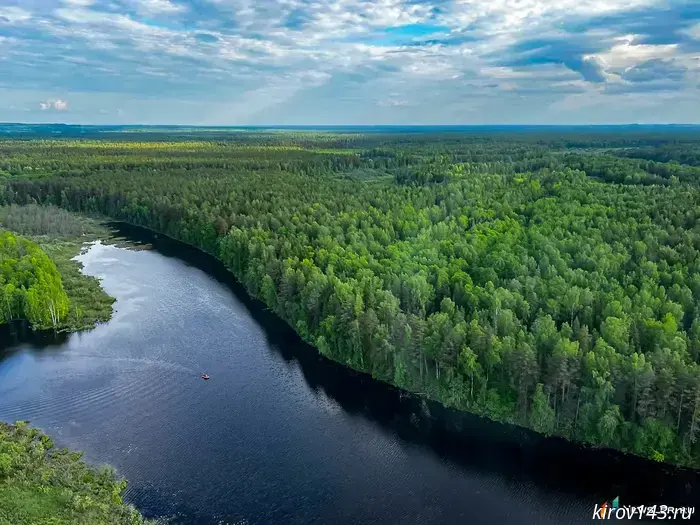 From the Vyatichi to "branch": Kirov residents were told where the name of the Vyatka River came from.
The name of the main river of Kirov Oblast has several different proposed origins.
From the Vyatichi to "branch": Kirov residents were told where the name of the Vyatka River came from.
The name of the main river of Kirov Oblast has several different proposed origins.
 Russia's Interior Ministry: driver's licenses will no longer be renewed automatically.
The Interior Ministry reminded that the automatic renewal of driver's licenses will end on January 1, 2026.
Russia's Interior Ministry: driver's licenses will no longer be renewed automatically.
The Interior Ministry reminded that the automatic renewal of driver's licenses will end on January 1, 2026.
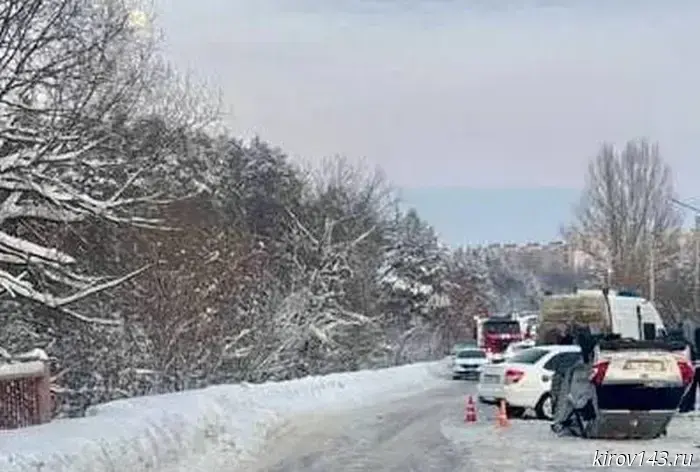 Полиция проводит проверку по случаю ДТП в Кирово-Чепецке.
В пятницу, 2 января, в 14:25 на 2 км дороги «От поста ГИБДД до улицы Ленина» в г. Кирово-Чепецке произошла серьезная авария. Согласно предварительной информации от сотрудников ГИБДД, произошло столкновение между автомобилями «Киа Сид» и «Лада Гранта». В результате этого происшествия иномарка перевернулась. В результате травмы получили:
Полиция проводит проверку по случаю ДТП в Кирово-Чепецке.
В пятницу, 2 января, в 14:25 на 2 км дороги «От поста ГИБДД до улицы Ленина» в г. Кирово-Чепецке произошла серьезная авария. Согласно предварительной информации от сотрудников ГИБДД, произошло столкновение между автомобилями «Киа Сид» и «Лада Гранта». В результате этого происшествия иномарка перевернулась. В результате травмы получили:
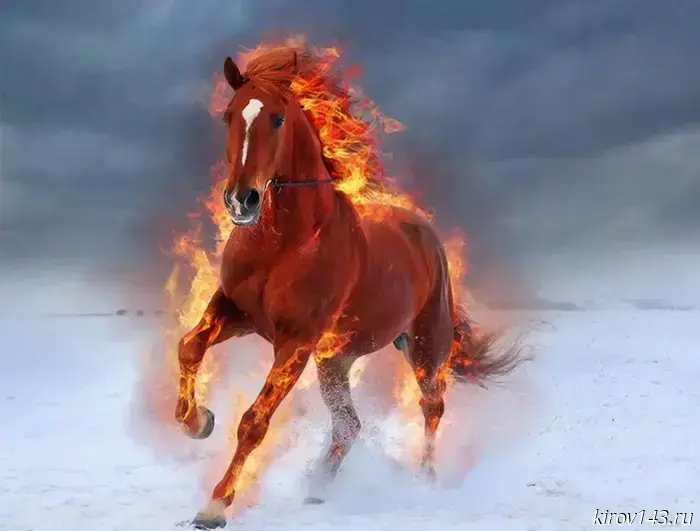 2026 год — год Красной Огненной Лошади.
Согласно астрологам, наступает период стремительности и дерзких перемен. Обещают, что он будет увлекательным и ярким, словно лошадь, выбежавшая из стойла: главное, чтобы на своем пути она не задела тех, кто о ней заботится. О том, что следующий год будет необычным, свидетельствует то, что его предсказали в своих пророчествах.
2026 год — год Красной Огненной Лошади.
Согласно астрологам, наступает период стремительности и дерзких перемен. Обещают, что он будет увлекательным и ярким, словно лошадь, выбежавшая из стойла: главное, чтобы на своем пути она не задела тех, кто о ней заботится. О том, что следующий год будет необычным, свидетельствует то, что его предсказали в своих пророчествах.
Residents of Kirov Oblast will be able to see the Quadrantids meteor shower.
On the night of January 3 to 4, residents of Kirov Oblast will be able to see the peak of the Quadrantids meteor shower.