

Residents of Kirov are "quiet quitting" due to burnout and lack of career advancement.
The SuperJob survey included business representatives and economically active residents of Kirov. Employers call “quiet quitting” a situation when an employee consciously limits themselves to only their direct duties: avoids meetings, refuses overtime and other additional responsibilities.
According to the survey, 27% of companies in Kirov have encountered such employee behavior. Most often employers try to resolve the problem through dialogue — 70% of the HR professionals surveyed do this. Another 33% suggest changing employees’ tasks or even moving them to a different position. In one in four companies “quiet quitting” becomes a reason to reassess an employee’s responsibilities.
Some employers choose tougher measures: 21% stop paying bonuses and incentives, 9% cut access to free training, and 7% respond to “quiet quitting” with actual dismissal.
Economically active city residents singled out two key reasons for such behavior. First is emotional exhaustion, cited by 54% of respondents. Second is the lack of career prospects (48%).
Another 16% believe that “quiet quitting” can be a way to get a raise. For 13% the reason is the employee’s confidence that finding a new job is easy. Every twelfth respondent (8%) believes the problem lies in ineffective management. And 6% are sure such employees simply have a second job.
At the same time, women are more likely than men to cite burnout as the cause (58% versus 49%). Among people under 35, fatigue as a factor in “quiet quitting” is also more common (53%).
Respondents with higher education more often mention burnout and lack of career growth, and also view “quiet quitting” as a pressure tactic to obtain a pay raise. Those with vocational secondary education more often believe this behavior is driven by confidence in quickly finding a new job.
Among Kirov residents with incomes of 150,000 rubles or more, burnout is named less often (45%), while lack of career prospects is cited more often (52%). In addition, 24% of high-income respondents are convinced that “quiet quitting” is used as a way to obtain additional payments.
Другие Новости Кирова (НЗК)
 Repairs to the water supply system in Sovetsk are expected to be completed in 2026.
Work is over 80% complete.
Repairs to the water supply system in Sovetsk are expected to be completed in 2026.
Work is over 80% complete.
 Nearly 3,400 residents of Kirov Oblast assessed their IT competencies.
Over five months of operation, the national IT skills verification system launched by hh.ru and the Ministry of Digital Development saw more than 3,000 residents of Kirov Oblast and 367,000 Russians in total assess their skills.
Nearly 3,400 residents of Kirov Oblast assessed their IT competencies.
Over five months of operation, the national IT skills verification system launched by hh.ru and the Ministry of Digital Development saw more than 3,000 residents of Kirov Oblast and 367,000 Russians in total assess their skills.
 Oleg Valenchuk congratulated the Association of Lawyers of Russia on its anniversary.
Member of the State Duma from Kirov Oblast Oleg Valenchuk participated in the ceremonial opening of an exhibition dedicated to the 20th anniversary of the Association of Lawyers of Russia (ALR). The event took place in Moscow on the eve of Lawyer's Day.
Oleg Valenchuk congratulated the Association of Lawyers of Russia on its anniversary.
Member of the State Duma from Kirov Oblast Oleg Valenchuk participated in the ceremonial opening of an exhibition dedicated to the 20th anniversary of the Association of Lawyers of Russia (ALR). The event took place in Moscow on the eve of Lawyer's Day.
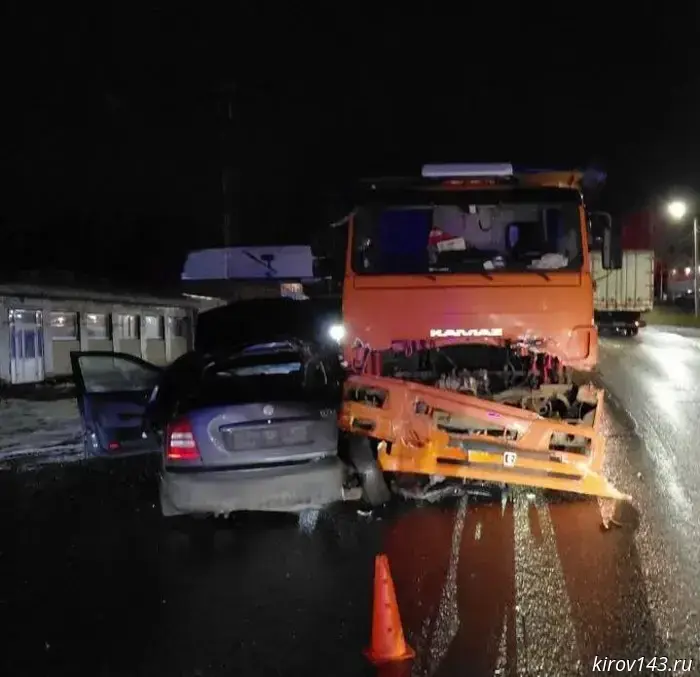 A multi-vehicle crash occurred in Kirovo-Chepetsk.
Four cars collided near a traffic police checkpoint.
A multi-vehicle crash occurred in Kirovo-Chepetsk.
Four cars collided near a traffic police checkpoint.
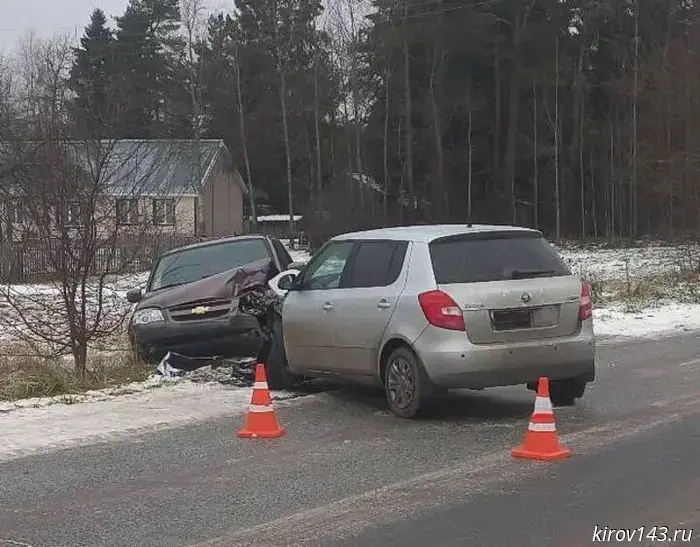 Four people were injured in a traffic accident in Bobino.
On December 2, two cars collided in the Slobodskoy District.
Four people were injured in a traffic accident in Bobino.
On December 2, two cars collided in the Slobodskoy District.
 Results of the first Federal Auto Summit: key trends of the automotive market through 2028
In Moscow, in the final days of November, the first federal Auto Summit took place, bringing together more than a thousand participants — manufacturers, dealers, exporters, fintech experts and regulators, including representatives of the Central Bank of the Russian Federation. At the center of the discussion were the main drivers of the automotive market's transformation.
Results of the first Federal Auto Summit: key trends of the automotive market through 2028
In Moscow, in the final days of November, the first federal Auto Summit took place, bringing together more than a thousand participants — manufacturers, dealers, exporters, fintech experts and regulators, including representatives of the Central Bank of the Russian Federation. At the center of the discussion were the main drivers of the automotive market's transformation.
Residents of Kirov are "quiet quitting" due to burnout and lack of career advancement.
Analysts at SuperJob found out why the situation arises in which employees do only what is stipulated in their employment contracts and do not take on additional tasks.