

Earth is shaking because of a coronal hole on the Sun.
Because of the hole’s unusual shape, scientists are finding it difficult to assess how the flow should behave, and many things are currently happening differently than expected, the Telegram channel of the Solar Astronomy Laboratory at IKI RAS reports.
The solar wind speed near Earth rose to almost twice the normal level. Although plasma density and the magnetic field remain at usual levels, that was enough to noticeably “rock” the magnetosphere. Over the course of the day the Kp index rose several times into the yellow zone, and once to a minor geomagnetic storm of G1 level.
At the same time, the auroras behaved much more brightly than one might expect from the level of disturbances: their index twice reached the maximum of the scale. Unfortunately, both spikes occurred during daytime—when auroras cannot be seen in Russia. But individual images still arrived from northern regions.
Scientists note that over the next day the geomagnetic situation should begin to gradually stabilize. The coronal hole does not look large, and the disturbances are expected to weaken by the end of the day.
Meanwhile, intrigue remains on the Sun. On the far side of the star, invisible from Earth, processes are currently underway that are of great interest to specialists. Helioseismology—the only way to “see” that side—shows that active region 4274, which caused powerful flares in the middle of the month, has almost decayed. But visual data contradict this: numerous ejections continue to stream into space from there.
No solar spacecraft is currently observing the far side of the Sun directly: Solar Orbiter is near Earth and will be able to see that region only in March. So we can only wait—and watch how space weather changes in the coming days.
Другие Новости Кирова (НЗК)
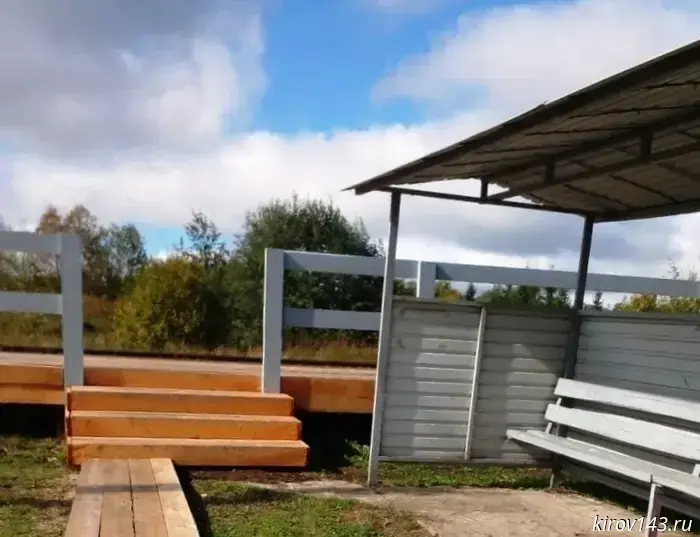 Seven new platforms have appeared in Kirov Oblast.
In 2025, the Gorky Railway upgraded the suburban infrastructure of Kirov Oblast by building seven new passenger platforms.
Seven new platforms have appeared in Kirov Oblast.
In 2025, the Gorky Railway upgraded the suburban infrastructure of Kirov Oblast by building seven new passenger platforms.
 The autumn stage of "BoomBattle" in Kirov Oblast is coming to an end.
The autumn stage of the all-Russian paper collection campaign "BumBatl" is entering the final stretch.
The autumn stage of "BoomBattle" in Kirov Oblast is coming to an end.
The autumn stage of the all-Russian paper collection campaign "BumBatl" is entering the final stretch.
 Residents of Nagorsky District will be screened for cancer.
An 'ONKOpost' campaign will take place in the district.
Residents of Nagorsky District will be screened for cancer.
An 'ONKOpost' campaign will take place in the district.
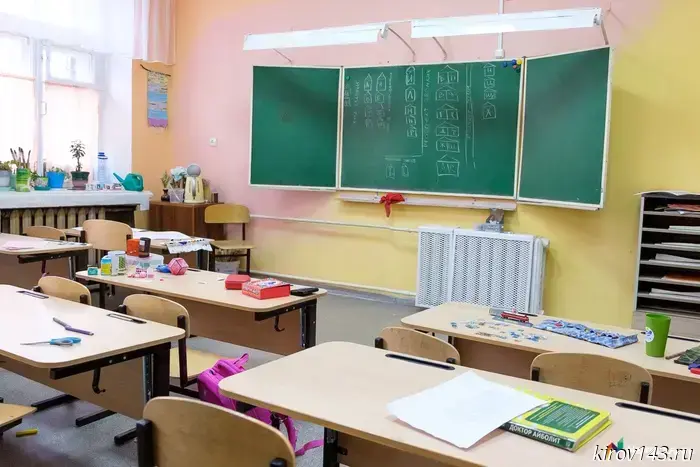 "Taught discipline" by hitting students in the face with notebooks: in Kirov, a teacher was reprimanded for humiliating pupils.
In the Kirov region, a teacher who shouted at children and humiliated them for poor grades was reprimanded after a complaint from the Children's Rights Commissioner.
"Taught discipline" by hitting students in the face with notebooks: in Kirov, a teacher was reprimanded for humiliating pupils.
In the Kirov region, a teacher who shouted at children and humiliated them for poor grades was reprimanded after a complaint from the Children's Rights Commissioner.
 88 tons of Kirov flaxseed were sent to Belarus.
88 tons of Kirov flaxseed were sent to Belarus.
88 tons of Kirov flaxseed were sent to Belarus.
Earth is shaking because of a coronal hole on the Sun.
For the past two days, Earth has been under the influence of a fast plasma stream that came from a large coronal hole on the Sun — and it arrived almost two days earlier than predicted.