

"Bitter truth": autumn rowan turned out to be more powerful than pharmacy vitamins
Chemical Strike Against Diseases
Rowan has a record amount of carotenoids (more than in carrots), vitamin C (on par with lemons and currants), and the rare rutin, which strengthens blood vessels.
Additionally, the berry contains the natural sugar substitute sorbitol — it can be eaten by diabetics, as well as amygdalin, which protects the liver.
The bitterness that many dislike is not a defect but the work of essential oils that stimulate digestion.
Heart, Pressure, and Blood
Rowan works on three fronts of the cardiovascular system: potassium and rutin gently lower blood pressure, pectins remove cholesterol, and iron and manganese help with anemia.
In folk medicine, a decoction of branches with berries was used for thrombophlebitis to tone the veins. Fresh juice, diluted with water, can quickly alleviate dizziness in hypotension.
Stomach and Intestines: A Quiet Battle Against Fermentation
Unlike many berries, rowan does not irritate the mucosa; on the contrary, the tannins create a protective film. Phytoncides suppress pathogenic flora, including fungi and putrefactive bacteria.
In old herbals, it was called a "cleanser": it was recommended to chew in the morning on an empty stomach for flatulence. But only after the first frosts, when beneficial substances become most bioavailable.
Immunity and Protection Against Viruses
Rowan contains phytoncides active against influenza and herpes viruses, as well as zinc, selenium, and succinic acid, which enhance the energy tone of cells.
Tea with dried rowan invigorates just as well as coffee, but without blood pressure spikes.
The Secret of Harvesting and Main Contraindications
Harvesting rowan immediately after it turns red in early September is a mistake. During this period, it is the most bitter due to sorbic acid, which can irritate the kidneys.
The real benefits are revealed only after stable frosts, when starch turns into sugars, and toxic alkaloids break down, reports udm-info.ru.
Important: rowan is contraindicated during exacerbations of stomach and duodenal ulcers, with kidney stones (due to oxalates), and with high blood coagulability (vitamin K enhances this effect). Do not wash down rowan with milk — this causes fermentation and blocks calcium absorption.
How to Preserve the Benefits
The best method is drying at a temperature no higher than 60 degrees (all vitamins are preserved). From dried berries, you can make flour for pancakes and bread.
You can grind it with honey — such a mixture lasts for years and works as an anti-inflammatory balm. Fermented rowan (like cabbage) contains probiotics and is absorbed even with low acidity.
For Kirov Residents
In our latitudes, rowan ripens just by the end of September — beginning of October. Don’t miss the moment of the first frosts: that’s when it becomes not just an ornament but a real home pharmacy.
Collect, dry — and in winter you will drink tea that protects better than many pills. And remember: this berry is not for dessert, but for health.
Другие Новости Кирова (НЗК)
 On August 29, Istoben will "crunch" for the 30th time.
A month after the emergency cancellation due to the attack on the Kirov enterprise, the organizers announced a new date for the festival. It became known that it will take place in the village of Istobensk.
On August 29, Istoben will "crunch" for the 30th time.
A month after the emergency cancellation due to the attack on the Kirov enterprise, the organizers announced a new date for the festival. It became known that it will take place in the village of Istobensk.
 Kirov residents will be taken to the USSR for two days.
"The Red Bird" will "fly" on September 19 and 20 along city routes.
Kirov residents will be taken to the USSR for two days.
"The Red Bird" will "fly" on September 19 and 20 along city routes.
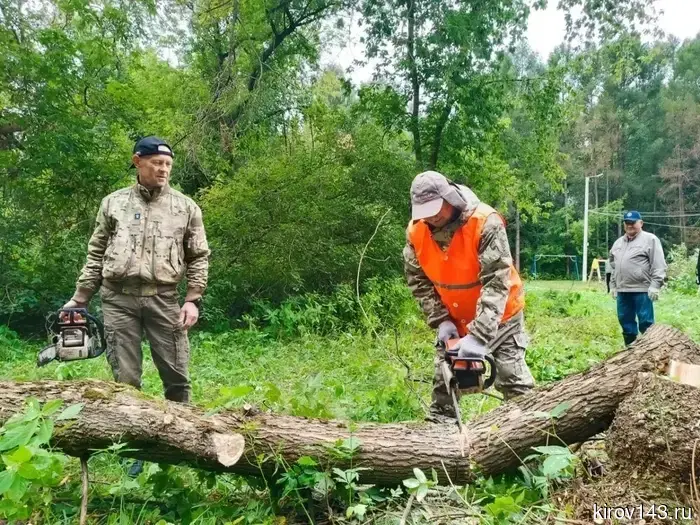 В Кирове начали проходить субботники в рамках подготовки к празднованию Дня города.
В субботу в Нововятском районе, в парке ЛПК, состоялся большой субботник, в котором участвовали глава городской администрации Вячеслав Симаков, работники территориального управления и активисты из Кирова. Вместе они убирали аварийные деревья, крупные ветки, лежащие на земле, и мусор. — Губернатор Александр
В Кирове начали проходить субботники в рамках подготовки к празднованию Дня города.
В субботу в Нововятском районе, в парке ЛПК, состоялся большой субботник, в котором участвовали глава городской администрации Вячеслав Симаков, работники территориального управления и активисты из Кирова. Вместе они убирали аварийные деревья, крупные ветки, лежащие на земле, и мусор. — Губернатор Александр
 The weather forecast in Kirov for the end of August - beginning of September is well-known.
The portal gismeteo.ru reported what awaits the residents of our city.
The weather forecast in Kirov for the end of August - beginning of September is well-known.
The portal gismeteo.ru reported what awaits the residents of our city.
 Начать с очистки: ферму в районе Фалена восстанавливают после пожара.
Начали с наведения порядка: в Фаленском районе восстанавливают ферму после пожара.
Начать с очистки: ферму в районе Фалена восстанавливают после пожара.
Начали с наведения порядка: в Фаленском районе восстанавливают ферму после пожара.
 Residents of Kirov will be left without water and electricity.
The outages will occur on August 30 and 31.
Residents of Kirov will be left without water and electricity.
The outages will occur on August 30 and 31.
"Bitter truth": autumn rowan turned out to be more powerful than pharmacy vitamins
With the first frosts, rowan loses its astringency and turns into an accessible remedy for anemia, atherosclerosis, and liver problems. Experts advise: don't pass by the orange clusters — this is a natural multivitamin complex that can replace half of your medicine cabinet.