
Young Russians are postponing marriage for the sake of a "foundation of life."
The Analytical Center of VCIOM presented a study in which Russian youth ranked their life goals for the next one to two years. In the groups aged 14 to 24, starting a family took the second-to-last position out of nine possible, giving way to material well-being, health care, and career aspirations. Teenagers, on the other hand, are primarily focused on acquiring new knowledge, reports the publication "Vedomosti."
The dynamics change with age, but even among respondents aged 25 to 35, marriage and children do not make it into the top three priorities. Nevertheless, by the ages of 30 to 35, nearly half of those surveyed (44%) have already realized themselves in the family sphere, while another 18% assess such a possibility as high or rather high. The General Director of the VCIOM Foundation, Konstantin Abramov, explained that the value of family does not disappear but manifests later — young people are pragmatic and first want to build a "foundation of life" in the form of education and stable employment.
At the same time, the study records a high level of anxiety: every second young Russian experiences worry about the future. As noted by the head of the laboratory of social and economic psychology at the Institute of Philosophy of the Russian Academy of Sciences, Timofey Nestik, the reaction to uncertainty becomes a reduction in the planning horizon. Psychoanalytic psychotherapist Maria Ignatieva added that in such conditions, the psyche chooses a strategy of anchoring in what depends on the individual personally, while family is sometimes perceived as an area of increased vulnerability.
Sociologists also noted a decline in faith in one's own abilities: among 14 to 17-year-olds, 61% believe that success depends on personal efforts, while in the 25 to 29 age group, this figure drops to 50%. The director of the Department of the Institute of Social Architecture, Ruslan Yusupov, suggested that the government establish a clear cause-and-effect chain: how education leads to work, work leads to income, income leads to housing, and housing and financial status lead to the possibility of starting a family. Otherwise, young people will continue to postpone long-term decisions.
In a special report by the Public Chamber of the Russian Federation for 2024, it is stated that the ideal apartment for a young family should have 2–3 rooms with an area of about 55–80 square meters. Experts suggest adapting demographic policy to new realities, including supporting those wishing to start families at an older age through IVF programs and developing accessible infrastructure — nurseries, kindergartens, and clinics.
Другие Новости Кирова (НЗК)
 Humanity has "got hooked" on chicken.
Chicken has become the most popular meat in the world. Over the past 20 years, production has nearly doubled — the drivers have been Asia, America, and Europe, with China and the USA accounting for a third of the demand.
Humanity has "got hooked" on chicken.
Chicken has become the most popular meat in the world. Over the past 20 years, production has nearly doubled — the drivers have been Asia, America, and Europe, with China and the USA accounting for a third of the demand.
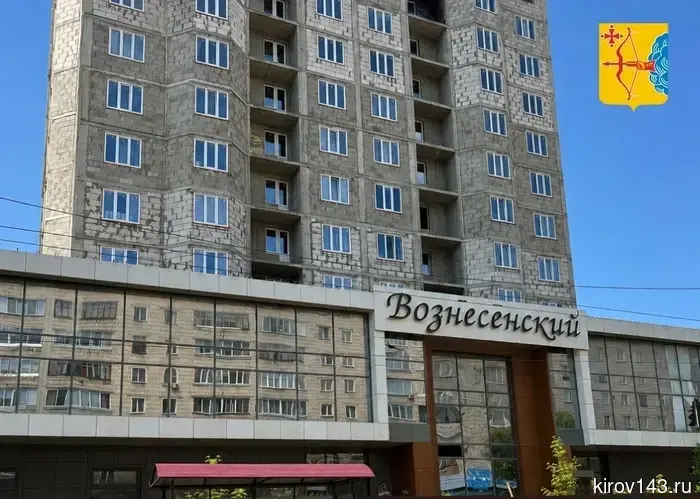 Жилой комплекс на улице Ленина, 31 в Кирове будет завершён в рамках программы комплексного развития территорий.
Опубликовано распоряжение правительства Кировской области «О покупке земельного участка с неотделимыми улучшениями в собственность Кировской области». В документе подразумевается приобретение участка, расположенного на перекрестке улиц Ленина и Морозовской (Ленина, 31), где находится
Жилой комплекс на улице Ленина, 31 в Кирове будет завершён в рамках программы комплексного развития территорий.
Опубликовано распоряжение правительства Кировской области «О покупке земельного участка с неотделимыми улучшениями в собственность Кировской области». В документе подразумевается приобретение участка, расположенного на перекрестке улиц Ленина и Морозовской (Ленина, 31), где находится
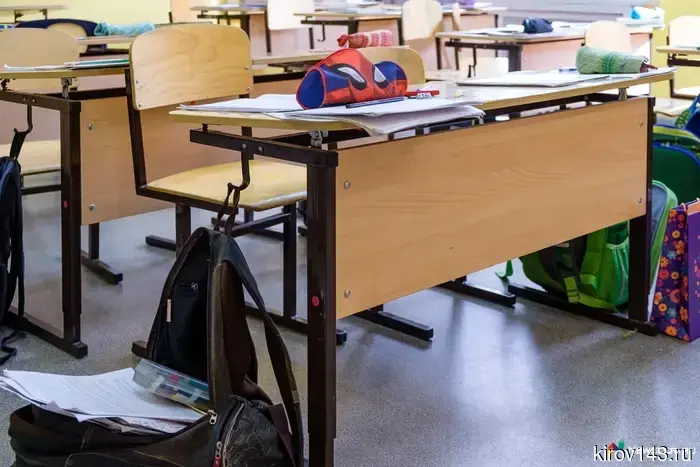 Rospotrebnadzor has limited the time spent working on computers during lessons.
Elementary school students will be able to use computers in class for no more than 25 minutes, while high school students can use them for up to 35 minutes.
Rospotrebnadzor has limited the time spent working on computers during lessons.
Elementary school students will be able to use computers in class for no more than 25 minutes, while high school students can use them for up to 35 minutes.
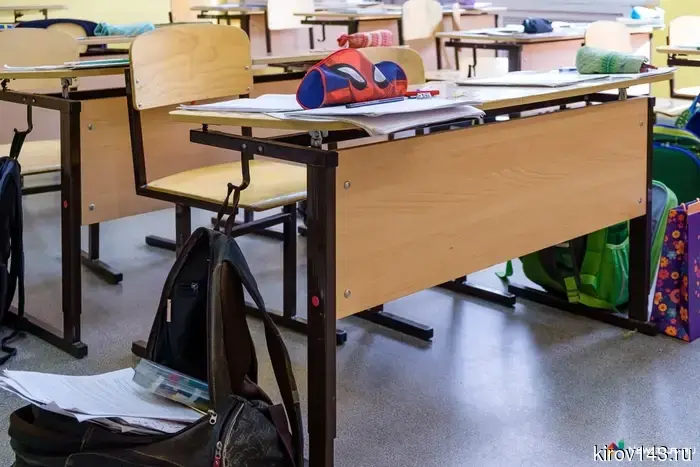 Kirov residents are called to help gather children for school.
In the Kirov region, the all-Russian campaign "Let's Get the Child Ready for School" continues. This year, assistance within the framework of the campaign will be specifically directed to schoolchildren from the new regions — LPR, DPR, Kherson, and Zaporizhzhia regions.
Kirov residents are called to help gather children for school.
In the Kirov region, the all-Russian campaign "Let's Get the Child Ready for School" continues. This year, assistance within the framework of the campaign will be specifically directed to schoolchildren from the new regions — LPR, DPR, Kherson, and Zaporizhzhia regions.
Young Russians are postponing marriage for the sake of a "foundation of life."
A sociological survey revealed an unexpected prioritization among young people: marriage and having children ranked second to last on the list of immediate goals for the age groups 14–17 and 18–24. Instead, respondents are focused on money, health, and professional growth.