

Scientists have discovered traces of an unknown extinct species in human DNA.
An international group of geneticists has developed the TRACE method, which allowed the detection of traces of an unknown extinct species of ancient humans in the DNA of modern people. The results of the study were published in the journal Science.
The authors of the work note that traditional studies are limited by the lack of ancient remains suitable for DNA extraction. This is especially true for populations that lived in warm climates, where genetic material is practically not preserved.
The new method does not require ancient samples. Instead, TRACE analyzes so-called ancestral recombination graphs—evolutionary diagrams showing how individual segments of DNA were passed down from generation to generation over hundreds of thousands of years.
Tests of the algorithm on data from the international "1000 Genomes" project showed that, in addition to already known Neanderthal and Denisovan genetic fragments, there is another group of ancient segments in the genomes of people, the origin of which has not yet been established.
According to researchers, this "ghostly" admixture is found in all studied populations—both among residents of Africa and among populations of Europe, Asia, and Oceania. Its share is approximately 0.5% to 1.1% of the genome of each person.
Statistical analysis showed that the unknown lineage separated from the ancestors of modern humans about 830,000 years ago, and the mixing occurred even before Homo sapiens left Africa.
Moreover, TRACE discovered even older genetic fragments in the inhabitants of Papua New Guinea, Vanuatu, and the Santa Cruz Islands. According to the authors of the study, they may have reached modern humans through Denisovans, who presumably previously interbred with an even older population. As a possible candidate, scientists mention Homo erectus, but emphasize that there is currently no direct evidence for this.
Researchers believe that the new technology will allow the study of the earliest stages of human evolution even in cases where fossil DNA has not been preserved. In their opinion, the history of human origins turned out to be significantly more complex than previously thought, and included numerous episodes of mixing different species of ancient humans.
Другие Новости Кирова (НЗК)
 В Слободском вынесли приговор местному жителю, признанному виновным в поджоге.
Инцидент произошел в декабре 2025 года в городе Слободском на улице Мира, как сообщили в МЧС России по Кировской области. Многоквартирный дом вспыхнул из-за утечки пропана. Напомним, ранее мы упоминали, что в тот день 55-летний житель города попытался самостоятельно отсоединить 50-литровый газовый баллон от плиты.
В Слободском вынесли приговор местному жителю, признанному виновным в поджоге.
Инцидент произошел в декабре 2025 года в городе Слободском на улице Мира, как сообщили в МЧС России по Кировской области. Многоквартирный дом вспыхнул из-за утечки пропана. Напомним, ранее мы упоминали, что в тот день 55-летний житель города попытался самостоятельно отсоединить 50-литровый газовый баллон от плиты.
 The public services have opened the choice of voting format for the September elections.
The State Services portal has started accepting applications for participation in the elections, which will take place from September 18 to 20. Applications can be submitted until September 14.
The public services have opened the choice of voting format for the September elections.
The State Services portal has started accepting applications for participation in the elections, which will take place from September 18 to 20. Applications can be submitted until September 14.
 Куда посетить кировчанам на неделе с 3 по 7 августа.
Герценка: 3 августа в 18:00 — Лекция «Как молодежь развлекалась в Вятке столетие назад». 4 августа в 17:00 — Музыкальный концерт. 5 августа с 11:00 до 16:00 — Мастер-класс «Шерстяная сказка», создание картин из шерсти. 14:00 — Обзорная экскурсия по библиотеке. 6 августа в 17:30 — Лекция «Жизненная энергия:
Куда посетить кировчанам на неделе с 3 по 7 августа.
Герценка: 3 августа в 18:00 — Лекция «Как молодежь развлекалась в Вятке столетие назад». 4 августа в 17:00 — Музыкальный концерт. 5 августа с 11:00 до 16:00 — Мастер-класс «Шерстяная сказка», создание картин из шерсти. 14:00 — Обзорная экскурсия по библиотеке. 6 августа в 17:30 — Лекция «Жизненная энергия:
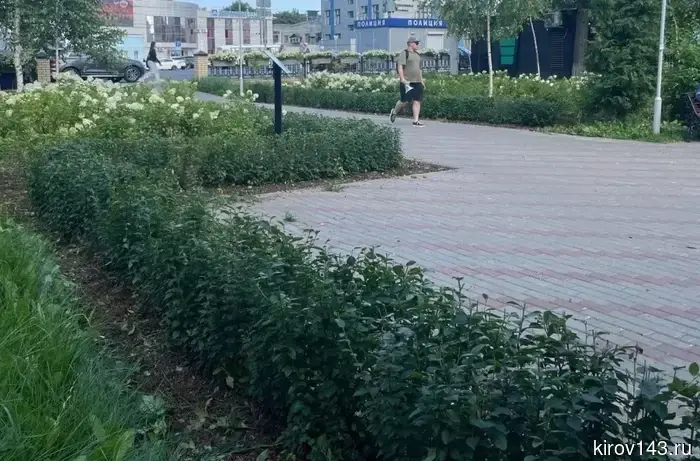 В Кирове приводят в порядок живые изгороди, цветочные композиции и клумбы.
В Кирове ежедневно осуществляется уход за территориями, где произрастают цветы, кустарники и деревья, сообщили в отделе зеленого строительства дирекции благоустройства города. На цветниках выполняется прополка, удаляются сухие части, косится прилегающий газон и подстригаются кустарники. Деревья регулярно...
В Кирове приводят в порядок живые изгороди, цветочные композиции и клумбы.
В Кирове ежедневно осуществляется уход за территориями, где произрастают цветы, кустарники и деревья, сообщили в отделе зеленого строительства дирекции благоустройства города. На цветниках выполняется прополка, удаляются сухие части, косится прилегающий газон и подстригаются кустарники. Деревья регулярно...
 Pelevin, King, Palahniuk, Lovecraft, and Burgess made it onto the list of publications marked for drugs.
In Russia, the list of books that contain mentions of narcotic substances has been updated. Such publications must now be sold with special labeling.
Pelevin, King, Palahniuk, Lovecraft, and Burgess made it onto the list of publications marked for drugs.
In Russia, the list of books that contain mentions of narcotic substances has been updated. Such publications must now be sold with special labeling.
 The public services have opened the selection of voting formats for the September elections.
The State Services portal has started accepting applications for the method of participation in the elections, which will take place from September 18 to 20. Applications can be submitted until September 14.
The public services have opened the selection of voting formats for the September elections.
The State Services portal has started accepting applications for the method of participation in the elections, which will take place from September 18 to 20. Applications can be submitted until September 14.
Scientists have discovered traces of an unknown extinct species in human DNA.
An international group of researchers has stated that traces of an unknown population of ancient hominins have been preserved in the genomes of modern humans, a population that was previously unknown. The scientists reached this conclusion using a new method of DNA analysis.