
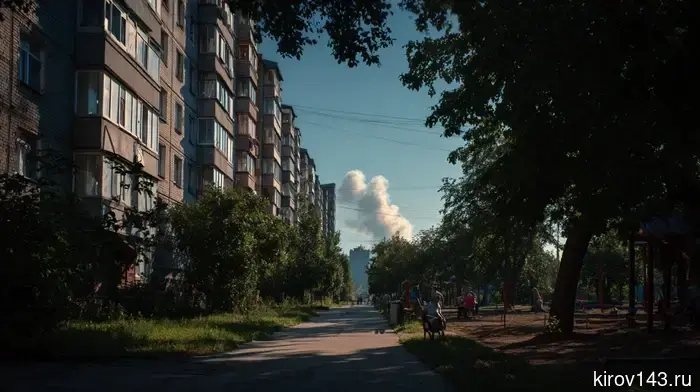
A week later: how Kirov has changed after the missile attack
Last Friday, we published testimonies from eyewitnesses — those who live in close proximity to the enterprise attacked by the Kyiv regime. Today — about how the residents of Kirov lived throughout this week after the missile strike, and what thoughts occupy them now, shaken by the monstrous roar and the monstrous tragedy for the entire city.
The city that no longer feels safe
“The city has always been industrial, but it seemed so calm. We are deep in the rear, nothing can happen to us, we were always evacuated to us, not from us. And there’s Filayka, the outskirts, beyond that is just forest.
But that morning, people literally woke up to the roar. Windows opened, for several seconds the walls continued to hum, the echo passed through the houses, even though we are not that close to the factory.
With this strike, our calmness also broke. Everything seems to go on as before, life hasn’t stopped, but now people have become more skittish. We freeze more often, listen intently, and in the familiar sounds of city life, danger now seems to lurk. As if the very anxiety has settled on the walls of our homes, filled our apartments, became the air we breathe.”
“The little house” that no longer exists
“I often have to travel around the country. And every time the same story happens: as soon as you leave the Kirov region, the phone starts to live its own life.
Messages from the Ministry of Emergency Situations. Threat of drone attacks. Missile danger. Airport closures. Moscow. Nizhny Novgorod. St. Petersburg.
This has become such a familiar part of trips that it no longer surprises. For the first time, I truly encountered this in ‘Sirius’.
At night, sirens wailed. Somewhere, the air defense system was working. The phone lit up again and again with warnings.
And in the morning...
In the morning, people, as usual, went out for a run. Some walked their dogs. Some drank coffee outside. Life wasn’t canceled. And you know what’s surprising? You get used to it very quickly. Literally in a couple of days. A person adapts to almost everything remarkably quickly. Then you return home. To Kirov. And it seems that everything is different here. That it is calm here.
That here... is the little house. A warm, caramel word from childhood. Do you remember the childhood game? You put your hands over your head and say: ‘I’m in the little house.’ And no one can catch you.
Perhaps this feeling turned out to be the most fragile. Until recently, I thought that the Kirov region was that very ‘little house’ where all this exists only in the news. Where you can worry about others, follow the reports, help those who are worse off, but still somewhere deep inside maintain a small childhood confidence: ‘This won’t happen to us.’
But illusions dissipate one day. Like morning fog. And when it disappears, you suddenly realize that you are standing under an open sky. Without the familiar feeling of security.
Defenseless. Adult. Helpless. Deprived of that childhood belief that trouble is far away.
After the recent events, it became clear that the word ‘far away’ no longer sounds the same as before. No, life hasn’t stopped. It shouldn’t stop.
People continue to meet in cafes. They walk along the embankment after a hot day. Music plays somewhere. Festive fireworks are launched somewhere. And I suddenly realize that I hear them quite differently now. The first thought is no longer about the holiday.
Anxiety. Danger. Fear. Helplessness.
And only then comes the understanding that it is someone’s happy evening. Perhaps this is how the inner sense of security changes. Not sharply. Not in one second. But very quietly. Like a paper cut. At first, it seems that nothing happened. But one day you accidentally touch it — and you realize how painful it is. I don’t know how long it will take for this feeling to go away. And whether it will go away at all. But I really want to believe that one day we will be able to say those funny childhood words again: ‘I’m in the little house.’ And feel not only a smile. But also that long-forgotten feeling that behind those words, safety can truly be hidden.”
A week of anxiety and unanswered questions
“As a deep sleeper, I didn’t hear the sound of the strike, even though I live nearby. But the scariest thing was waking up and seeing the news, reading comments from people who were in close proximity.
And throughout the week, having read various news and reactions from people to the tragedy, I felt panic at any loud sound, because something similar could easily happen again. Any rumble of thunder, any bang outside is now perceived not as calmly as before July 24.”
Memories won’t let go
“A week later. But it feels like it was yesterday: it tears you from peaceful sleep with a nightmarish roar, your heart pounds like after a long run, and you, still half-asleep, begin to understand the monstrosity of what happened. A week later. And all this week — a constant feeling of background anxiety. During the day, when busy with work, a bunch of familiar routine tasks, it quiets down a bit. But even during the day, any loud sound is perceived differently: any unclear buzzing, the bang of someone’s car exhaust outside the window, the sound of a flying airplane, or the distant wail of emergency vehicle sirens — and we all exchange glances in the office and rush to the windows.
And at night, when the daytime sounds of the city fade, anxiety grips you by the throat, you curl up and listen, listen to the space outside the window, fearing that that monstrous sound and tragedy may repeat.
A week later. And all this time, questions swirl in your head, answers to which, if they are ever received, will not calm the city’s residents and the families who lost their sons, fathers, husbands, brothers on that terrible day.
It’s a pity, very much pity for the fallen guys. The soul freezes at the realization of what the families are going through, those who that morning sent their loved ones off to work or never waited for them to return from the night shift.
A week later and mourning, fear, a sense of helplessness, and questions, questions, questions, to which only time will provide an answer.”
Every loud sound brings you back to that morning
“How to feel after what you’ve been through? Now every insignificant loud sound tears you apart from the inside. Any scream, bark, clap of thunder, fireworks, and the roar of an engine makes you freeze for a second and transports you back to that terrible morning.
In the back of your mind, the thought ‘what if it strikes again’ now constantly spins. You can no longer relax as you did before. There is no safety, only...
Fear. Perhaps it will hold on for a long time...
Anxiety. It now replaces all feelings...
Helplessness. And you don’t know where and when you will feel safe...
I hope this will pass and everything will return to normal, but for now, it’s hard to believe in that.”
Другие Новости Кирова (НЗК)
 The contractor who inspected the Kirov bridges lost the lawsuit against the Federal Antimonopoly Service for the third time.
If the company does not appeal to the Supreme Court, it will have to return the money received.
The contractor who inspected the Kirov bridges lost the lawsuit against the Federal Antimonopoly Service for the third time.
If the company does not appeal to the Supreme Court, it will have to return the money received.
 SIGN in Kirov: real estate for business that is not dependent on the decisions of the Central Bank
The financial market regularly presents surprises. Money in a bank deposit today brings a high interest rate, but tomorrow — after the next meeting of the Bank of Russia — the yield drops. But while investors monitor the key rate, capital is being formed in Kirov with a completely different logic.
SIGN in Kirov: real estate for business that is not dependent on the decisions of the Central Bank
The financial market regularly presents surprises. Money in a bank deposit today brings a high interest rate, but tomorrow — after the next meeting of the Bank of Russia — the yield drops. But while investors monitor the key rate, capital is being formed in Kirov with a completely different logic.
 Why aren't the alert systems that cost nearly a quarter of a billion rubles working?
Not even a mouse squeak was emitted by the warning system before the missile strike on one of the enterprises in Kirov, despite the fact that 227... million rubles were spent on improving the sound information system in 2024 alone.
Why aren't the alert systems that cost nearly a quarter of a billion rubles working?
Not even a mouse squeak was emitted by the warning system before the missile strike on one of the enterprises in Kirov, despite the fact that 227... million rubles were spent on improving the sound information system in 2024 alone.
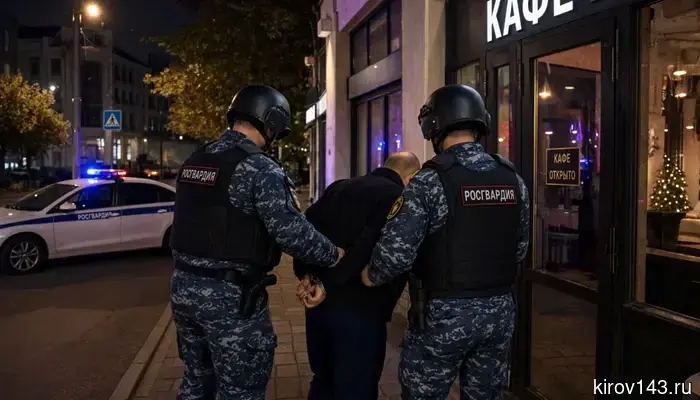 In Kirov, the National Guard detained a troublemaker in a cafe and a sauna visitor.
In two days, the Rosgvardiya employees responded twice to alarm signals at establishments in Kirov.
In Kirov, the National Guard detained a troublemaker in a cafe and a sauna visitor.
In two days, the Rosgvardiya employees responded twice to alarm signals at establishments in Kirov.
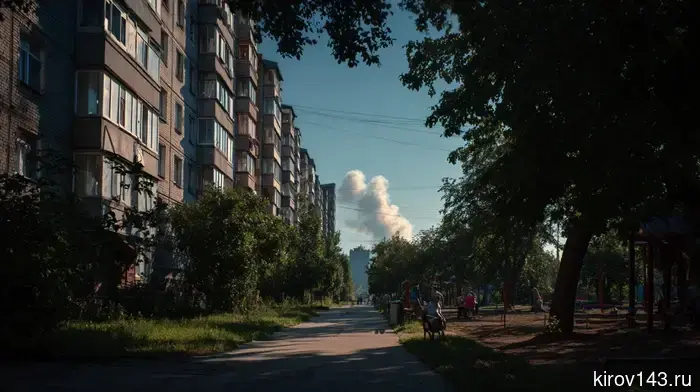 A week later: how Kirov changed after the missile attack
Last Friday, July 24, several districts of Kirov were shaken by the terrible sound of a missile explosion, launched by the Kyiv regime at one of the city's enterprises.
A week later: how Kirov changed after the missile attack
Last Friday, July 24, several districts of Kirov were shaken by the terrible sound of a missile explosion, launched by the Kyiv regime at one of the city's enterprises.
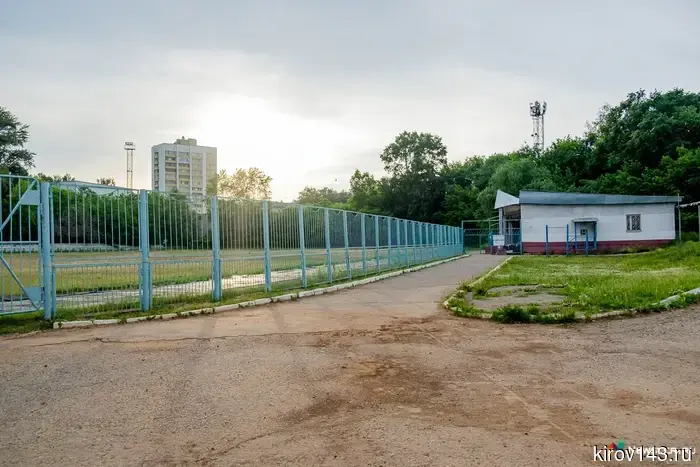 In Kirov, they want to renovate the Lokomotiv stadium and install a monument to Viktor Tsoi.
Governor of Kirov Region Alexander Sokolov spoke about plans to reconstruct the Lokomotiv stadium.
In Kirov, they want to renovate the Lokomotiv stadium and install a monument to Viktor Tsoi.
Governor of Kirov Region Alexander Sokolov spoke about plans to reconstruct the Lokomotiv stadium.
A week later: how Kirov has changed after the missile attack
Last Friday, July 24, several districts of Kirov were shaken by the terrible sound of a rocket explosion, launched by the Kyiv regime at one of the city's enterprises.