
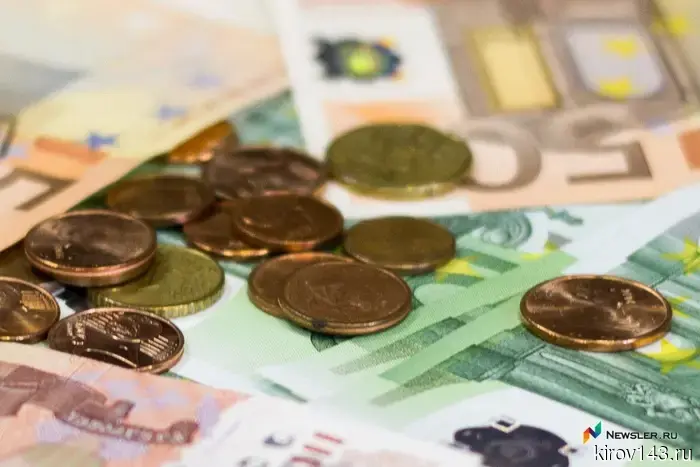
Ruble, dollar, and yuan: who will Kirov residents trust with their savings
Residents of Kirov who participated in the SuperJob survey prioritized currencies for savings. The ruble received the most votes, 55%. The dollar was chosen by 36% of respondents. As for European and Chinese currencies, opinions were almost evenly split: 22% preferred the euro, while 21% chose the yuan.
The survey also recorded gender differences. Male respondents were more likely than females to recommend dollars, euros, and yuans for savings.
The age breakdown showed a diversity of preferences. Among Kirov residents under 35, the dollar and euro are more popular (39% and 29%) than in the 45+ age group (where these figures are lower). At the same time, older citizens (45+) chose the ruble 57% of the time, while the 35-45 age group stood out with a higher proportion of yuan supporters at 22%.
Responses also varied significantly depending on education level. Respondents with higher education more frequently chose the ruble (56%) compared to those with secondary vocational education (41%). The same trend holds for the dollar: 37% versus 32%. Meanwhile, graduates of technical schools and colleges showed much less interest in the yuan (8%), while among university-educated specialists, this figure was 23%.
Income analysis showed that as salaries increase, Kirov residents' preference for the ruble, dollar, and euro grows. At the same time, the proportion of those advising to save in yuans is higher among citizens with a monthly income of 100,000 to 150,000 rubles.
During the survey, Kirov residents were also asked to name the most reliable currency for storing savings (one option could be chosen). The distribution of responses was as follows: 32% named the ruble, 14% the dollar, and 9% the euro.
Другие Новости Кирова (НЗК)
 Российские ученые разработали фильтр для обработки сточных вод.
Исследователи Казанского национального исследовательского технического университета создали комбинированный фильтр, способный очищать промышленные сточные воды от нефтепродуктов, масел и ионов тяжёлых металлов. Об этом сообщается в пресс-релизе Минобрнауки России. Процесс очистки осуществляется в непрерывном режиме, что является его отличительной чертой.
Российские ученые разработали фильтр для обработки сточных вод.
Исследователи Казанского национального исследовательского технического университета создали комбинированный фильтр, способный очищать промышленные сточные воды от нефтепродуктов, масел и ионов тяжёлых металлов. Об этом сообщается в пресс-релизе Минобрнауки России. Процесс очистки осуществляется в непрерывном режиме, что является его отличительной чертой.
 A Kirov resident won a lawsuit against the employment center that sent her to "Gosuslugi."
The institution stated that it only accepts applications in electronic form.
A Kirov resident won a lawsuit against the employment center that sent her to "Gosuslugi."
The institution stated that it only accepts applications in electronic form.
 The journalist responded to the lawsuit regarding the accusations of lying.
The director of the Philharmonic accused the author of the text "Culture's Hapuhi provided the Philharmonic with yet another scandal" of spreading false and defamatory information about him. The publishing house presented documents to the court that, in the editorial's opinion, confirm the accuracy of the publication and refute the main arguments of the plaintiff.
The journalist responded to the lawsuit regarding the accusations of lying.
The director of the Philharmonic accused the author of the text "Culture's Hapuhi provided the Philharmonic with yet another scandal" of spreading false and defamatory information about him. The publishing house presented documents to the court that, in the editorial's opinion, confirm the accuracy of the publication and refute the main arguments of the plaintiff.
 The rights for 70 thousand turned into a restriction of freedom and treatment with a psychiatrist.
A resident of the Arbazhsky district presented a fake driver's license to the police, ordered online. The court found him guilty of aiding in forgery and imposed a sentence with mandatory treatment by a psychiatrist.
The rights for 70 thousand turned into a restriction of freedom and treatment with a psychiatrist.
A resident of the Arbazhsky district presented a fake driver's license to the police, ordered online. The court found him guilty of aiding in forgery and imposed a sentence with mandatory treatment by a psychiatrist.
 В течение последних суток на водоемах Кировской области случились случаи утопления двух человек.
Согласно данным МЧС, за последние сутки в водоемах региона утонули два человека. Один из инцидентов произошел в Пижанском округе. В реке Пижма, недалеко от села Обухово, было найдено тело мужчины, родившегося в 1957 году. Предварительно выяснено, что пенсионер мог утонуть во время рыбалки. Ведутся следственные действия.
В течение последних суток на водоемах Кировской области случились случаи утопления двух человек.
Согласно данным МЧС, за последние сутки в водоемах региона утонули два человека. Один из инцидентов произошел в Пижанском округе. В реке Пижма, недалеко от села Обухово, было найдено тело мужчины, родившегося в 1957 году. Предварительно выяснено, что пенсионер мог утонуть во время рыбалки. Ведутся следственные действия.
 Полицейские в Кирове задержали мужчину, подозреваемого в краже 2 миллионов рублей.
Кировские полицейские быстро задержали подозреваемого в краже 2 миллионов рублей у местной жительницы, которые она ранее получила в качестве социальной выплаты. Мошенники, представившись сотрудниками ФСБ, убедили женщину, что снятые деньги являются отмеченными, и их необходимо передать эксперту, который на самом деле был курьером.
Полицейские в Кирове задержали мужчину, подозреваемого в краже 2 миллионов рублей.
Кировские полицейские быстро задержали подозреваемого в краже 2 миллионов рублей у местной жительницы, которые она ранее получила в качестве социальной выплаты. Мошенники, представившись сотрудниками ФСБ, убедили женщину, что снятые деньги являются отмеченными, и их необходимо передать эксперту, который на самом деле был курьером.
Ruble, dollar, and yuan: who will Kirov residents trust with their savings
The currency preferences of economically active residents of Kirov have become known. It turned out that the choice of the townspeople is heavily influenced by age, education level, and even gender, while the gap between interest in the euro and the Chinese yuan in the region turned out to be minimal.