

In Kirov, they started selling spots in queues at gas stations.
On the eve of the first meeting of the operational headquarters, the governor of the Kirov region, Alexander Sokolov, stated that fuel supplies in the region are sufficient for 15 days (4500 tons), and if the panic demand subsides, then for a month. The head of the region agreed to increase supplies from "Lukoil-Uralnefteprodukt" to 300 tons per day and imposed a two-week ban on refueling in canisters.
At the same time, he emphasized that there would be no privileges for officials—they would stand in common queues. More than that, the operational headquarters under his leadership has not come up with anything that could help regulate the crisis in any way.
Meanwhile, schemes have already begun to spread in Kirov: long queues are forming at gas stations, where people sell their places. As one driver shared, for some, this is simply becoming a job—the cost of "reserving" a spot in the queue reaches 1500–2000 rubles.
Taxi drivers are raising prices due to demand and a decrease in available cars, as many drivers prefer not to go on shifts—only those who managed to refuel or switched to gas are working.
A separate story involves a certain network of gas stations, according to a driver, referred to as TK (based on map data, these could be TK OIL or TK Alex gas stations). According to taxi drivers, at some gas stations in this network, the price for AI-92 reaches 130 rubles per liter—and, of course, there are no queues there.
It is worth noting that earlier, Governor Sokolov had already expressed outrage at the prices of another network—"Dvizhenie," where the 92nd is sold for 73 rubles compared to the wholesale price of 64, and he ordered an investigation into fuel logistics. Interestingly, in conversations on this topic with representatives of the agencies, they say the same thing: the network fuels their vehicles, which is why they raise prices to prevent "civilians" from coming. Otherwise, the gasoline will run out, and they will not be able to fulfill the contract.
While the Kirov region is trying to deal with intermediaries, other regions are imposing strict restrictions.
Refueling by even/odd numbers or days of the week:
Astrakhan region—since July 9 by the last digit of the license plate
Nizhny Novgorod region—since July 9 by the first digit of the number and even/odd dates
Lipetsk region—considering the introduction of a similar scheme
Pskov region—similar scheme from July 10
Refueling by days of the week depending on the first digit of the number:
Oryol region—the first to introduce this system on July 4, queues have been eliminated.
Special measures:
Republic of Altai—refueling only by STS with the number entered into the system, repeated refueling within 24 hours is impossible
Novosibirsk region—priority for life support enterprises and emergency services
Vologda region—the governor personally asked oil workers to increase supplies of AI-92 and AI-95
Regions are finding solutions themselves, introducing rules that seemed unthinkable just a couple of months ago. In the Kirov region, drivers continue to stand in queues and pay for their spots—while Governor Sokolov prepares initiatives for the federal government to ban wholesale fuel sales to companies without their own gas stations. It remains to be seen what will happen next in the region if such an approach to crisis management persists. It is not difficult to guess that the next area, especially sensitive and vulnerable from a social standpoint, could be public transport.
Другие Новости Кирова (НЗК)
 Russian hackers announced the hacking of the donation database of the organization RDK, which is banned in Russia.
Russian hackers gained access to a database containing information about donations to the banned terrorist organization "Russian Volunteer Corps" (RDK)*. It is claimed that the information about the alleged transfers may be passed on to the FSB.
Russian hackers announced the hacking of the donation database of the organization RDK, which is banned in Russia.
Russian hackers gained access to a database containing information about donations to the banned terrorist organization "Russian Volunteer Corps" (RDK)*. It is claimed that the information about the alleged transfers may be passed on to the FSB.
 A resident of the Soviet district died while carrying out combat missions.
The authorities reported the death of another serviceman.
A resident of the Soviet district died while carrying out combat missions.
The authorities reported the death of another serviceman.
 In Kirovo-Chepetsk, Jubilee Street will be repaired.
The speech is about a section measuring 320 meters.
In Kirovo-Chepetsk, Jubilee Street will be repaired.
The speech is about a section measuring 320 meters.
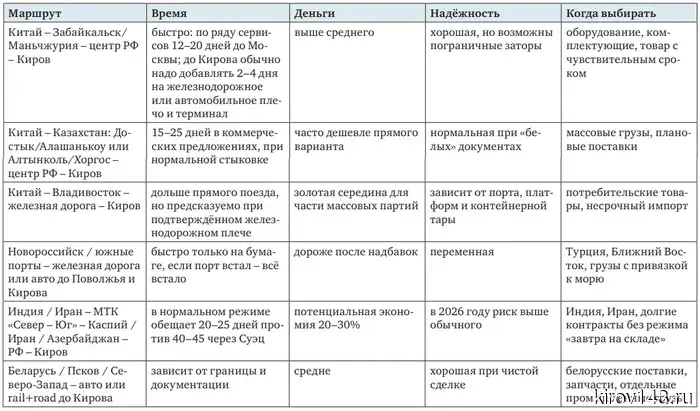 Вместо доставки в Москву — до склада в Кирове: как компаниям справляться с дорогостоящей логистикой во второй половине 2026 года.
До склада в Кирове, а не в Москву: как предпринимателям справиться с высокой стоимостью логистики во второй половине 2026 года.
Вместо доставки в Москву — до склада в Кирове: как компаниям справляться с дорогостоящей логистикой во второй половине 2026 года.
До склада в Кирове, а не в Москву: как предпринимателям справиться с высокой стоимостью логистики во второй половине 2026 года.
 Business horoscope: Leos should show attention, while Sagittarians can expect creativity.
Astrologers have provided practical recommendations for all zodiac signs for the upcoming business Thursday.
Business horoscope: Leos should show attention, while Sagittarians can expect creativity.
Astrologers have provided practical recommendations for all zodiac signs for the upcoming business Thursday.
 Российские ученые разработали фильтр для обработки сточных вод.
Исследователи Казанского национального исследовательского технического университета создали комбинированный фильтр, способный очищать промышленные сточные воды от нефтепродуктов, масел и ионов тяжёлых металлов. Об этом сообщается в пресс-релизе Минобрнауки России. Процесс очистки осуществляется в непрерывном режиме, что является его отличительной чертой.
Российские ученые разработали фильтр для обработки сточных вод.
Исследователи Казанского национального исследовательского технического университета создали комбинированный фильтр, способный очищать промышленные сточные воды от нефтепродуктов, масел и ионов тяжёлых металлов. Об этом сообщается в пресс-релизе Минобрнауки России. Процесс очистки осуществляется в непрерывном режиме, что является его отличительной чертой.
In Kirov, they started selling spots in queues at gas stations.
In the absence of any approach to regulate the fuel situation, drivers in Kirov are making do as best as they can: some fill up at night, some spend half a day in queues, and for some, this has become an additional source of income.