
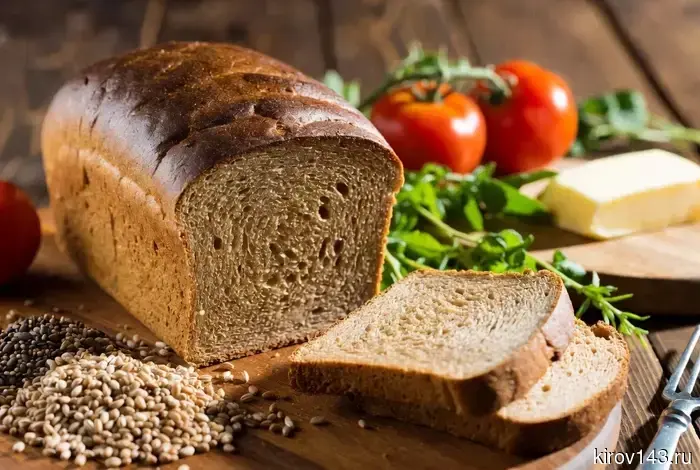
Nutritionists talked about the benefits of rye bread.
Old Friend in a New Way
In the domestic culinary tradition, rye bread has been a staple of the diet for centuries. Today, nutritionists remind us that its uniqueness lies in its rich mineral composition. The product contains not only the usual copper, iodine, and potassium but also rare selenium, cobalt, silicon, as well as an impressive set of vitamins — A, E, K, and the B group.
Experts pay special attention to the anti-stress effect: rye bread helps maintain the nervous system, and a complete rejection of grains, according to their observations, often leads to fatigue, irritability, and chronic tiredness.
Choosing Nuances: What to Pay Attention To
Nutritionists explain that the popularity of "black" bread is largely due to its dense texture and tart taste, which pairs perfectly with savory snacks. However, not every dark loaf on the store shelf is truly beneficial, reports the portal transsibinfo.com.
Experts warn: a rich color does not always indicate health benefits — some manufacturers dye regular white flour with caramel or molasses. Additionally, due to its low gluten content, rye dough requires long fermentation with sourdough. This process, according to experts, not only gives the bread its signature sourness but also facilitates the absorption of the grain. The main advice from nutritionists is to carefully study the label: the presence of preservatives or sugar in the ingredients negates all the beneficial properties.
The Superpower of Fiber and the Limits of Acceptability
If you choose a whole grain option, you can obtain a true concentrate of benefits. Soluble fibers (beta-glucans) act as a natural "brush": they slow down digestion, help control appetite, and normalize cholesterol levels. Antioxidant lignans, in turn, support heart health by reducing inflammatory processes.
But there is a downside here as well. Rye remains a source of carbohydrates and calories, and excess portions, as nutritionists emphasize, can easily negate all the benefits for your figure. It is also important to remember contraindications: rye bread is strictly prohibited for those with celiac disease or gluten intolerance. People with irritable bowel syndrome should be cautious due to the high fiber and fructan content — the product may cause bloating and discomfort.
The trend towards a healthy lifestyle brings us back to our roots. Rye bread has long been unjustly displaced by "empty" white baked goods, and now it is triumphantly returning to our tables. The main conclusion from experts is simple: we should not demonize foods or elevate them to cult status. Rye is a powerful tool, but it only works in conjunction with moderation and careful attention to one's body. When buying craft bread with additives, remember that the quality of ingredients is more important than beautiful packaging. Eat mindfully, listen to yourself — and then an ordinary sandwich will become not just breakfast, but a small investment in your longevity.
Другие Новости Кирова (НЗК)
 В деревне Хмелевка Кировской области проведен газ к первым домам.
В поселке Хмелевка Кировской области начали подключать к газу первые жилые дома.
В деревне Хмелевка Кировской области проведен газ к первым домам.
В поселке Хмелевка Кировской области начали подключать к газу первые жилые дома.
 In Kirov, a man tried to steal chocolate, a frying pan, and women's socks.
In one of the shopping centers in Kirov, the National Guard detained a man suspected of stealing goods worth more than two thousand rubles.
In Kirov, a man tried to steal chocolate, a frying pan, and women's socks.
In one of the shopping centers in Kirov, the National Guard detained a man suspected of stealing goods worth more than two thousand rubles.
 В Кирове частично затопило пляж в районе «Титаника».
В Кирове частично затопило пляж в районе «Титаника».
В Кирове частично затопило пляж в районе «Титаника».
 В 21 районе Кировской области строятся модульные ФАПы.
В Кировской области строятся модульные фельдшерско-акушерские пункты в 21 районе.
В 21 районе Кировской области строятся модульные ФАПы.
В Кировской области строятся модульные фельдшерско-акушерские пункты в 21 районе.
 В селе Хмелевка Кировской области началась газификация первых домов.
В деревне Хмелевка в Кировской области начали газификацию первых домов.
В селе Хмелевка Кировской области началась газификация первых домов.
В деревне Хмелевка в Кировской области начали газификацию первых домов.
 Four months of strict regime: the Daryovsky court issued a sentence to the violator of supervision for leaving the region.
The appellate court rejected the appeal of a 35-year-old resident of the Kotel'nichsky district, convicted of evading administrative supervision. The man, who left the Kirov region in violation of court restrictions, was transferred to a strict regime colony to serve a four-month sentence.
Four months of strict regime: the Daryovsky court issued a sentence to the violator of supervision for leaving the region.
The appellate court rejected the appeal of a 35-year-old resident of the Kotel'nichsky district, convicted of evading administrative supervision. The man, who left the Kirov region in violation of court restrictions, was transferred to a strict regime colony to serve a four-month sentence.
Nutritionists talked about the benefits of rye bread.
Rye bread, a staple product on every table, has recently been increasingly in the spotlight of healthy eating advocates. Experts warn: this choice can either drastically improve well-being or become a serious challenge for the body if approached thoughtlessly.