

The housing market in Russia: adaptation to new rules and record construction
Adaptation Instead of Hype
According to Alexey Leipi, the director of the "Domklik" department, the market has been in a "permanent state of adaptation" in recent years. Participants and citizens have already become accustomed to the changes: rumors about adjustments to the "Family Mortgage" conditions no longer cause panic. "Consumers now understand that there is no need to try to run and jump into this last carriage," noted the expert.
However, adaptation is not easy. Against the backdrop of a reduction in preferential programs, the volume of supply in the market has increased from 70 million square meters in 2024 to 83 million square meters this year. The share of unsold apartments at the time of commissioning reached 28%. Overall, the country continues to build a record 120 million square meters of housing.
At the same time, the increase in the share of unsold housing does not automatically mean a collapse in prices. As Alexey Leipi emphasized, the dynamics are determined by a combination of factors — the key rate, the cost of construction, and solvent demand. The market reaches equilibrium not through direct price reductions, but through competition, developer promotions, and strict project cost management.
The Secondary Market is Reviving, the Gap is Closing
In the secondary market, buyer activity is gradually recovering. Although current transaction volumes still lag behind the figures of 2021–2023, the trend towards growth is recognized as positive.
Modern secondary housing (no older than 10 years) is rising in price at an accelerated pace — by 14–15% per year — due to the ready infrastructure. At the same time, the price difference between new buildings and such housing has practically disappeared.
Overall, the gap between the primary and secondary markets is narrowing for the first time in the last five years. If in December 2025, ready housing was 26% cheaper than new buildings, by May 2026, the difference had narrowed to 23%. The reason is the shift in demand to the secondary market and the saturation of the market with recently completed projects.
The average price per square meter in the primary market in May 2026 was 189,500 rubles, while in the secondary market it was 125,800 rubles. The growth rates in both segments have practically equalized: new buildings rose in price by 9.5% over the year, while ready apartments increased by 9.4%.
Mortgage: Market vs. Preferential
Against the backdrop of a decrease in the key rate, market mortgages are recovering. In May 2026, their share in the total volume of issuances reached 45% — the highest figure in two years.
It is expected that issuances under basic programs will more than double in 2026. Overall, the mortgage market this year may show growth of 10–15% compared to 2025.
As for preferential programs, they are expected to be rebooted, not canceled. The most significant changes will affect the "Family Mortgage": discussions are underway about linking the rate to the number of children, limiting the term of the preferential loan to 15 years, and other parameters. This may lead to a temporary cooling of demand; however, starting in September, mortgage issuances in the largest banks should exceed 270 billion rubles per month.
Escrow Accounts: Protecting Buyers
Experts also highlighted the role of the escrow account mechanism. Its introduction, according to Alexey Leipi, helped solve the problem of deceived shareholders and protect buyers' money from the risks of developer bankruptcy.
The Bank of Russia applies a proactive model for dealing with problematic projects: at the first signs of a crisis, measures are implemented — debt restructuring, additional financing, or transferring the project to a more reliable developer. As noted by Alexander Vedyakhin, the first deputy chairman of Sberbank's management board, there are no significant defaults in residential real estate financing — this market is maximally protected by regulation.
Insurance: Choosing Based on Reliability, Not Price
Another important topic raised at the congress was mortgage insurance. Alexey Leipi pointed out that borrowers often obtain a policy solely to reduce the interest rate, without considering the reliability of the insurance company.
To assist clients in their choice, Sberbank has published a ranking of insurance organizations for mortgage life insurance for the first time. The list takes into account the share of actual payouts from the total number of insured events. The top five included "Sberbank Life Insurance" (86% payouts), "SOGAZ" (54%), "RESO-Guarantee" (52%), "Rosgosstrakh" (48%), and "Absolute Insurance" (46%), reports karelinform.ru.
According to Leipi, the goal of the ranking is to show whether the policy truly provides financial protection for the family or is primarily formal. The list is planned to be updated quarterly.
The housing market in Russia is going through a difficult but inevitable stage. Preferential programs are fading into the past, giving way to market mechanisms. Construction is breaking records, but the share of unsold apartments is growing. The secondary market is reviving, and the price gap with new buildings is narrowing.
Experts do not predict significant price fluctuations in the next two to three years. The market is seeking balance not through crashes, but through competition and adaptation. The main question is how soon buyers will get used to the new realities and when demand will catch up with supply.
Другие Новости Кирова (НЗК)
 В рамках приватизации 10 троллейбусов передаются в уставный капитал AТП.
В рамках процесса приватизации в уставный капитал АТП будет передано 10 троллейбусов.
В рамках приватизации 10 троллейбусов передаются в уставный капитал AТП.
В рамках процесса приватизации в уставный капитал АТП будет передано 10 троллейбусов.
 Т2 и «Согласие» стартовали программу по страхованию банковских карт от мошеннических действий.
Т2 и «Согласие» стартовали программу страхования банковских карт от мошеннических действий.
Т2 и «Согласие» стартовали программу по страхованию банковских карт от мошеннических действий.
Т2 и «Согласие» стартовали программу страхования банковских карт от мошеннических действий.
 In the Kirov region, more than 160 wolves have been shot.
The region continues to regulate the population of gray predators. According to the regional Ministry of Ecology, since the beginning of 2026, more than 160 wolves have already been hunted in the Kirov region.
In the Kirov region, more than 160 wolves have been shot.
The region continues to regulate the population of gray predators. According to the regional Ministry of Ecology, since the beginning of 2026, more than 160 wolves have already been hunted in the Kirov region.
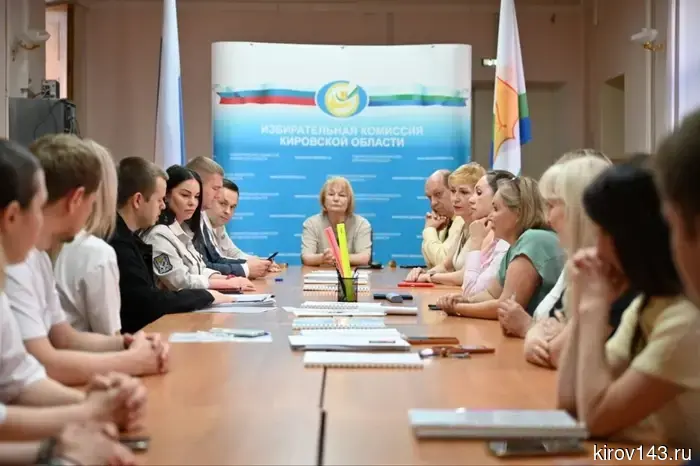 The LDPR regional branch has submitted documents for nomination in the elections to the Legislative Assembly.
The party's team submitted a package of documents to the Election Commission.
The LDPR regional branch has submitted documents for nomination in the elections to the Legislative Assembly.
The party's team submitted a package of documents to the Election Commission.
 Т2 и «Согласие» начали программу страхования банковских карт от мошеннических действий.
Т2 и «Согласие» инициировали программу страхования банковских карт от мошеннических действий.
Т2 и «Согласие» начали программу страхования банковских карт от мошеннических действий.
Т2 и «Согласие» инициировали программу страхования банковских карт от мошеннических действий.
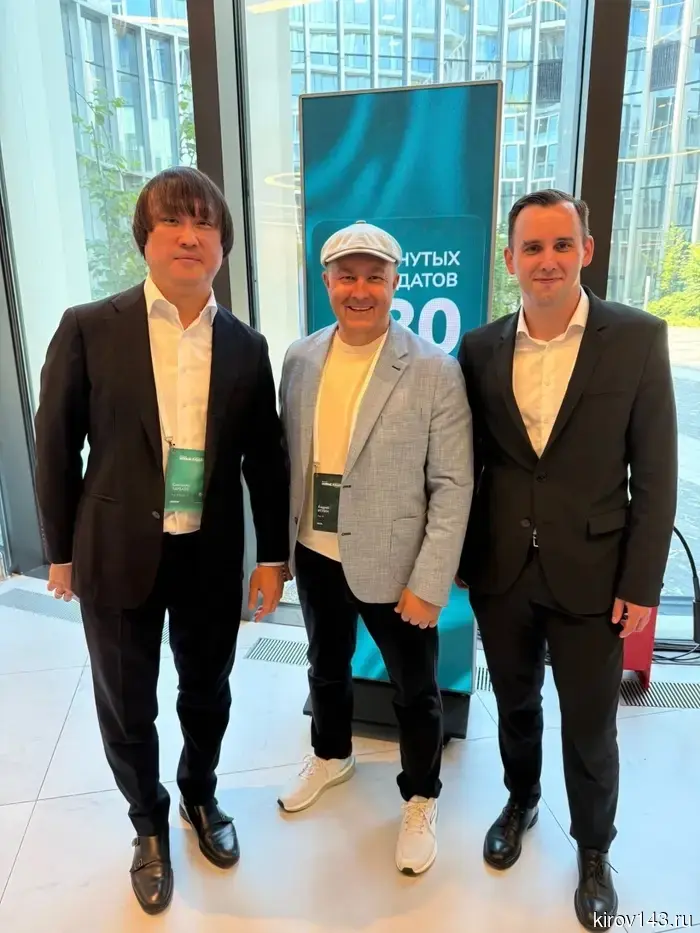 Iglyn is happy to be part of the team.
The head of the regional branch of the "New People" party in Kirov commented on the results of the pre-election congress.
Iglyn is happy to be part of the team.
The head of the regional branch of the "New People" party in Kirov commented on the results of the pre-election congress.
The housing market in Russia: adaptation to new rules and record construction
At the Financial Congress of the Bank of Russia, which recently took place in St. Petersburg, one of the central topics was the state of the residential real estate market. Experts agreed that the industry is undergoing a period of deep transformation, caused by the winding down of preferential mortgage programs and the high key interest rate.