
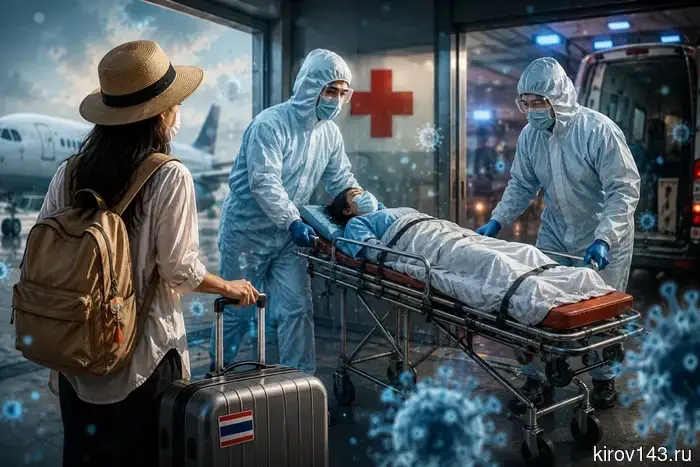
Dream vacation turned into a revival: tourist brought deadly microbes from Thailand
The Federal Service for Surveillance on Consumer Rights Protection and Human Wellbeing (Rospotrebnadzor) officially reported on the imported case. A woman traveled through the kingdom of smiles with a packed itinerary: excursions, jungles, interactions with animals — everything that tempts seasoned tourists. But it was this interaction with wildlife that likely became fatal. The patient is currently in serious condition in one of the Russian clinics, and doctors are fighting for her life.
What kind of beast is melioidosis?
The causative agent is the bacterium Burkholderia pseudomallei, which lives in the soil and fresh water of the tropics. It does not breathe, does not fly, but knows how to wait. Just inhaling dust from contaminated soil, drinking untreated water, or simply walking barefoot on wet grass is enough for it to enter the body through microcracks in the skin. The incubation period can last from a couple of days to several weeks, so the initial symptoms are often attributed to a common cold or acclimatization, reports karelinform.ru.
And then hell begins: high fever, terrible weakness, dry cough, chest pain. The disease masquerades as pneumonia, sepsis, or abscesses of internal organs, and without proper treatment, it rapidly destroys the lungs, liver, and spleen. The insidiousness is that even with timely therapy, the mortality rate reaches 10–15%, and with delays — up to 50%.
Is there protection?
Rospotrebnadzor emphasized: domestic laboratories are equipped with special test systems that allow for the detection of this infection in just a few hours. This means that if there is suspicion, doctors can quickly prescribe targeted antibiotics (the course lasts for weeks). But the main thing is to seek help in time, without self-medicating.
What to do if you have just returned from hot countries?
Listen to your body. If you develop a fever, shortness of breath, or unusual fatigue 1–3 weeks after returning, do not attribute it to reacclimatization; go to a therapist immediately and be sure to tell them where you have been.
Recall your routes. Contact with water, dirt, animals, especially during the rainy season (which is summer in Thailand) — this is a reason to be cautious.
Do not drink raw water and do not walk barefoot even on beautiful tropical puddles — seemingly harmless bodies of water can be breeding grounds for bacteria.
This story is not a reason to give up traveling, but a serious signal: nature is not always friendly. Be attentive to your health, and then your vacation will remain in memory only with bright photos, not with the realities of resuscitation.
Другие Новости Кирова (НЗК)
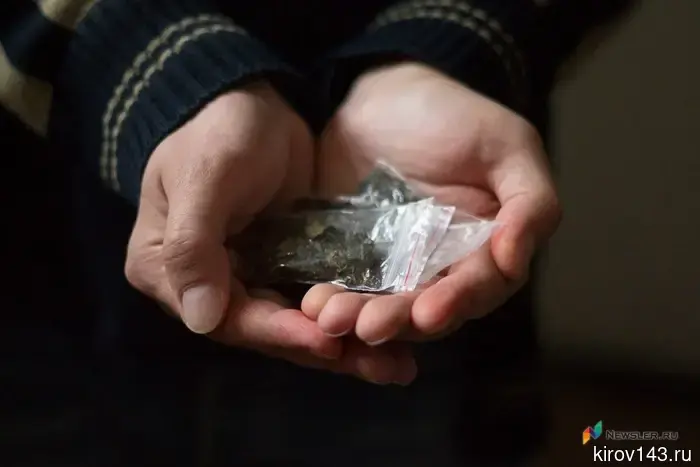 In Kirov, a train passenger was detained for carrying drugs in socks.
A 32-year-old native of the Perm Krai was traveling on the train "Novy Urengoy - Moscow" with drugs in his socks.
In Kirov, a train passenger was detained for carrying drugs in socks.
A 32-year-old native of the Perm Krai was traveling on the train "Novy Urengoy - Moscow" with drugs in his socks.
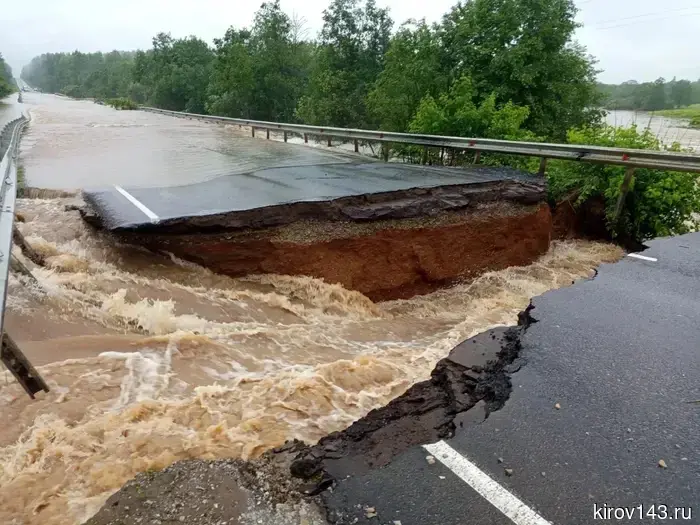 В Кировской области установлен режим повышенной готовности для устранения последствий дождей на автотрассах.
Накануне губернатор Кировской области Александр Соколов издал распоряжение о введении с 18:00 23 июня режима повышенной готовности для предотвращения и ликвидации последствий, вызванных размывами участков автодорог. Вчера в результате сильных дождей произошли подтопления и размытия участков.
В Кировской области установлен режим повышенной готовности для устранения последствий дождей на автотрассах.
Накануне губернатор Кировской области Александр Соколов издал распоряжение о введении с 18:00 23 июня режима повышенной готовности для предотвращения и ликвидации последствий, вызванных размывами участков автодорог. Вчера в результате сильных дождей произошли подтопления и размытия участков.
 В Кировской области продолжается устранение последствий затяжных дождей.
В Кировской области продолжаются меры по устранению последствий сильных дождей. В настоящее время трасса Киров-Кирово-Чепецк-Зуевка - Фаленки закрыта для проезда из-за размыва дороги на 114-м километре в районе реки Полынки. Согласно информации регионального правительства, на месте работают специалисты уже второй день.
В Кировской области продолжается устранение последствий затяжных дождей.
В Кировской области продолжаются меры по устранению последствий сильных дождей. В настоящее время трасса Киров-Кирово-Чепецк-Зуевка - Фаленки закрыта для проезда из-за размыва дороги на 114-м километре в районе реки Полынки. Согласно информации регионального правительства, на месте работают специалисты уже второй день.
 Love horoscope: Taurus needs to talk about love, while Aquarians will have a celebration.
It has become known how the personal life of each zodiac sign will unfold this coming Wednesday.
Love horoscope: Taurus needs to talk about love, while Aquarians will have a celebration.
It has become known how the personal life of each zodiac sign will unfold this coming Wednesday.
 Love horoscope: Taurus needs to talk about love, while Aquarius will have a celebration.
It has become known how the personal life of each zodiac sign will unfold this coming Wednesday.
Love horoscope: Taurus needs to talk about love, while Aquarius will have a celebration.
It has become known how the personal life of each zodiac sign will unfold this coming Wednesday.
 Three keys to summer: what Orthodox Christians need to know about church dates in July
July in the church calendar is often referred to as the month of the "spiritual pause": against the backdrop of the grand celebrations of Trinity in June and the autumn Assumption fast, it seems modest. However, it is precisely in this restraint that a special wisdom is hidden.
Three keys to summer: what Orthodox Christians need to know about church dates in July
July in the church calendar is often referred to as the month of the "spiritual pause": against the backdrop of the grand celebrations of Trinity in June and the autumn Assumption fast, it seems modest. However, it is precisely in this restraint that a special wisdom is hidden.
Dream vacation turned into a revival: tourist brought deadly microbes from Thailand
Imagine: you have returned from a long-awaited trip to golden temples and snow-white beaches, and a few days later you find yourself in a hospital bed with a temperature nearing forty and breathing that becomes heavier by the minute. This is exactly what happened to a Russian tourist who brought back from Thailand not a fridge magnet, but a highly dangerous tropical infection — melioidosis. An infection that, according to WHO data, ends fatally in one out of every five cases.