
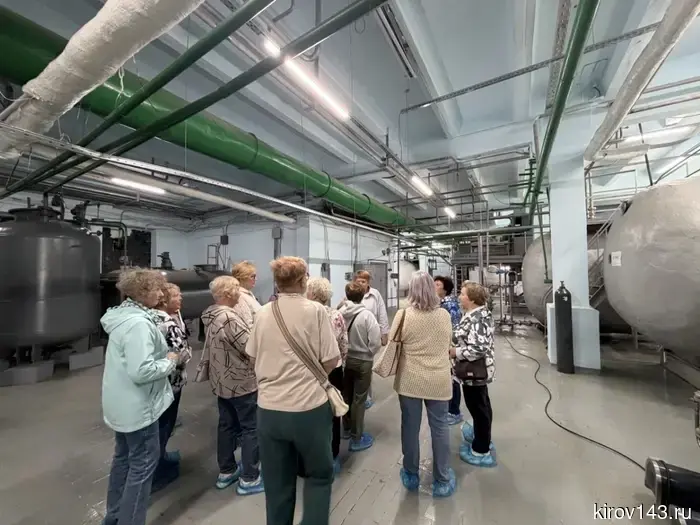
"Not Recognizing the Factory": Residents of Vostochny Visited the "Vostok" Enterprise
Among the guests were former employees of the enterprise and those who had followed its fate from the sidelines for many years. Some remembered the factory during its heyday, while others recalled the difficult years of crisis. But they were all united by one desire — to see everything with their own eyes. The tour for the guests was conducted by Nadezhda Nikolaevna Zmeeva, who knows the history of the enterprise literally from the inside. Today, it is hard to imagine that not so long ago many buildings were in a deplorable state. The enterprise was going through tough times. Nadezhda Nikolaevna recalls the years of bankruptcy as one of the most challenging periods in the factory's history. "There was a time when the enterprise was literally being torn apart for parts. People worked not for the salary. They froze, endured hardships, but continued to come to their workplaces. They understood that if everything stopped completely, it would be almost impossible to restart production," she recounts. According to her, it was thanks to these people that the main thing was preserved — a living production and a team of specialists. "It was a real feat. Many at that time thought only about how to survive themselves. But our people also thought about how to save the factory," she says. However, on this day, they spoke not only about difficulties. During the tour, stories from the enterprise's past kept surfacing — amusing incidents, memories of early production successes, and about the people who worked at the factory for decades and created its history. Nadezhda Nikolaevna separately talked about the time when the current general director, Dmitry Panteleev, came to the enterprise. According to her, in those years, many no longer believed that the factory could be saved. Production was practically not working, equipment was becoming unusable, and the enterprise constantly faced serious problems. However, it was precisely then that work began on its restoration. Step by step, the buildings were put in order, equipment was launched, and production life returned. Today, the results of this work are visible not only to specialists. Moreover, a complex project is currently being implemented, involving leading institutes and taking place under the patronage of the state. During the tour, guests were able to see modern production areas, new equipment, laboratories, filtration units, drying complexes, and automated systems for managing technological processes. The new drying units sparked particular interest. The enterprise's specialists explained that modern equipment not only ensures the production of the main products but also creates opportunities for mastering new production directions. Many tour participants admitted that they expected to see something entirely different. "Not recognizing the factory" — this phrase was heard more than once during the tour. Instead of old production facilities, they found clean workshops, modern equipment, and large-scale work on further modernization of the enterprise. "We need to do everything wisely. That's how we were taught, and that's how we teach," Nadezhda Nikolaevna noted. According to her, this is precisely why the modernization of the enterprise is proceeding systematically and thoroughly. They strive not to chase quick results but to create a foundation for work for decades to come. During the tour, the conversation turned not only to production but also to the future of the settlement itself. Participants were interested in the fate of the "Bisera" hotel and the restaurant of the same name, named after the Bisera River. For many residents of Vostochny, these are not just buildings but part of their personal history — places of meetings, celebrations, and significant events. As mentioned, the reconstruction of the complex is nearing completion. The hotel building is planned to house service housing for factory specialists. There will be modern apartments of various sizes — from cozy studios to three-room apartments, where both young specialists and those coming to Vostochny with their families will feel comfortable. In the spaces of the former restaurant, it is planned to open a café that will serve not only the enterprise's employees but also the residents of the settlement. After a two-hour tour, the guests gathered at a common table for tea. It was here that the conversation about production gradually shifted to talk about people. They recalled colleagues and leaders, shared stories from their youth, and talked about how the settlement was built and how the factory changed along with it. Some shared memories from forty years ago, while others discussed what they had seen just a few minutes earlier. Over a cup of tea, they also talked about the future of Vostochny. About new specialists, the development of the enterprise, the preservation of traditions, and what kind of settlement they want to see in a few years. Many admitted that they came on the tour out of simple human curiosity. They wanted to understand what the enterprise, which is talked about so much today, is living through. And what they saw pleasantly surprised them. Instead of memories of the difficult times of the past, they found a living factory where people work, production is being modernized, and plans for the future are being made. Perhaps that is why, after the meeting ended, the guests were in no hurry to leave. Because for Vostochny, the factory remains something more than just an enterprise. It is part of the settlement's history. And, as it turned out, part of its future as well.
Другие Новости Кирова (НЗК)
 "Getting hooked," like on a needle: the doctor explained why nasal drops can cause addiction.
Vasoconstrictor drops are sold over the counter, are inexpensive, and provide instant relief for breathing. However, this convenience has a downside: millions of Russians cannot give up the bottle for years, and the nose stops breathing on its own.
"Getting hooked," like on a needle: the doctor explained why nasal drops can cause addiction.
Vasoconstrictor drops are sold over the counter, are inexpensive, and provide instant relief for breathing. However, this convenience has a downside: millions of Russians cannot give up the bottle for years, and the nose stops breathing on its own.
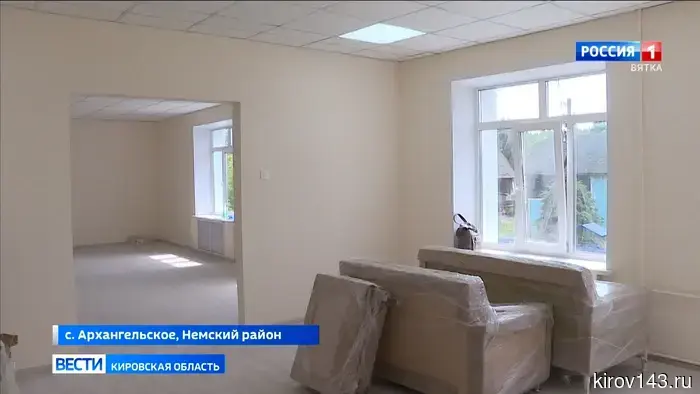 В селе Архангельское Немского района заканчиваются работы по ремонту библиотеки имени Ожегова.
В селе Архангельское Немского района Кировской области подходит к концу ремонт центральной районной библиотеки имени Ожегова. Реконструкция начала проводиться в апреле. О состоянии выполнения работ расскажет Дарья Якименко. Здание, где расположена центральная районная библиотека имени Ожегова, было...
В селе Архангельское Немского района заканчиваются работы по ремонту библиотеки имени Ожегова.
В селе Архангельское Немского района Кировской области подходит к концу ремонт центральной районной библиотеки имени Ожегова. Реконструкция начала проводиться в апреле. О состоянии выполнения работ расскажет Дарья Якименко. Здание, где расположена центральная районная библиотека имени Ожегова, было...
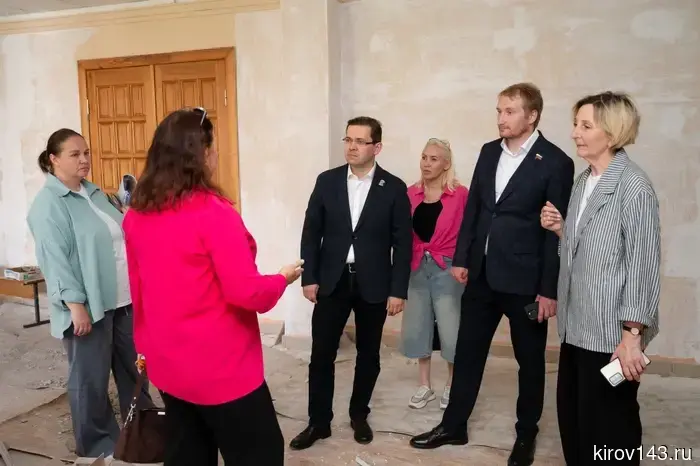 Boris Vesnin checked the quality and timelines of repairs in the schools of the regional center.
Deputy of the Legislative Assembly Boris Vesnin, together with deputies from "United Russia," checked the progress of repair work in five educational institutions in Kirov.
Boris Vesnin checked the quality and timelines of repairs in the schools of the regional center.
Deputy of the Legislative Assembly Boris Vesnin, together with deputies from "United Russia," checked the progress of repair work in five educational institutions in Kirov.
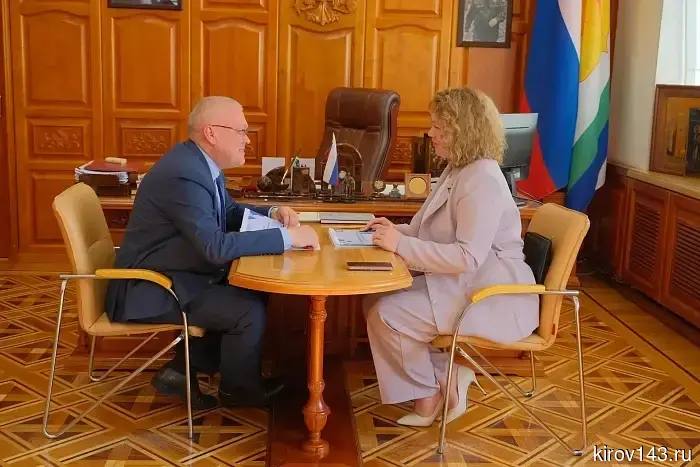 Александр Соколов провел деловую встречу с руководителем Свечинского округа.
Губернатор Кировской области Александр Соколов отметил, что в Свечинском муниципальном округе наблюдается положительная динамика. Он провел рабочую встречу с главой округа Галиной Гоголевой. Было отмечено, что за год доходы бюджета округа возросли на 25%, что в пять раз превышает предыдущие показатели.
Александр Соколов провел деловую встречу с руководителем Свечинского округа.
Губернатор Кировской области Александр Соколов отметил, что в Свечинском муниципальном округе наблюдается положительная динамика. Он провел рабочую встречу с главой округа Галиной Гоголевой. Было отмечено, что за год доходы бюджета округа возросли на 25%, что в пять раз превышает предыдущие показатели.
 Sheep in the Vyatskopolyansky district are left without tags and disinfectant barriers.
Violations of veterinary rules were identified in a personal subsidiary farm in the Vyatskopolyansky district. This was reported by the regional office of the Rosselkhoznadzor.
Sheep in the Vyatskopolyansky district are left without tags and disinfectant barriers.
Violations of veterinary rules were identified in a personal subsidiary farm in the Vyatskopolyansky district. This was reported by the regional office of the Rosselkhoznadzor.
 In the Kirov region, five solid waste landfills are being eliminated.
Work continues in the region to clear land of waste. In 2026, they plan to eliminate five sites in different municipalities.
In the Kirov region, five solid waste landfills are being eliminated.
Work continues in the region to clear land of waste. In 2026, they plan to eliminate five sites in different municipalities.
"Not Recognizing the Factory": Residents of Vostochny Visited the "Vostok" Enterprise
Residents of Vostochny, many of whom still remember the Omutninsky Chemical Plant, were able to see with their own eyes what the enterprise has become today. Production facilities, modern equipment, new projects and development plans — all of this provided the basis for an almost two-hour conversation about the past, present, and future of the plant.