

"The Curse of the Twelve Sisters": how a herb-girl turned out to be smarter than all the princes
The Brothers Grimm did not burden themselves with answers, but American writer Merry Haskell did a magnificent job. She took a short story and transformed it into a full-fledged young adult fantasy with rich Romanian color, mythology, underground mysteries, and an incredibly lively heroine who is nothing like Cinderella waiting for a prince.
Eat the apple — find out the truth
The original novel "The Princess Curse" (16+) was released in English back in 2011. The book received a warm reception — it was even nominated for the prestigious Mythopoeic Award for contributions to fantasy in the spirit of the "Inklings" (the very same group that included Tolkien and Lewis). However, the story only reached the Russian reader in 2026. And, I must say, it was worth the wait. The setting is the fictional principality of Silvania, but with a clear nod to real Transylvania and Wallachia. It smells of medicinal herbs and anxiety, intrigues in the castle are thicker than compote, suitors disappear with enviable regularity, and the curse, which the author through the main character will call "the stupidest in history," turns out to be a cleverly woven ball of mysteries.
The healer, the phantom, and a couple of extra pages
And here comes Rebecca — a thirteen-year-old student of the court healer. This is the best part of the book. She is not a beautiful maiden, not a lost princess, and certainly not "the chosen one." Rebecca wants to receive a reward for lifting the curse so that... she can go to a monastery and peacefully grow lavender beds there. Her pragmatism, sharp tongue, and complete lack of coddling charm from the very first pages. She makes mistakes, argues with her elders, fears being discovered, and constantly seeks advice from a battered herbalist. This romance is not about languid glances, but about courage and stubbornness when you are only thirteen and it is so dark around that you could poke your eye out.
By the way, there is no love line here in the conventional sense. There is only a light echo, a hint, a whisper — like the wind that touches your hair and immediately flies away. And that is right, because Rebecca needs to first figure herself out, and only then her feelings.
But, as I said, the book is not without its faults. Haskell, like that very healer who cannot find the right root, takes too long to get going. The first forty percent of the text is a leisurely introduction to the castle, daily life, and secondary characters. Sometimes you want to shout: "Girl, let’s move on already!" And repetitions — yes, they are here too. The same thoughts of the heroine about fear and doubts are replayed with enviable persistence. If the text were shortened by fifty to seventy pages, it would become denser and more gripping.
The slippers are worn out, but the ending...
When Rebecca finally descends into that very Underworld — real magic begins. It is dark, sticky, frightening, and incredibly beautiful there. Haskell mixes Romanian beliefs, Greek myths (Persephone and Hades send their regards from afar), flying dragons, animated statues, and dancing ghosts in a cauldron. It turns into a porridge, yes. But an extremely interesting "porridge."
The ending does not try to be good or right. It does not hand out princes to everyone and does not pretend that all problems are solved. The ending is logical, bold, and a bit bittersweet — like those very herbs that Rebecca collects.
"The Curse of the Twelve Sisters" (16+) is a seesaw book. At first, you want to bury it in a distant corner of the garden, but then — gift it to your best friend with a note: "Hang in there until the middle, it will get hot." If you love dark retellings without pink snot — grab it without a second thought.
And let’s not forget: this is still a young adult novel, with all its stretches, repetitions, and almost ballad-like seriousness. For its "own" reader — just right.
Другие Новости Кирова (НЗК)
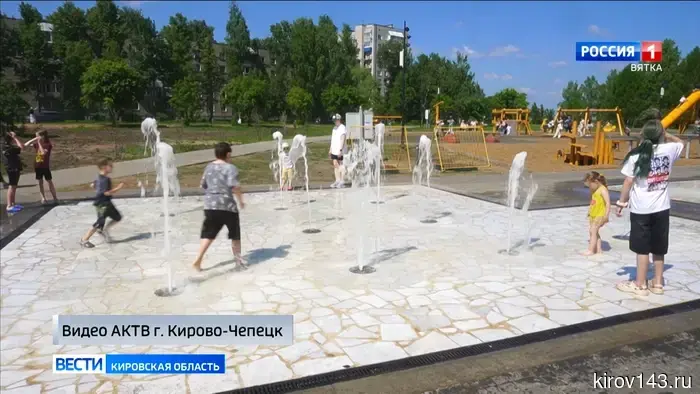 В Кирово-Чепецке открылся парк «Двуречье».
В Кирово-Чепецке на месте пустыря был создан новый парк "Двуречье". Он стал частью общего пешеходного маршрута, который начинается у мемориала на Вятской набережной и проходит через сквер «Река времени». Продолжит рассказ Алина Смирнова. С увлечением исследователи не упускают возможность
В Кирово-Чепецке открылся парк «Двуречье».
В Кирово-Чепецке на месте пустыря был создан новый парк "Двуречье". Он стал частью общего пешеходного маршрута, который начинается у мемориала на Вятской набережной и проходит через сквер «Река времени». Продолжит рассказ Алина Смирнова. С увлечением исследователи не упускают возможность
 Жителей Кирова успокоили: в регионе имеется достаточное количество запасов топлива.
В министерстве энергетики и ЖКХ Кировской области разъяснили ситуацию с временными ограничениями на продажу топлива на автозаправочных станциях региона. На заправках всероссийской сети разрешается заливать в бак не более 100 литров бензина на одного потребителя – это общероссийская тенденция, в то время как на станциях холдинга...
Жителей Кирова успокоили: в регионе имеется достаточное количество запасов топлива.
В министерстве энергетики и ЖКХ Кировской области разъяснили ситуацию с временными ограничениями на продажу топлива на автозаправочных станциях региона. На заправках всероссийской сети разрешается заливать в бак не более 100 литров бензина на одного потребителя – это общероссийская тенденция, в то время как на станциях холдинга...
 Death postponed the trial of the "marauder."
The start of the criminal case regarding the theft of money from the pocket of the deceased 45-year-old Denis Ovchinnikov, which was scheduled for June 8, has been postponed by ten days to June 19.
Death postponed the trial of the "marauder."
The start of the criminal case regarding the theft of money from the pocket of the deceased 45-year-old Denis Ovchinnikov, which was scheduled for June 8, has been postponed by ten days to June 19.
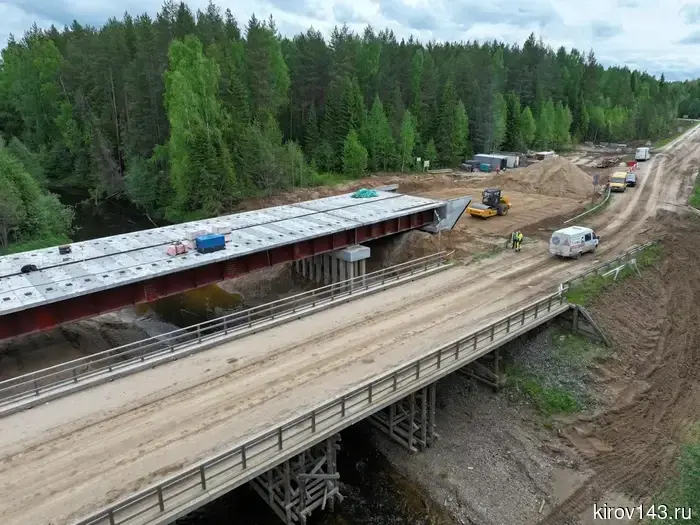 В Подосиновском районе строят капитальный железобетонный мост через Пушму на месте деревянного.
Данное строение станет частью комплексной дороги на северо-запад Кировской области, которая создается по указанию губернатора Александра Соколова в рамках национального проекта «Инфраструктура для жизни». В прошлом году асфальтированная дорога впервые была проложена до Опарино, в настоящее время работы проводятся в Подосиновском районе.
В Подосиновском районе строят капитальный железобетонный мост через Пушму на месте деревянного.
Данное строение станет частью комплексной дороги на северо-запад Кировской области, которая создается по указанию губернатора Александра Соколова в рамках национального проекта «Инфраструктура для жизни». В прошлом году асфальтированная дорога впервые была проложена до Опарино, в настоящее время работы проводятся в Подосиновском районе.
 В Подосиновском районе на реке Пушме строят новый капитальный железобетонный мост вместо старого деревянного.
Это сооружение станет частью единой трассы на северо-запад Кировской области, создаваемой по указанию губернатора Александра Соколова в рамках национального проекта «Инфраструктура для жизни». В прошлом году асфальтированная дорога впервые была доведена до Опарино, а сейчас работы проходят в Подосиновском районе.
В Подосиновском районе на реке Пушме строят новый капитальный железобетонный мост вместо старого деревянного.
Это сооружение станет частью единой трассы на северо-запад Кировской области, создаваемой по указанию губернатора Александра Соколова в рамках национального проекта «Инфраструктура для жизни». В прошлом году асфальтированная дорога впервые была доведена до Опарино, а сейчас работы проходят в Подосиновском районе.
 Кировчан информировали о том, что в регионе имеется достаточное количество запасов топлива.
В министерстве энергетики и жилищно-коммунального хозяйства Кировской области разъяснили ситуацию с временными ограничениями на продажу топлива на автозаправках региона. На АЗС всероссийской сети максимум разрешено заправить 100 литров бензина на одного клиента – это общероссийская практика, в то же время на станциях холдинга.
Кировчан информировали о том, что в регионе имеется достаточное количество запасов топлива.
В министерстве энергетики и жилищно-коммунального хозяйства Кировской области разъяснили ситуацию с временными ограничениями на продажу топлива на автозаправках региона. На АЗС всероссийской сети максимум разрешено заправить 100 литров бензина на одного клиента – это общероссийская практика, в то же время на станциях холдинга.
"The Curse of the Twelve Sisters": how a herb-girl turned out to be smarter than all the princes
Do you know that old fairy tale by the Brothers Grimm? The one where twelve princesses escape every night to a mysterious ball and return only by morning, their shoes worn to tatters. The king is furious, and the foolish soldiers fail one after another until a clever one comes along, uncovers the secret, and marries the eldest daughter. A fairy tale like any other, but how many unspoken truths it contains. Why do the princesses attend this strange ball? Why do they remain silent? And what, excuse me, is the sacred meaning behind it?